
A steampunk junk journal is a vintage-industrial album built from aged papers, brass cogs and keys, old correspondence and ledger pages, layered so the textures read as worn machinery rather than a pile of clutter. The trick is restraint: pick one focal motif per spread and let the paper carry the rest.
Below are the pieces that make the look work, five layouts you can copy, and where most pages go wrong.
Table of Contents
What goes in a steampunk junk journal?
Steampunk borrows from the Victorian age of steam engines, brass instruments and handwritten ledgers, then ages it all another fifty years. A steampunk junk journal recreates that feel with a few repeating ingredients. Once you have these, almost any spread comes together:
- Aged base papers in sepia, rust, oxidised copper and ink-stained cream.
- Mechanical clipart: cogs, gears, keys, pocket-watch faces, pressure gauges and rivets.
- Ephemera: old tickets, postage, handwritten letters, maps and ledger fragments.
- Metallic accents in brass, copper and antique gold for frames and corners.
- A script or serif font for titles, so the lettering matches the era.
You do not need all of it on one page. A single key over a tea-stained letter says more than ten gears fighting for space. If you are buying a kit, look for one that bundles the papers, the mechanical clipart and a few frames together so the tones already match. Mixing a brass kit with a silver one is a common mismatch; pick a metal and stay with it across the whole album.
It helps to decide what each spread is for before you start. A travel page, a portrait page and a ledger page all use the same ingredients, but the focal photo and the journaling change. Knowing the purpose stops you reaching for every gear in the folder.
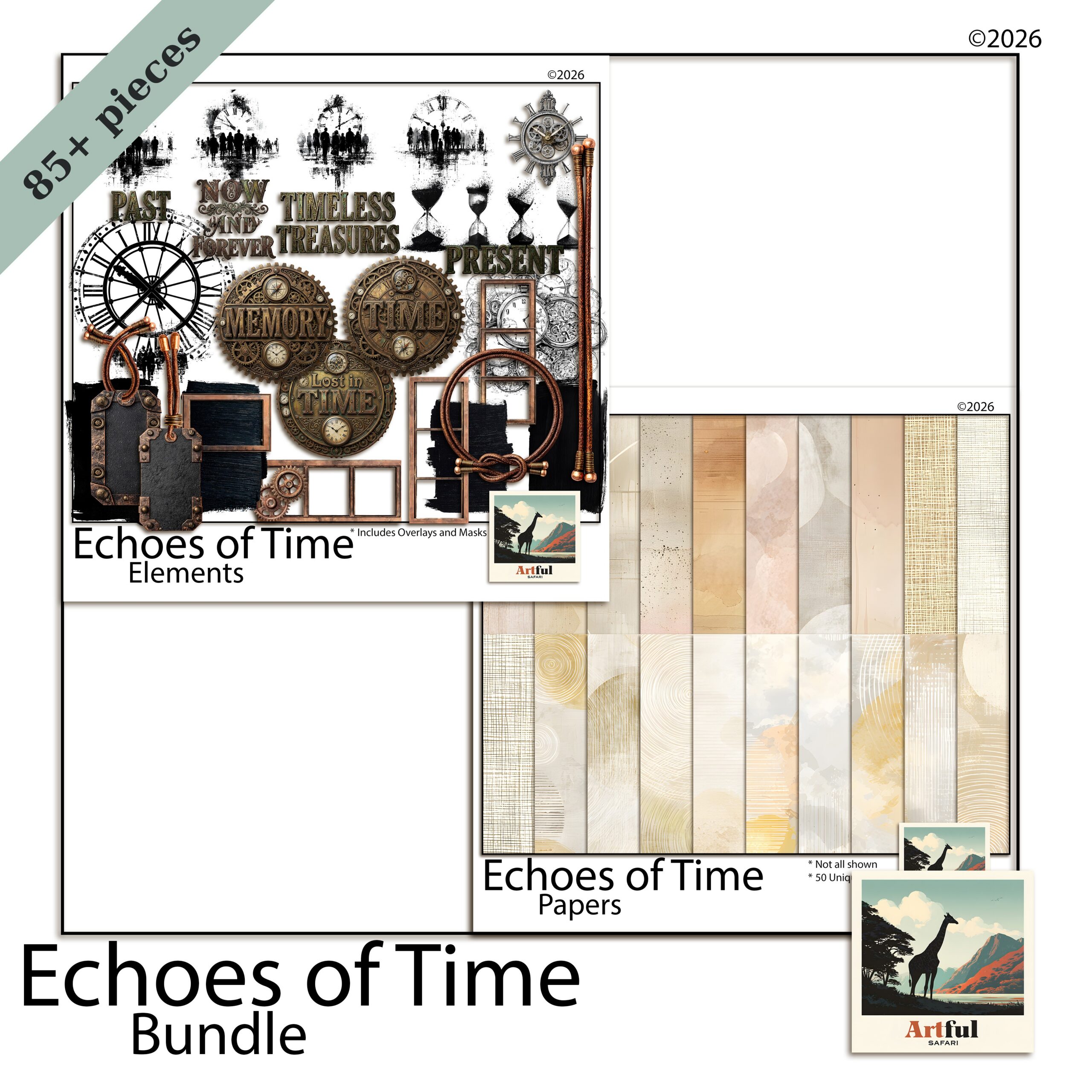
Which steampunk junk journal papers set the mood?
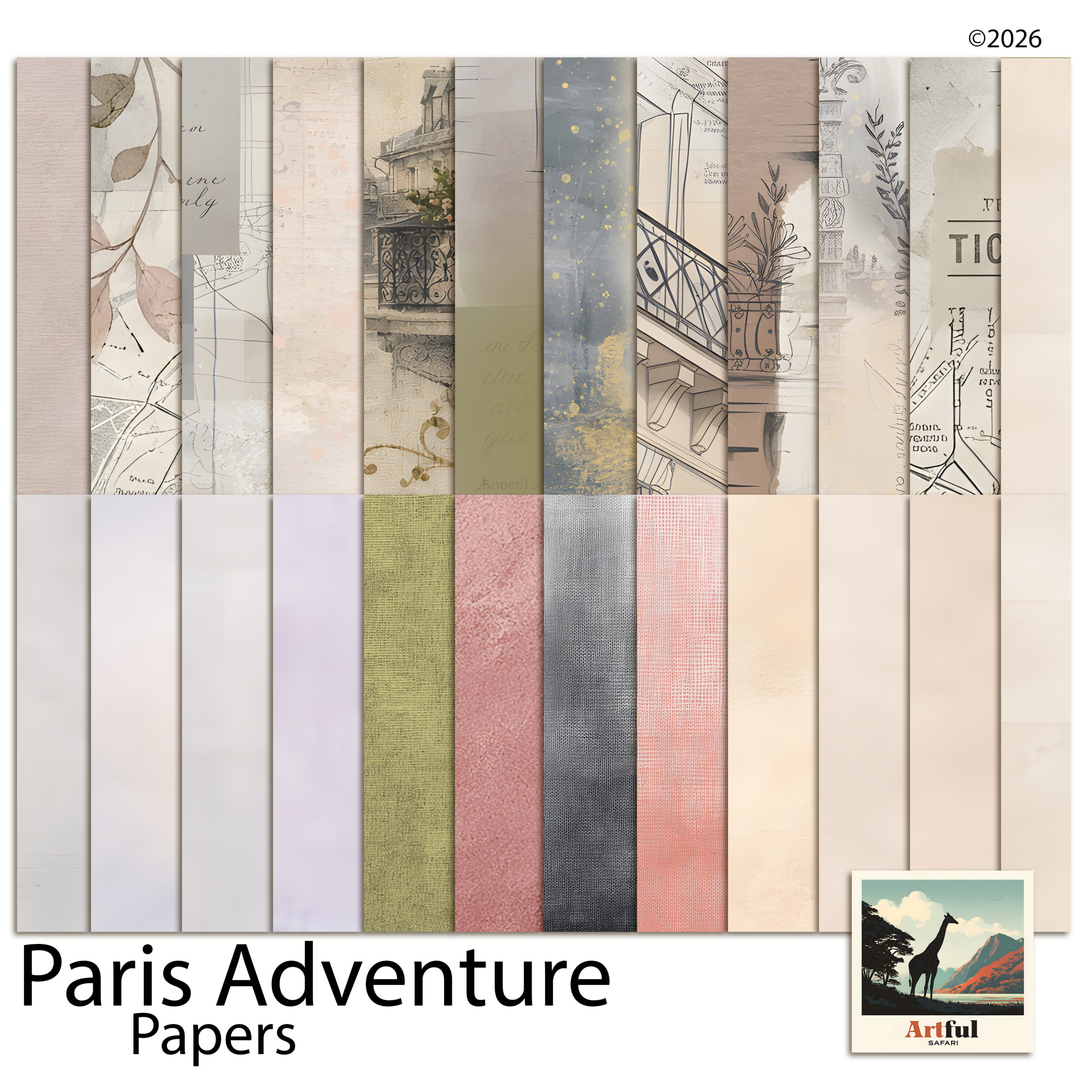
The base paper does most of the work. Industrial-era pages are rarely bright, so reach for low-contrast, weathered surfaces and let your photos or journaling be the lightest thing on the spread.
Textures that read as “steampunk”
- Tea-stained and coffee-ringed cream for letters and journaling cards.
- Oxidised copper and verdigris green for metal-panel backgrounds.
- Faded blueprint and grid paper behind diagrams or gauges.
- Cracked leather and parchment for cover pages and pockets.
Lay a darker aged paper as the full background, then float a lighter cream panel in the centre for your writing. That single move keeps the page readable while still feeling worn. If a spread starts to look flat, swap one paper for a different texture rather than adding more clipart.
How do you use cogs, keys and gears without clutter?
This is where most steampunk junk journal pages fall apart. Gears are fun, so people scatter dozens of them, and the spread turns into visual noise. A few rules keep it under control:
- Pick one hero element. A large pocket watch or a single ornate key anchors the page. Everything else supports it.
- Cluster, don’t sprinkle. Group three small cogs in one corner instead of dotting them across the whole spread.
- Use metal at the edges. Corners, spine and frame work let the centre breathe.
- Vary the size. One large gear, one medium, one small reads as a designed cluster, not a clip-art dump.
- Leave empty space. Bare paper around your photo is what makes the busy bits feel intentional.
A quick test: squint at the finished page. If your eye can find the photo or title in a second, the clutter is under control. If everything blurs together, take an element away. Most spreads improve when you remove the last thing you added rather than adding one more.
Layering depth also sells the machinery. A small drop shadow under a cog or key lifts it off the paper so it reads as a real object sitting on the page, not a flat sticker. Keep the shadow soft and short, the way an object casts a shadow in dim lamplight.
Five steampunk junk journal spreads you can copy
Stuck on where to start? These five layouts each lean on one idea, so they stay readable:
- The inventor’s desk: ledger background, a tilted blueprint, one large gear lower-right, journaling card centre.
- The travel log: a faded map paper, a postage stamp and ticket stub, a key clipped to a torn-edge photo.
- The pocket-watch portrait: a single photo framed in brass, a pocket watch as the only accent, plenty of bare parchment.
- The correspondence page: a handwritten letter under a wax seal, one rose or feather quill for softness.
- The specimen sheet: grid paper, three small labelled cogs in a row, a tag tucked into a pocket.
Building a readable ledger or letter spread
Ledger and letter pages are the heart of a steampunk junk journal, and they double as journaling space. Old account books, with their ruled columns and faded numbers, make a brilliant backdrop for handwriting or a printed quote.
A reliable layout:
- Full ledger or letter paper as the background.
- A cream journaling card, slightly tilted, pinned with a brass corner or wax seal.
- One key or small gear cluster lower-right to balance the title upper-left.
- A torn paper edge or postage stamp to break the rectangle.
Pockets and tucked tags are worth the extra few minutes here. A small kraft pocket on the ledger page holds a folded letter or a spare tag, and pulling it out is part of what makes a junk journal fun to handle rather than just look at. Add a ribbon or string pull so the tag is easy to find.
New to the format? My beginner walk-through, What Is a Junk Journal?, covers the basics of pages, pockets and signatures before you add the steampunk styling on top.
Digital or printed: which suits a steampunk journal?
You can build a steampunk junk journal either way. Working in Procreate, Photoshop or Canva keeps everything tidy and re-editable. Junk journals are also one of the few digital kits made to be printed, so if you want a chunky physical book you can print the papers onto a heavier stock, age the edges, and bind real pockets and tags.
| Approach | Best for | Watch out for |
|---|---|---|
| Fully digital (tablet/desktop) | Clean layering, easy redo, sharing online | Loses the tactile, handled feel |
| Printed and bound | Real pockets, tags, stitched signatures | Ink and paper cost; use heavier stock |
| Hybrid (print papers, add art first) | Planned spreads, best of both | More steps before you start gluing |
My own habit is to design the spread digitally, where I can move a gear five times without re-gluing, then print the finished papers if I want a physical copy. You get the planning of digital and the texture of paper.
Key takeaways
- One hero motif per spread; cluster small cogs instead of scattering them.
- Low-contrast aged papers carry the mood, so keep your journaling the lightest element.
- Ledger and letter pages give you a backdrop and writing space at once.
- Steampunk junk journal papers print well, so go physical if you want real pockets and tags.
Frequently asked questions
What is a steampunk junk journal?
It is a junk journal styled around the Victorian-industrial steampunk aesthetic: aged and tea-stained papers, brass cogs, keys and gauges, old letters, and ledger pages, often with metallic frames and script titles.
What do I put on a steampunk junk journal page?
Start with an aged base paper, add one focal element like a pocket watch or ornate key, a cream journaling card for writing, and a small cluster of gears or a wax seal to balance it. Leave empty space so the busy parts read as deliberate.
What colours work for steampunk journaling?
Sepia, rust, oxidised copper, verdigris green, ink-stained cream and antique gold. Keep contrast low and let metallic accents sit at the edges of the page.
Can I print steampunk junk journal papers?
Yes. Junk-journal papers are made to be printed, so you can run them onto heavier stock, age the edges, and bind real pockets and tags for a physical book.