
Colostle is a solo journalling game by Nich Angell, set inside a castle so large it has oceans and mountains in its rooms. You play it with the book, an ordinary deck of 52 playing cards and a notebook: draw a card, read the prompt it points to, write down what your character did.
The writing is the game, and the notebook is the part nobody sets up for you. Players call the finished book an RPJ, short for role playing journal, a name the YouTuber Journals4breakfast put on it.
That gap is where most people stop. They buy the book, buy a journal to go with it, and then sit looking at a blank first page trying to work out what goes where. Six steps below get a Colostle journal open, laid out and usable before you turn a single card.
Table of Contents
What Colostle actually asks your notebook to hold
Colostle was written and illustrated by Nich Angell of Draconeer Games in Gloucestershire, and it won the Gold ENNIE for Best Rules in 2022 after a Kickstarter that raised close to £45,000. His own description of the world is on the Colostle site: a castle so big that there are oceans, mountains and cities within its rooms, and no outside to any of it. The landscapes inside are the Roomlands.
Colostle plays like this. Your character has an Exploration score and a Combat score, each a number out of five, set by the class you pick from the book. You draw a number of cards equal to your Exploration score, and each card sends you to a prompt.

Red cards point at living things, people and creatures. Black cards point at places and objects. The number on the card decides which prompt you land on, and you choose the order in which you resolve the cards you drew.
Wandering the Roomlands are the Rooks, which the book calls huge walking stone castle towers that attack anything they see, but hold the Rookstones, the only source of magic in this world. Fighting one means drawing cards against it and winning the majority of the exchanges. Angell has described the game as part game, part creative-writing exercise, which is a fair description and the reason the journal carries so much of the weight.
So the book hands you a card draw and a prompt, and everything after that is yours. The cards you turned need somewhere to sit on the page. So does the shape of the place you were standing in, and so does what your character did about it.
Deciding where a card draw goes on the page is a job you only have to do once. Do it properly and the next forty spreads fill themselves in.
Step 1. Pick a book you are willing to spoil
The single biggest reason a Colostle journal never gets started is that the journal is too nice. A pristine hardback with cream paper invites you to wait until you have something good enough for page one, and that day does not arrive.
Pick something you would not mind wrecking. A cheap sketchbook, a charity-shop hardback you are gutting, an old ledger, a spiral pad. Players in this hobby routinely play inside altered books, and one of the better-known ones runs her games in 1980s school yearbooks.
Size matters more than quality, because a Colostle spread wants width. A4 gives you room for a card record and a map on the same opening without cramping the writing. Anything smaller and the map turns into a doodle in a corner.
Step 2. Build the character opening before anything else
Colostle builds a character from four things: a Calling, which is why they are out there; a Nature, which is how they react to what they meet; a class; and a weapon. The Calling and the Nature come up randomly. The class sets those two numbers you will be drawing cards against all game.
The base book gives you four to choose from. The Armed has grafted a Rook’s arm to themselves and fights slightly better than they explore. The Followed travels with a Rookling companion and is the best explorer of the set.
The Helmed has harvested machinery from a Rook’s heart, which makes them poor at exploring and very dangerous in a fight, and the Mounted rides a Rook mechanism, which reverses that entirely.
Give all of it a full double-page opening at the front. Name, Calling, Nature, class, weapon, the two scores, and a space to write in what the character is carrying as it accumulates. You will turn back to this opening more than any other page in the book, so make it the one that looks finished.
Step 3. Set up one Colostle spread before you draw a card
This is the step that gets skipped and it is the one that fixes everything. Rule up a single blank Colostle opening in advance, so that when you sit down to play you are filling in a shape rather than inventing one.
The official Colostle journal is worth copying here. The Roomlander Journal is a 98-page spiral-bound A4 book in which every double-page spread holds one encounter phase, with a section to record the card draws for Exploration and Combat, a map section for visual notes on the lay of the land, and a journal section to write up what your character did that day.
You can rule that yourself with a pencil and a straight edge. A narrow column down the left edge of the left-hand page holds the cards, and a box roughly a quarter of the spread, top right, holds the map. Everything else is writing space.
Do five or six of these openings in one sitting while you are in the mood for ruling lines. Then Colostle never waits on your stationery.
Step 4. Record the draw so you can read it back in a year
Colostle runs on the cards, so write them down as cards. Not “I found a ruined tower” but “♠7 — ruined tower”, with the prompt number if you want to find it again. The suit and the rank are the reason the story went where it went, and stripping them out turns your RPJ into fiction with no evidence behind it.
There is a practical reason as well as a sentimental one. When an Events table sends you back for another draw, or a fight runs across two openings, you need the record to keep track of what came from where. A column of card symbols down the left edge does that job, and it looks deliberate.
Junk journallers have an advantage here. A small pocket glued to the character opening will hold the actual cards from a session you care about, and a whole encounter can be pasted in as a fan of four cards rather than transcribed.
Step 5. Map the room while it is still in your head
The map box is the part people leave out, and it is the part that makes a Colostle journal look like a Colostle journal rather than a diary. It does not need to be good. A rectangle for the room and an X where the Rook was standing will do.
Do it before you write the prose, not after. Once you have written the entry the geography collapses into sentences and you lose the sense of where things were in relation to each other, which is the whole pleasure of exploring a room the size of a country.
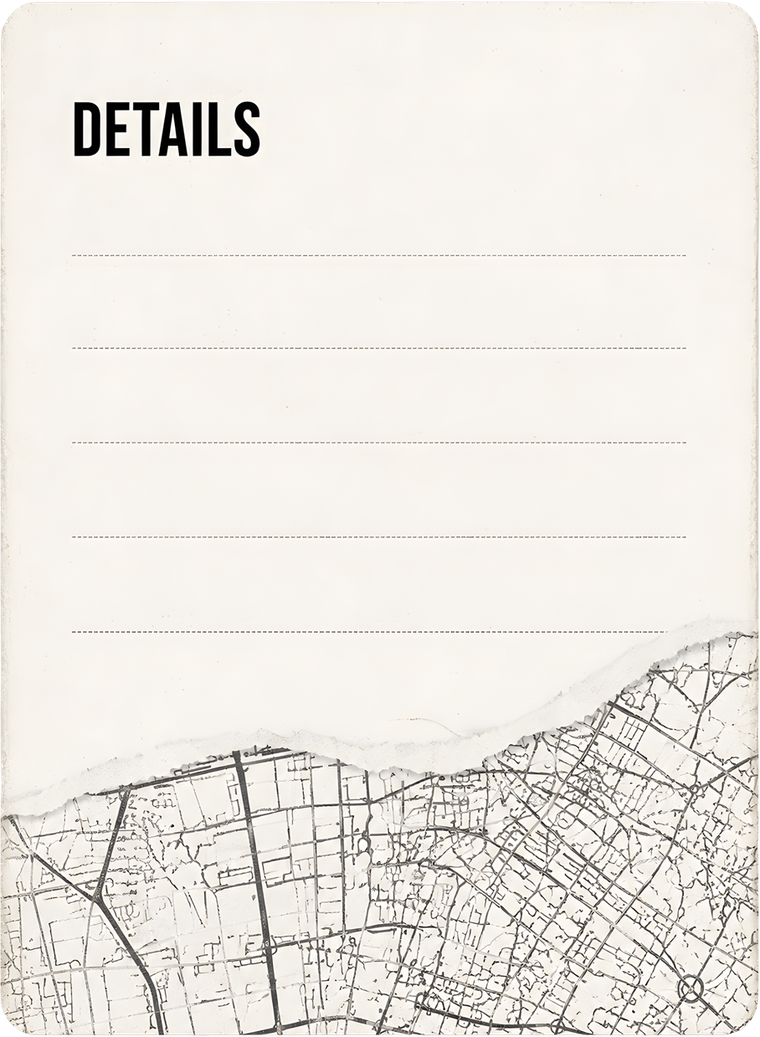
Ink the map, then let a wash of watered-down brown or grey sit over the floor of it. That one move does more for the look of a page than any amount of careful lettering. If you would rather not draw at all, a torn scrap of aged paper with the room’s name on it does the same job.
Step 6. Write the entry, then close the spread properly
Now write the Colostle entry. Your character’s account of what happened, in whatever voice suits them, as long or as short as it wants to be. Some encounters are four lines and some fill the page.
Then close the opening off. Date it in the world’s own terms, note the two scores as they stand after the encounter, and write one line about where the character is heading next. That last line is what gets you back into the chair tomorrow, because it means the next session opens with a direction instead of a blank.
The reason to close a spread rather than trail off is that an RPJ is a book, and books have pages that end. A finished opening has a card column, a map, an entry and a sign-off, and a stack of them reads as a record of a journey rather than a set of abandoned starts.
What a finished Colostle spread looks like
Left-hand page: the card column down the outside edge with the suits inked in, the map box top right of the spread with its wash, and the first half of the entry filling the rest. Right-hand page: the rest of the writing, and the sign-off at the foot with the two scores and a heading.
Pick two inks and one paper tone and keep them for the whole book, so a flip through reads as one journey rather than forty separate craft projects. A warm brown for everything and a deep red kept back for the Rookstones will carry the entire Roomlands.
If you want to see how Colostle flows before you commit to a layout, Cozy RPG Reviews goes through the card system and the setting in full, and it is the quickest way to see what one turn actually involves:
Watching somebody play is consistently what makes these games click for people who have read the rules twice and still feel stuck.
Colostle questions people actually ask
Do you need dice to play Colostle?
No, Colostle runs on an ordinary deck of 52 playing cards and nothing else, which is one of the reasons people pick it as a first solo game. The suit and the rank of each card you turn send you to a prompt in the book. If you already own dice from another game, they sit this one out.
Do you have to be good at writing?
No, and the prompt system is why: the book hands you the situation, so you are never facing an empty page and inventing from nothing. Plenty of players write four lines an encounter and let the map and the card record carry the rest of the spread. Nobody is reading it over your shoulder.
I have the book and a journal, so how do I actually start?
Set up the character opening first, then rule one blank spread, and only then shuffle. That order is the whole trick, because it means your first card draw lands in a page that already has somewhere for it to go. Most people who stall have skipped straight from buying the book to a blank sheet.
Do you need the official Roomlander Journal?
No. The rules ask for a notebook, and any book you are willing to write in will do the job. The official one is useful as a template rather than a requirement, because its spread layout shows you what to rule into your own: a card record, a map box and a writing area on every opening.
Can you play Colostle in a junk journal?
Yes, and it suits the game well. A made book gives you pockets to keep the actual cards from a session, aged paper that matches a stone castle, and tip-ins for maps that outgrow their box. The only thing to watch is bulk, since a book that is already fat with ephemera will not lie flat once you add forty spreads.
How long does one Colostle session take?
The game does not set one. The natural unit is a single encounter phase, meaning one round of card draws written up, and the official journal gives each of those a double-page spread. Treating one spread as one sitting keeps the book moving and means you always stop somewhere you can pick up from.
If Colostle is your first journalling game
Plenty of people arrive at Colostle having never touched a roleplaying game in their life and get on with it fine, because there is no table of people waiting on you and no one to improvise at.
Our guide to solo journalling RPGs covers what these games have in common and how a session usually runs, and the seven-nights piece is a shorter on-ramp if you want to try the format before buying a rulebook. If the book you are playing in is a made one rather than a bought one, what a junk journal actually is is the place to start.
For the papers themselves, Helene designs the sheets for The Crimson Parlour in the sort of aged Victorian tones that suit a stone castle and a card draw, and the kit carries its own thirteen-night mystery to play if you finish the Roomlands and want another book to fill.