The Notorious solo RPG is a bounty-hunting game for one player, designed by Jason Price for Always Checkers Publishing. It shares a name with the Hitchcock film and the rapper, and it is neither. You play a Nomad, a hunter in a galaxy at war, and you track one target across one planet with two six-sided dice and a stack of tables.
The rules hand you the hunt. What they do not hand you is a book to keep it in, and that is where people get stuck once the first session is over.
Below are six ways to run a Notorious solo RPG hunt as a real book you can pick up off a shelf, rather than a stack of loose notes.
Table of Contents
What the Notorious solo RPG asks you to do
Your Nomad carries three numbers. Notoriety is your reputation on the planet you are working, Favour is your standing with the Nomad’s Guild, and Motivation is your will to bring the target in.
Motivation doubles as your re-roll currency. Spending it to rescue a bad roll costs you at the end of the story, which is where most of the tension in the Notorious solo RPG comes from.
Every action is one roll of your Nomad die plus whichever attribute applies, against a challenge die. Higher number wins. That is the whole dice system, which is why there is so much room left over for writing.
The game gives you six Nomad profiles to choose from: the Armour, the Assassin, the Bot, the Brute, the Scoundrel and the Uncanny. Each comes with a ranged weapon, a melee weapon and an outfit that gives you armour. You then roll for Origin, Scar, Trigger, Species and Personality, and those rolls are the ones that give you something to write about on page one.
There are two ways to play. Arcade Mode runs fast, and Story Mode is written for people who want to journal, so Story Mode is the one you want if you are building a book.
New to the format entirely? Our complete guide to solo journaling RPGs covers the basics before you spend anything.
1. Open your Notorious solo RPG book with a wanted poster
Notorious generates the contract before almost anything else. You roll for the planet your target is rumoured to be hiding on, and the planet hands you three factions present there: a Controlling one, a Challenging one, and a Minor one.
You pick which of those hired you, and each has its own reasons for wanting somebody brought in. The Old Empire is after rebellious types. The Trade Alliance wants whoever has damaged its takings, and the Mystic Order is interested in the darker end of its own ancient warrior tradition.
That is a wanted poster sitting there waiting to be made. Give it the right-hand page of your first opening: the target’s name, a face if you want to collage or sketch one, the faction’s mark, and the fee. Write “dead or alive” along the bottom, because the game does.
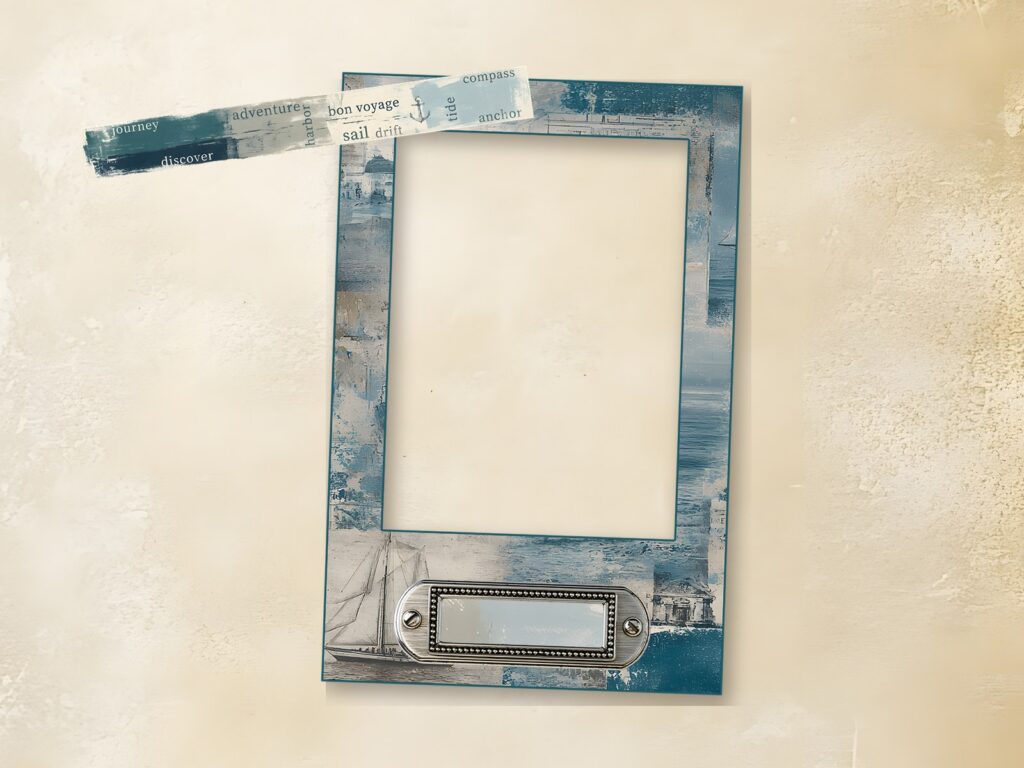
Doing it this way means the first thing anyone opening your book sees is the job rather than a grid of numbers.
2. Give the Nomad a page facing the poster
All those character rolls exist to be looked at again later. Your Scar is something visible that other people react to, and your Trigger is what pulls you away from the Guild’s code once the pressure comes on.
Put them on the left-hand page opposite the poster so hunter and hunted stare at each other across the gutter. Name, species, profile, the three numbers in a box you can cross out and rewrite, and four lines of history underneath.
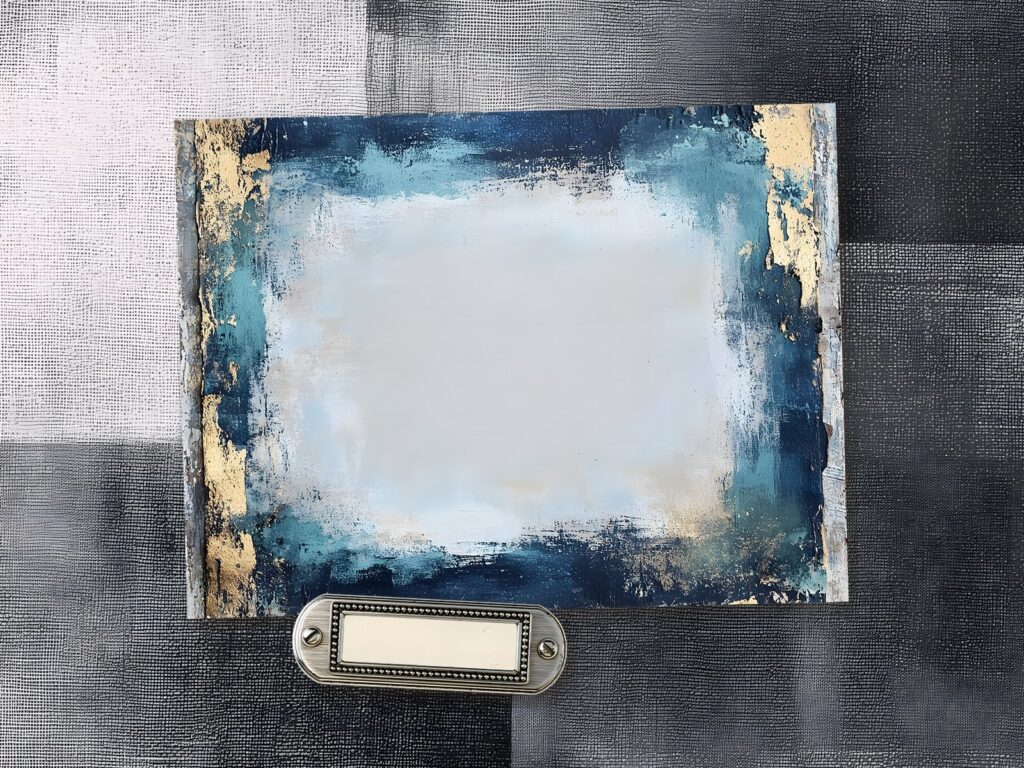
Leave the numbers loose. Notoriety in particular climbs through a hunt, and you want to watch it move.
3. Keep a ledger of leads
The play loop in the Notorious solo RPG is short. You roll on the Exploration table and complete the prompt, and there is a chance of turning up a Lead. That chance rises as your Notoriety rises, which is a quiet way of saying that the more people know your name, the faster the job closes.
After two Leads, the third is always the Target. Every hunt has that shape: two clues, then the confrontation.
A ledger handles it better than prose does. Rule three columns down a left-hand page, headed with what the lead was, where it came from, and what it cost you. Two rows fill across a whole planet, and the third row is where you write the target’s name and stop.
4. Give each destination half a spread
After Exploration, the game sends you to the Destinations table, and you play out whatever happens there. Each planet carries six locations, and the prompts attached to them are where most of the encounters live.
How you approach somebody depends on what they are. You can Speak to a Local, but you cannot attack or threaten one, and you can only Recruit them when a prompt offers it. A Hostile is the reverse: no conversation, only Threaten or Attack.
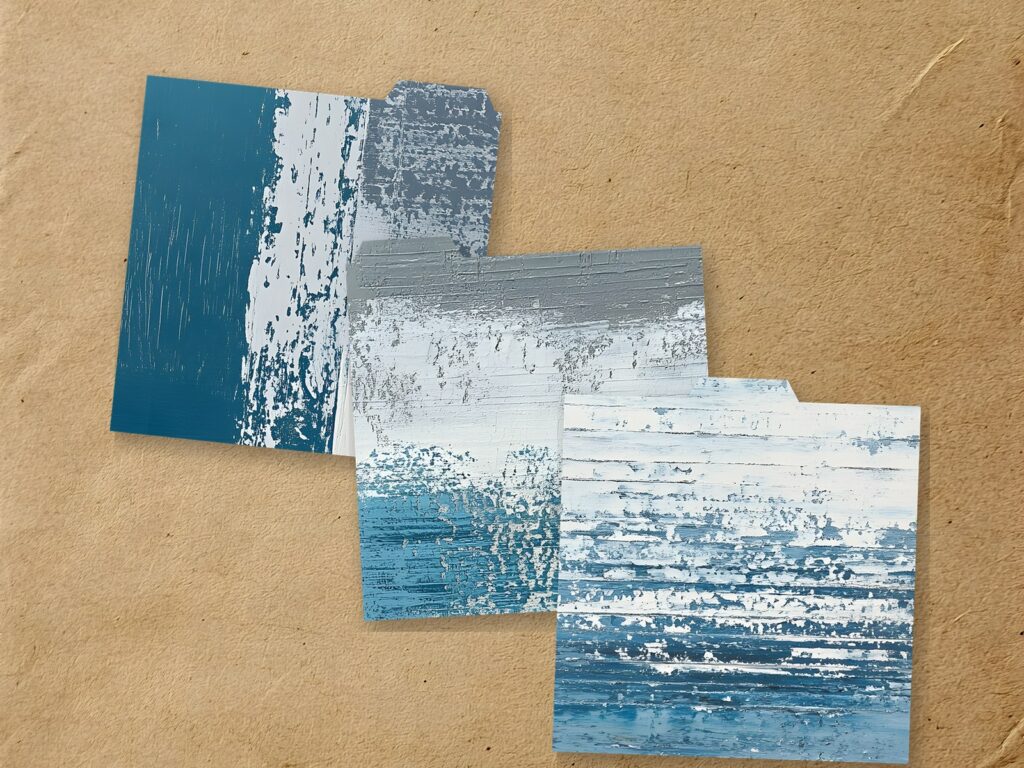
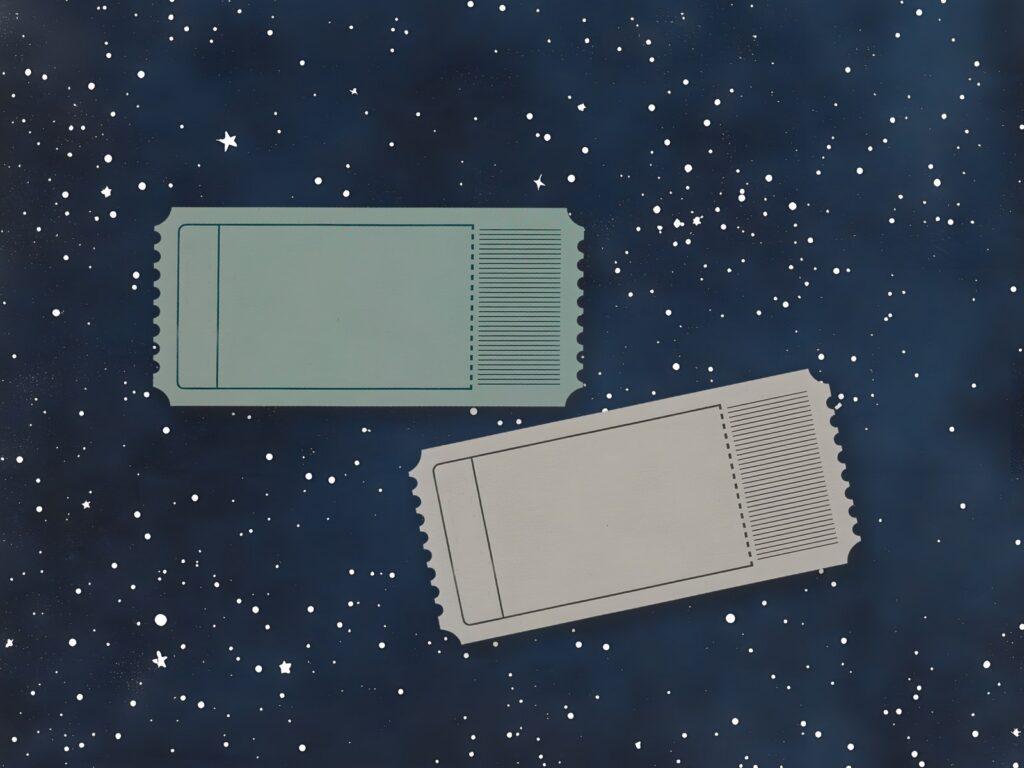
Half a spread per destination keeps pace with the game. A torn strip for the sky, a darker scrap for the ground, the place name in the top corner, and five or six lines about who you met there.
Anything more elaborate and the book falls behind the dice.
5. Build the showdown as a full opening
When a Lead surfaces or the Target finally appears, the Notorious solo RPG asks you to roll a Showdown. First a Site, which might be a speeding hovertrain, the ruins of a crashed starship, or a mystic temple. Then a Setting for the conditions on top of it, such as a blinding sandstorm or a herd stampeding through.
None of that touches the dice. It exists so you have something worth describing, which makes it the most useful roll in the game for anyone keeping a book.
Give it both pages. Site across the top, the fight down the middle, and the outcome bottom right where the eye lands last.
6. Close the bounty on the page
When the Showdown with the Target is finished, however it went, you take your remaining Motivation, double it, and add it to your Favour with the Guild. A poor result can leave you starting the next contract with almost no support, or being hunted yourself by the faction that hired you. A strong one earns you something bigger and more dangerous.
That number is your closing entry. Write it on the last page of the hunt, then go back to the front and mark the poster: CLOSED, or KILLED, or ESCAPED across the target’s face.
The Notorious solo RPG also gives you epilogues, so you can end the Nomad’s story there or carry them into the next job. If you are carrying them, leave the following right-hand page empty and let the next poster begin there.
What a finished Notorious solo RPG journal looks like
People in this hobby have started calling these books RPJs, short for role playing journals. The finished ones have a shape you can recognise from across a table.
A finished Notorious solo RPG book runs poster at the front, character page facing it, then the ledger, four or five destination pages, one full showdown opening, and a closing entry with a number on it. Twenty to thirty pages for a single contract, which is comfortable at an evening or two a week over a month.
The RPJ crowd calls the videos of these “flip throughs”, and watching one is the quickest way to see what you are aiming at. Cassi Mothwin plays the whole thing at journaling pace rather than gaming pace, which is the pace this kind of book needs:
If you already build books out of scraps, none of this is new to you. It is the same craft described in what a junk journal actually is, pointed at a bounty instead of a holiday.
Where to get the Notorious solo RPG and what it costs
The download lives on the publisher’s own itch.io page from around ten US dollars. That gets you the 76-page book with the tables, the six Nomad profiles, and a character sheet you can fill in on screen.
Always Checkers also sell a printed A5 edition with copper foiling on the cover, wire-bound, though it goes in and out of stock. Torben Bökemeyer did the artwork and it is worth seeing at full size.
To read somebody else’s hunt before committing, PopCult’s review and actual play of Notorious follows one Nomad through two contracts, and it is the fullest written account of the loop I could find.
Questions people ask about the Notorious solo RPG
I have bought the Notorious solo RPG and still have not started. Where do I actually begin?
Begin with the contract, not the character. Roll the planet your target is hiding on, take the three factions it gives you, and pick the one that hired you. Write that up as a wanted poster on one page. You now have a target with a name and a reason behind it, which makes the first Exploration roll feel like play rather than admin.
Do I need special dice for the Notorious solo RPG?
No. Two ordinary six-sided dice cover the whole game. One of them is your Nomad die, which you roll with an attribute added on, and the other is the challenge die you are rolling against. A pair borrowed from a board game in the cupboard will do the job.
Do I have to be good at writing?
No. Most of what goes in the book is short: a place name, who you met, what it cost you, a number. The lead ledger is columns rather than prose, and a destination page runs to five or six lines. Only the showdown really asks for a scene, and by the time you reach one you know your Nomad well enough to write it.
How long does one hunt take?
A contract runs two Leads and then the Target, so somewhere between three and six sittings depending on how much you cut and glue. An evening or two a week finishes a book in about a month. Arcade Mode compresses that a long way if you want the story without the pages.
Can I use cards instead of dice?
The rules ask for two six-sided dice and give you tables to roll on, so cards are your own substitution rather than something the game offers. Plenty of people in the journaling crowd do it anyway, drawing from a tarot or oracle deck and mapping the numbers across. It shifts the odds, which may or may not bother you.
Is the Notorious solo RPG the same as the film or the rapper?
No. This is a 76-page game from Always Checkers Publishing, with no connection to the 1946 Hitchcock thriller, the 2009 biopic, or Christopher Wallace. If you arrived here looking for one of those, that is a name clash rather than the game.
If you would rather start from papers
None of this needs a kit. A cheap notebook, a pen, and whatever is already in your stash will carry a whole Notorious solo RPG hunt, and half the pleasure of these books is that they look handmade.
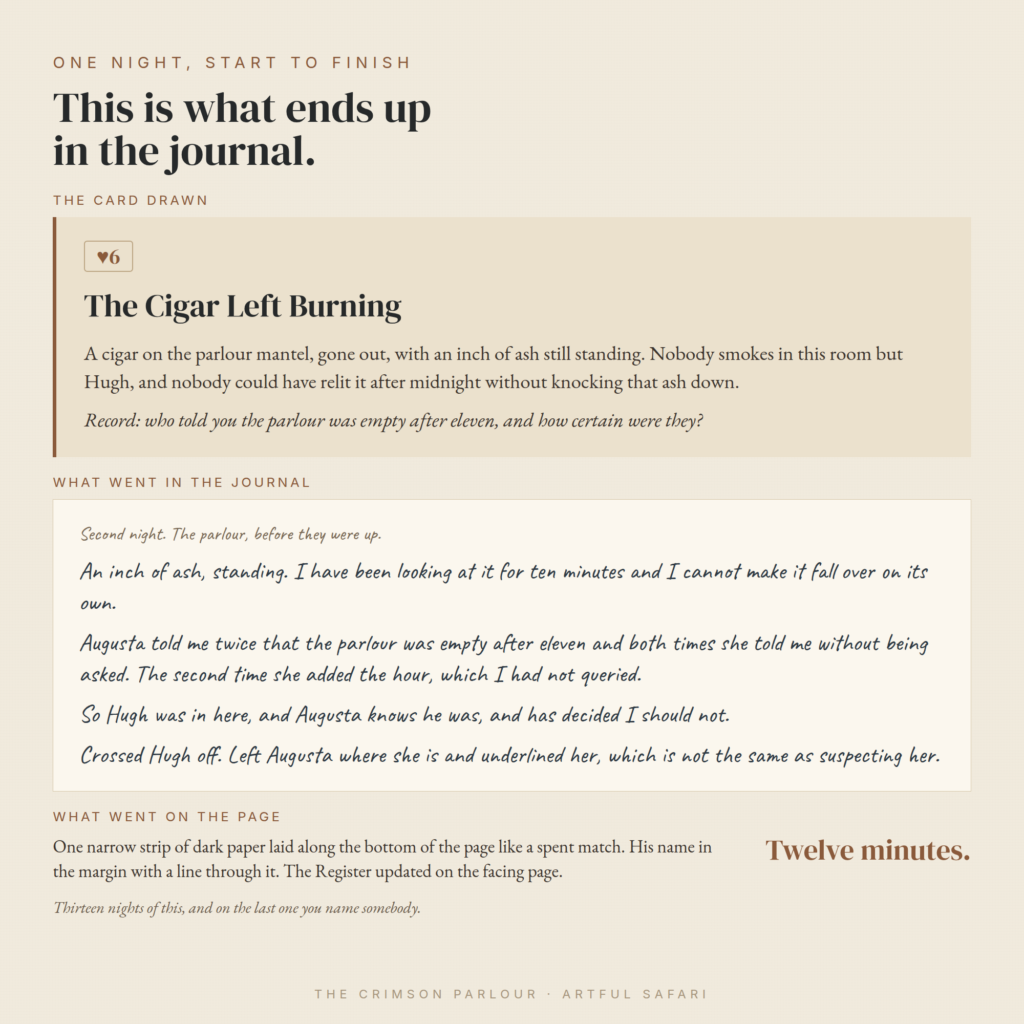
If you would sooner start from papers that already have an atmosphere, Helene designs the sets in The Crimson Parlour, a Victorian mystery kit with its own thirteen-night game inside it. A different setting to the Notorious solo RPG, and the same idea underneath: a game that leaves a book behind when it is over.