
A glue book is a book you fill by gluing paper into it, and it has nothing to do with the glue used to mend a book’s spine. Cuttings, wrapping, tickets, packaging, offcuts from other projects. No layout to plan and no photographs to hunt for, only scissors, a glue stick and a book you already own.
That is the whole craft. It asks less of you than anything else in paper crafting, and it is the thing that finally empties the cupboard you keep meaning to use.
It suits anyone who has bought paper faster than they have used it, which is most of us.
Table of Contents
What is a glue book, and why the search results are confusing
Type the words into a search box and half of what comes back is about adhesive for book repair. Those pages are answering a different question. The craft has simply borrowed a plain name.
You will see it written as one word too. Gluebook and glue book mean the same thing, and crafters use both without anybody minding. If you are following along on YouTube, searching the single-word spelling usually turns up more flip-throughs.
The definition people in the hobby actually use is loose on purpose. A glue book is any book where the pages get covered in glued-down paper, and the rules stop there. Nothing has to line up, and no page has to be finished before you turn over.
Glue book vs junk journal vs scrapbook
A scrapbook is built around photographs and the story attached to them. Pages get planned, titled and dated, and the album ends up being for other people to look at.
A junk journal is a book you make first and fill afterwards, usually with pockets, tuck spots and things you write. If that is the part you want, the beginner’s guide to junk journals walks through building one, and scrapbooking vs junk journalling sets the two side by side.
A glue book skips both jobs. You are not making the book and you are not curating memories, you are covering pages with paper you like the look of. It sits closest to collage, and its older cousin is the commonplace book, where people pasted and copied whatever was worth keeping.
What goes in a glue book
Anything flat that will take glue. Magazine pages, seed packets, tea wrappers, ticket stubs, envelope linings, stamps, packaging, till receipts, the good bits of a birthday card.
Offcuts count double. Every crafter has a bag of trimmed edges and misprints too nice to bin, and a glue book is where those stop being waste.
Here is a librarian walking through the making of one from start to finish, which is worth watching if you want to see the pace of it before you begin:
5 easy ways to start a glue book
Each of these works with a book you already have and paper already in the house. Pick one and ignore the other four until it stops being interesting.
1. Empty one drawer into it
Choose a single drawer or one bag of scraps and give yourself the rule that nothing else may be used. Glue pieces down until that container is empty, overlapping wherever two things want the same space.
The limit is what makes it work. A whole craft room is paralysing and one drawer is a decision already made for you.
2. Make the whole glue book one colour
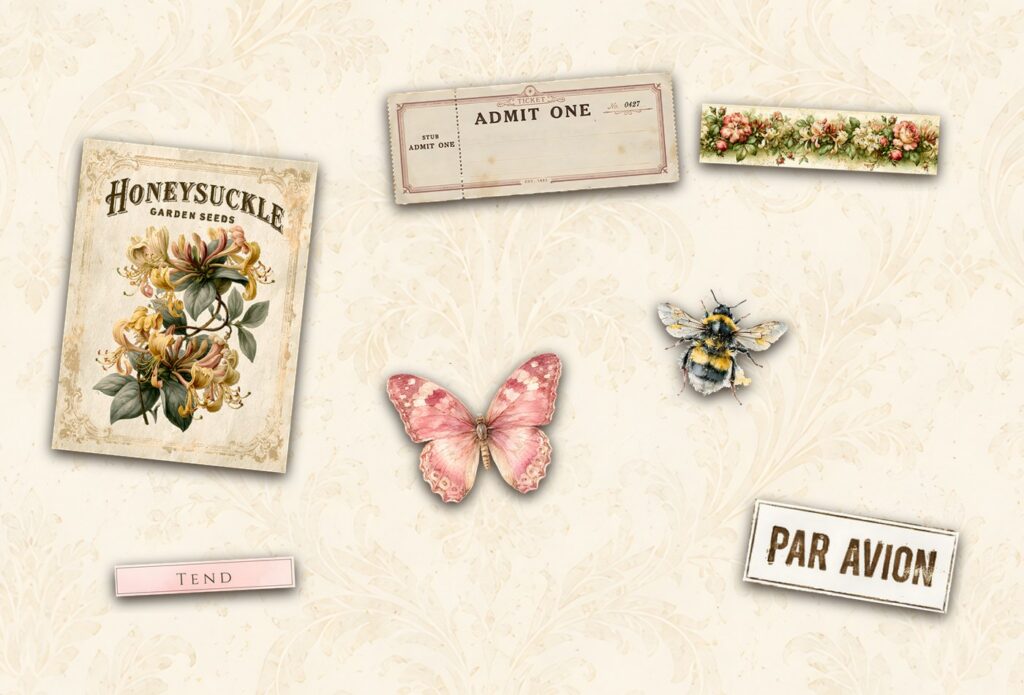
Pick a colour and only glue in things that carry it. Pink wrapping, a pink label, the pink corner of a magazine advert, a scrap of gingham.
Colour does the composing for you, so a page of unrelated rubbish still reads as deliberate. A single-colour gluebook can run for months, which suits anyone who would rather keep a collection going than finish a project.
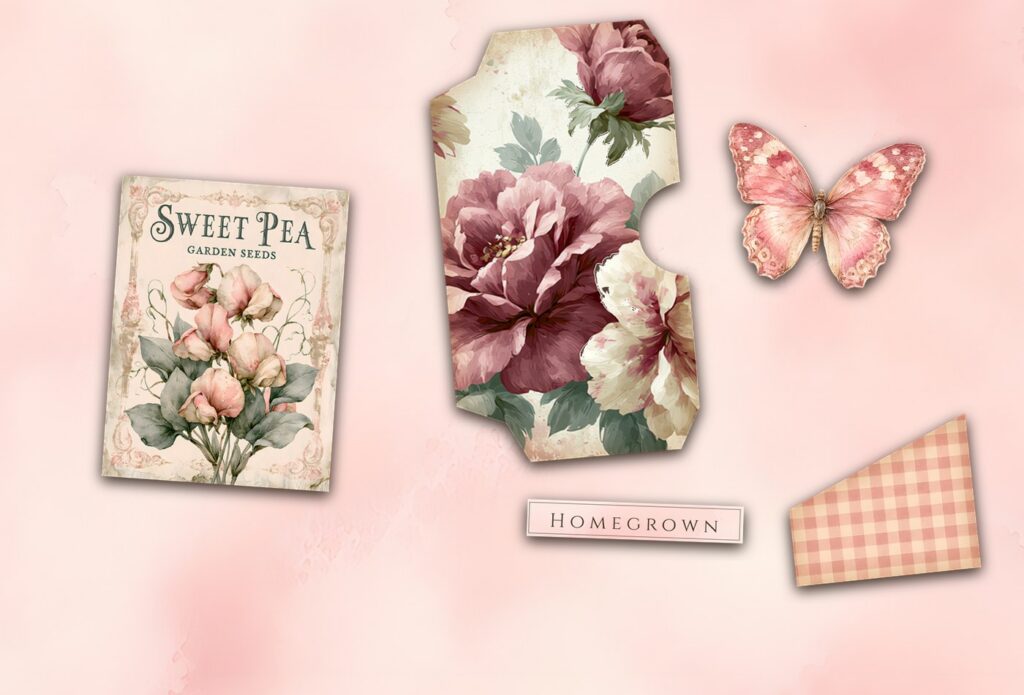
Ceri Griffiths spent over a year on a single-colour book and filmed the finished flip-through, which shows what the approach looks like at the end:
3. Tear the edges instead of cutting them
Tear every piece by hand and let the fibres show. A torn edge sinks into the page underneath it, where a scissor cut sits on top and announces itself.
This is the fastest way to make a glue book look like the ones you have been admiring. It also removes the last excuse about not cutting straight.
4. Give some pages a pocket or a tag
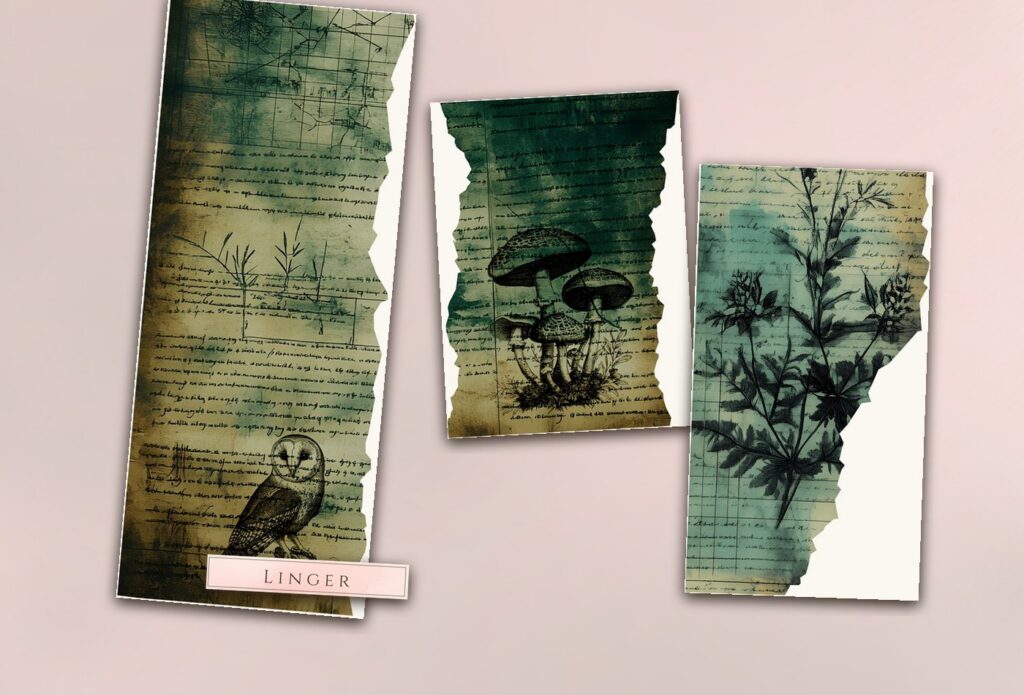
Glue three sides of a scrap down and leave the top open, and you have a pocket. Slip a tag inside with a note on it, or a cutting you have not decided about yet.
Pockets are the point where a glue book starts holding things rather than only showing them. They are also useful when you love a piece but cannot commit it to a page.
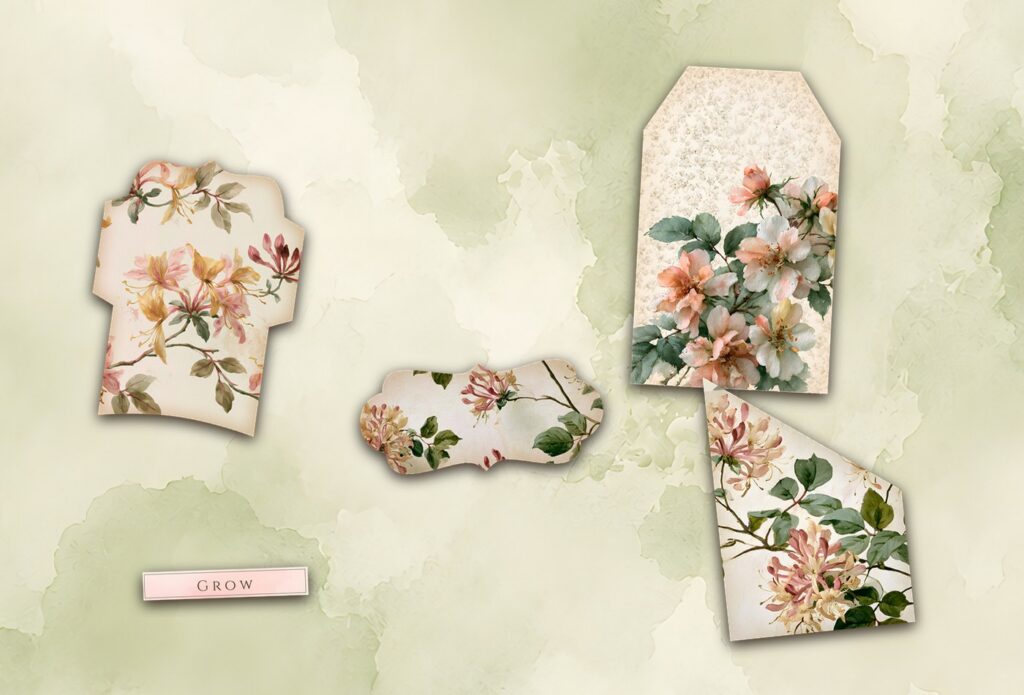
5. Add words you did not write
Cut headlines, price tags, instructions and stray sentences out of whatever is going in the recycling, and glue them in as they are. A found phrase gives a page a subject without asking you to journal.
If you would rather print your own strips and labels, the settings that stop them coming out murky are in printing junk journal papers at home.
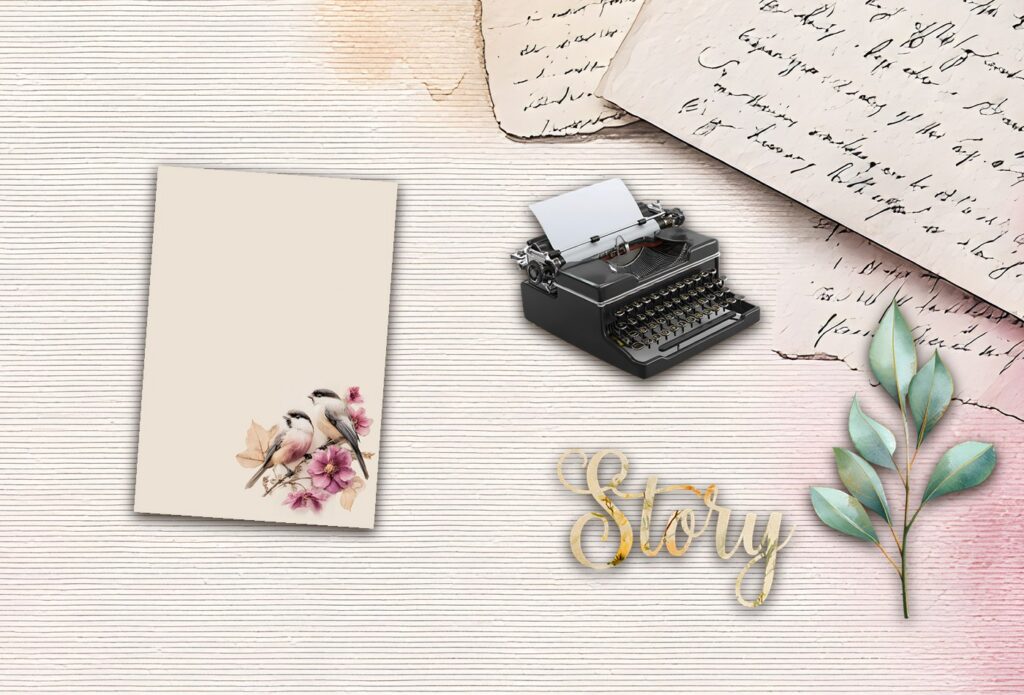
Where a glue book tends to lead
A lot of people start a glue book to use things up and find out they like keeping a book. The gluing stops being the point somewhere around page twenty, and the wanting-it-to-add-up-to-something starts.
That is usually when a solo journaling game turns up. It is a small book of prompts and tables you play by yourself in a journal: you draw a card or roll a die, read what the book says has happened, and write and stick down your answer on the page. The craft side of YouTube calls it an RPJ, a name coined by the creator Journals4breakfast, and it has moved through junk journalling circles fast this year.
The reason it fits a glue book habit so neatly is that it hands you a subject each night without handing you homework. Your pages keep being made of glued paper, and now there is a story running underneath them.
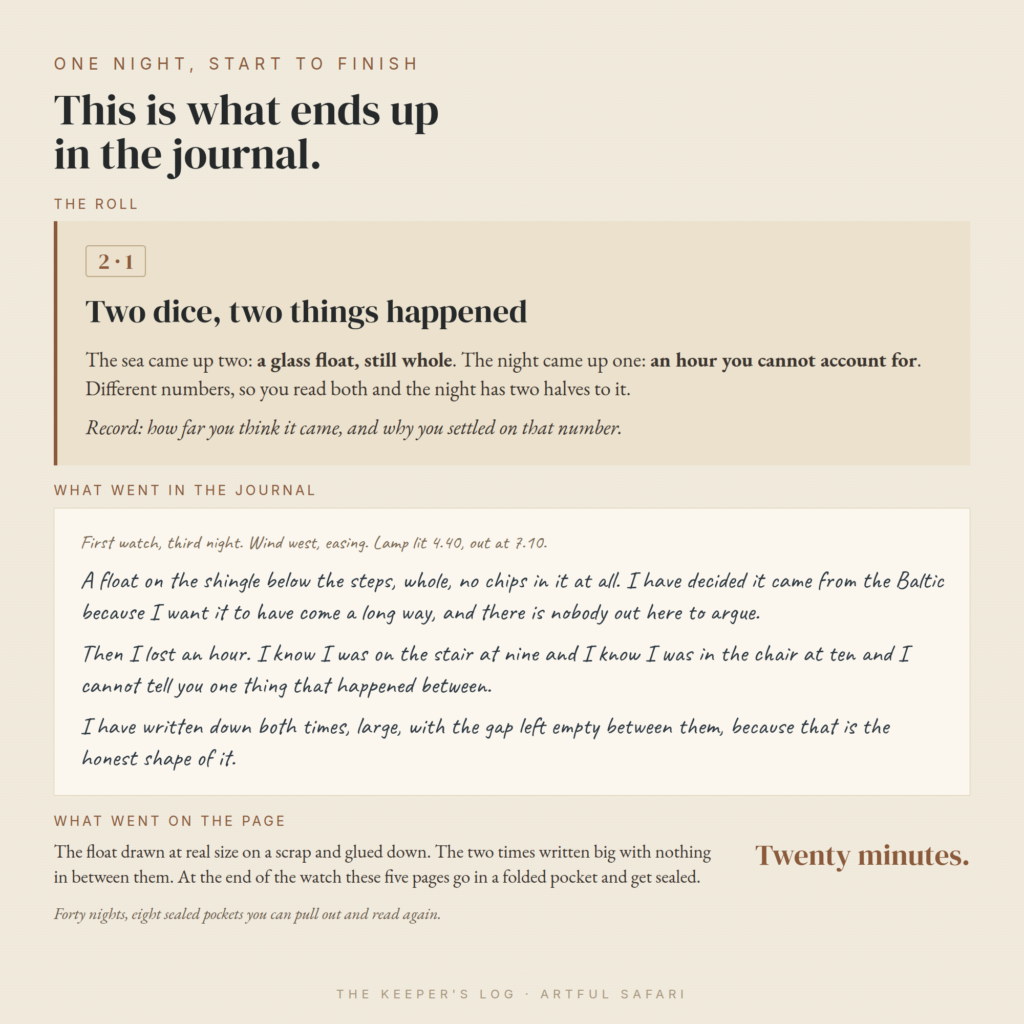
If that sounds like the next thing rather than a different hobby, your first seven nights of a solo journaling game takes it a night at a time.
Frequently asked questions
What is the point of a glue book?
The point is to use paper you already own without needing a reason. A glue book has no theme to serve, no photographs to source and nobody to show it to, so it removes every part of paper crafting that makes people stall. It becomes the book you reach for when you want to make something and have no idea what.
Do I need special glue?
No. An ordinary glue stick handles most of what goes in a glue book, and a bottle of white craft glue covers anything heavy or slippery. Avoid anything very wet on thin paper, since it wrinkles as it dries. This is a craft people run for years on supermarket supplies.
What book should I use?
Whatever is already in the house. A composition notebook, an old hardback, a diary you abandoned in February, a sketchbook that intimidated you. Thin pages cockle as the glue dries and that is normal, so glue two together when you want a sturdier surface.
How is a glue book different from a junk journal?
A junk journal is usually built by hand before it is filled, with signatures, pockets and covers made from salvaged materials. A glue book starts with a book that already exists and only concerns itself with what goes on the pages. Plenty of people keep both, and the two habits feed each other.
The first page feels daunting. Where do I actually start?
Cover the whole of one page with a single large piece of paper before you do anything clever. The blank page is what stops people, and it disappears in one move. Once there is a background down, adding a ticket or a torn strip on top stops feeling like a decision.
Can I use printed papers instead of magazine cuttings?
Yes. Cuttings run out faster than you expect, and printed papers refill the drawer with the backgrounds and the ephemera you actually want. That helps most with a one-colour glue book, where finding enough of one shade is the hard part.
Starting tonight
Pick the book, pick one drawer and cover a page. A glue book has no standard to fall short of, so the first page and the hundredth are equally correct.
And if the pages start wanting a story to hang on, the Folklore Forest kit pairs woodland papers and ephemera with a 52-night journaling game, so the paper and the prompt arrive together.