
A nature journal is the easiest kind of journal to start and the hardest to keep filling. The first page goes in on a good day with a leaf and a few notes. By the third week the pages feel thin, and the book sits on a shelf.
This guide is for the second problem. Here are six ways to fill a nature journal page so it holds something real, whether you keep it on paper or in a digital scrapbook app.
For papers and elements made for nature pages, see the Small Wild Things collection.
Table of Contents
1. Start the nature journal page with a surface, not a subject
Most people open a nature journal and look for something to record. Try the opposite. Choose the surface first, and let it tell you what belongs on it.
A cream page with pressed fern fronds near the edges leaves the middle open for one photo and a few lines. A plain white page asks for everything, which is why it stays blank. A textured background does half the work before you add a word.
2. Keep one specimen per page
The pages that get finished are the ones with a single subject. One oak leaf, one feather, one acorn cup from the walk home. A crowded page is a page you will not want to open again.
If you collect more than one thing on a walk, give each its own page. A nature journal with twenty slim pages reads better than one with five overloaded ones.
Pairs work too, if they belong together. A feather and the leaf it landed on make one page, because the second thing explains the first.
3. Write the place, the weather and the date first
Before you describe the specimen, put down where you were and what the sky was doing. These three small facts take a few words and make the page useful later. They are also the easiest way to start when you have nothing to say yet.
Plant collectors work this way too. A herbarium sheet is only useful if it records where and when the plant was found, and a nature journal page works the same way.
Add one sensory detail if you can. The smell of wet bracken or the sound of rooks in the oak is the line you will be glad of in a year.
4. Learn two or three names, then stop
You do not need to identify everything. Pick the fern you keep passing and learn what it is called. The Royal Horticultural Society keeps a useful page on garden ferns if you want a place to begin.
Write the name small beside the specimen. A page with a name on it is a page you can find again, and each name you learn makes the next walk more specific.
5. Mix real and digital pieces
A pressed leaf cannot go flat in a phone app, and a photograph cannot be glued into a field notebook without printing it. Digital pages let you do both on one spread. Photograph the real leaf, set it on a botanical background, and add your notes in a text box.
This is also how to avoid damaging anything fragile. The leaf goes back in its envelope while the page you made of it stays in the album. If you want more on the digital side, our guide to building a woodland junk journal covers layering in more detail.
Layout matters less than people think. Put the specimen where your eye lands first, keep the writing in one block, and leave a margin. A page that breathes looks finished even when it is simple.
6. Let colour hold the pages together
A nature journal looks like one book when the pages share a palette. Cream, oatmeal and sand with a little sage and dove blue will go with nearly everything you pick up outdoors. Bright backgrounds fight with the muted colours of dried leaves and feathers.
Our post on woodland and botanical junk journal ideas has more on keeping an earthy palette consistent from page to page.
What to carry so the nature journal page gets finished
Keep the kit small enough that you never leave it at home. A phone for the photograph, a small envelope for anything fragile, and a note app open for the place and the date. That is a complete field kit for a digital nature journal.
Take the photograph before you pick anything up. Shoot the specimen where it grows, then one close picture of the detail you liked. Two photographs are plenty, and choosing between them later is part of the fun.
When you get home, do the page the same day. The weather, the name and the sensory line fade quickly. A page made while the walk is still fresh takes less effort and says more.
Putting it together: a nature journal page from one paper
Here is how the six ideas come together on a single page. I will use the Small Wild Things botanical papers as the example, because they were designed for exactly this job.
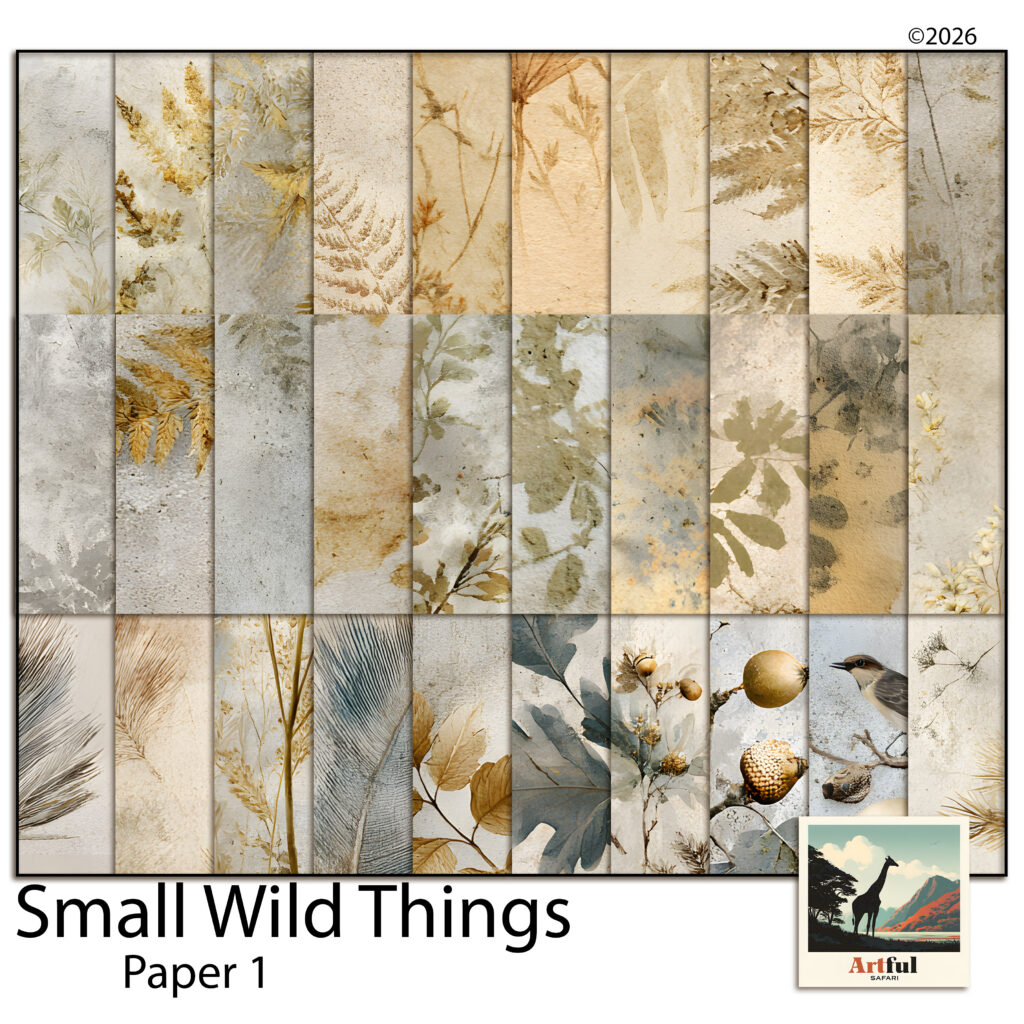
The Small Wild Things botanical background papers are a set of 30 full 12 x 12 in pages of pressed ferns, grasses, feathers, oak leaves and pinecones. The detail sits toward the edges and the centre stays open. That open centre is where your photo and your three lines of notes go.
Pick the paper with oak leaves and acorns for an autumn walk. Choose a soft fern paper when the weather was grey and you only brought home one frond. Drop your photograph in the middle, add the place, the weather and the date, then write the one name you learned.
Because the papers share a palette, thirty pages in a row will still look like one nature journal. That is the quiet advantage of working from a set rather than choosing a new background every time.
Several of the papers in the set carry a small bird or a cluster of mushrooms in one corner. Those suit a page about a woodland edge, where the creature is part of the story and the specimen is not the only point of interest.
Others are almost bare, with only soft washes of colour. Use those under a page that already has a lot going on, such as a spread with three photographs and a long entry.
Keep the next nature journal page small
You do not need to fill a page every day. A nature journal built from short, finished pages beats a long one full of good intentions.
Season by season, the pages add up to a record of one place: the first fern unrolling, the dry grasses in late summer, the oak leaves going to oatmeal and ochre. That record is the reason to keep a nature journal at all, and it only exists if the pages are easy enough to finish.
Next time you are outside, pick up one thing. Give it a page, a place, a date and a name, and close the book.