
A botanical junk journal is a handmade or digital journal built around forest and plant motifs: stag and fern silhouettes, mossy greens, pressed leaves and aged paper that looks like it spent a winter in a cabin drawer. You make one by picking a forest-folklore kit, layering a few botanical papers, adding one or two animal elements per spread, and leaving room to write.
The trick is restraint. A woodland theme reads best when the paper does the heavy lifting and the clipart stays sparse.
Table of Contents
What makes a botanical junk journal feel like the woods?
Three things carry the whole look: the paper texture, a tight green palette, and a handful of forest motifs used sparingly. Get those right and even a beginner spread reads as woodland.
Texture matters most. Aged, foxed, slightly mottled papers say “old field notebook” far better than a clean white background ever will. Layer a torn-edge paper over a plain mossy one and you already have depth.
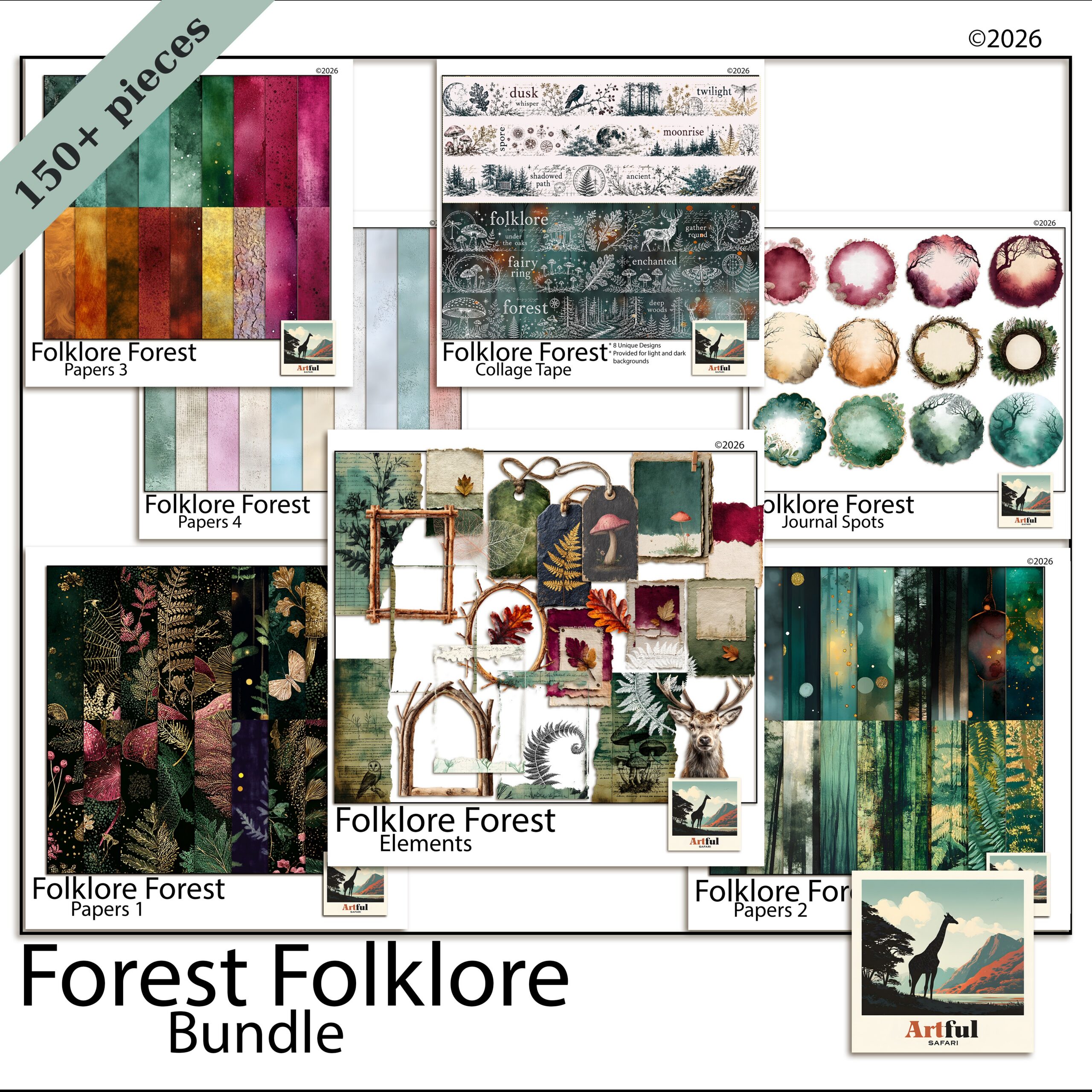
The Folklore Forest Botanical Junk Journal Bundle gives you the papers, fern overlays and animal elements in one place, so you are not hunting for matching greens across five different sets.
The emerald and moss palette that holds it together
Woodland lives in a narrow band of greens with warm neutrals underneath. Pick two greens and one neutral, then repeat them across every page so the botanical junk journal looks like one book and not a scrapbook of offcuts.
- Deep emerald for borders, ribbon and the darkest leaves.
- Soft moss or sage for the main paper fields, where your writing sits.
- Warm kraft or tea-stained cream as the neutral that stops the greens going flat.
A touch of rust or mushroom-brown reads as autumn woodland. A touch of grey-blue tips it toward misty morning forest. Add one accent, not both.
If a spread starts to feel muddy, it is usually too many mid-greens fighting each other. Pull one of them out and let a cream paper carry the space instead. Contrast is what makes the dark leaves and the stag read; an all-green page goes flat fast.
How to age and layer the papers
Layering is what separates a flat single-paper page from one that looks like it has history. Work from the back forward:
- Lay a plain moss or kraft paper as the base.
- Tear or rough the edge of a second, more textured paper and set it slightly off-square on top.
- Add a strip of darker emerald along one edge as a spine or border.
- Drop your photo or journaling block last, so it sits clearly above the texture.
For a more foxed, aged look on printed pages, a light coffee or tea wash over the cream paper deepens it. On digital pages, a low-opacity texture overlay does the same job without the mess.
Stag, fern and pressed-botanical page ideas
Build each spread around a single focal element. A stag, a single fern frond, one pressed flower. Crowd the page with five animals and it turns into a children’s sticker book.
Layouts that work
- Stag title page: one large stag silhouette off-centre, a script title across the antlers, fern sprigs in two corners.
- Pressed-botanical spread: a grid of three or four leaf or flower elements with handwritten Latin names underneath, like an old herbarium sheet.
- Pocket page: a kraft pocket holding tags, with a fern overlay on the pocket front and a stag tag peeking out.
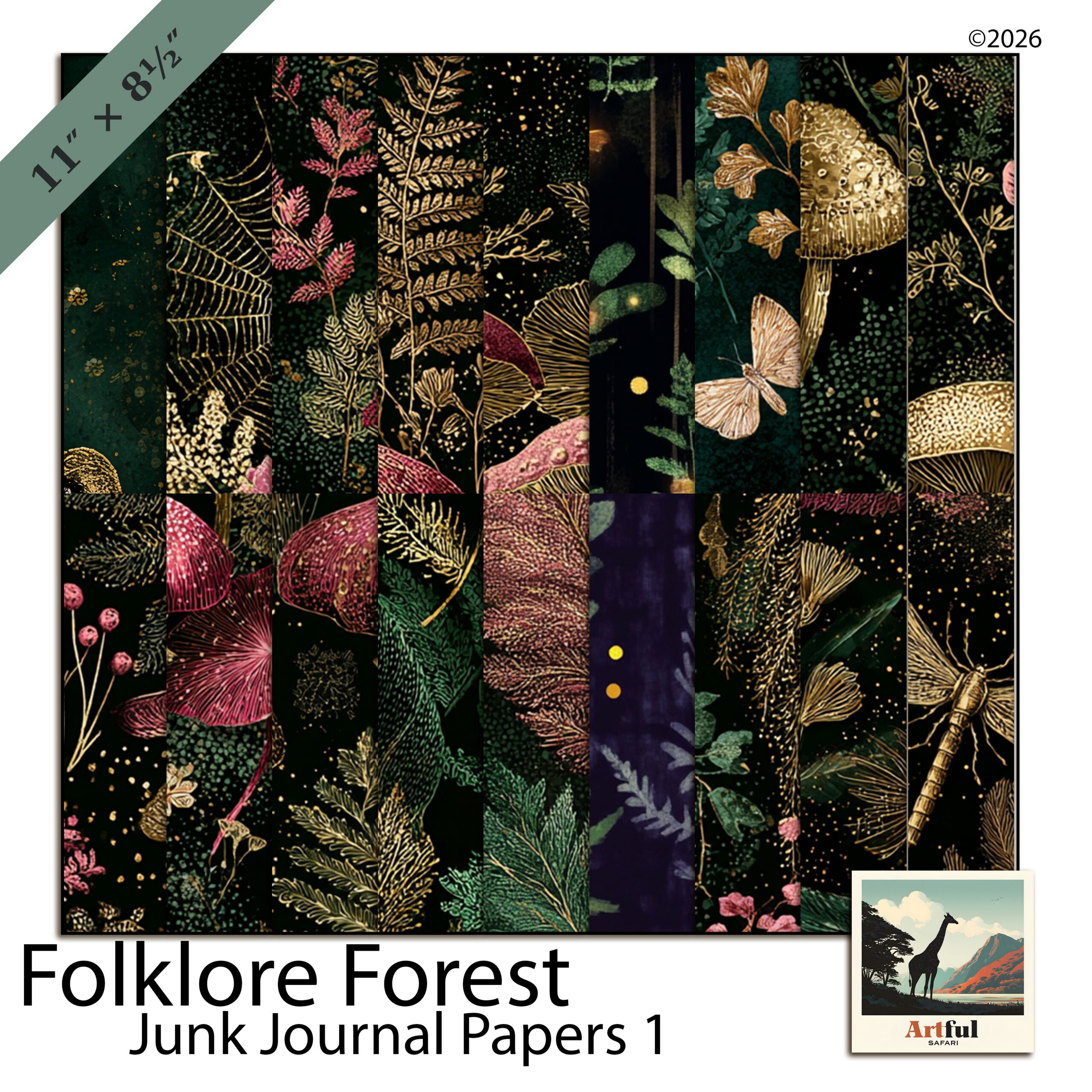
The Botanical Woodland Junk Journal Kit Stag leans into that herbarium feel, so it pairs well for the pressed-botanical pages above.
| Page type | Focal element | Supporting layer |
|---|---|---|
| Title page | Stag silhouette | Fern corners + script title |
| Nature log | Single fern frond | Lined or grid insert for notes |
| Herbarium spread | 3-4 pressed leaves | Handwritten labels |
| Pocket page | Kraft pocket + tag | Moss paper background |
| Quote page | Wreath or branch frame | Emerald border ribbon |
Woodland journaling prompts that fill the blank pages
A botanical junk journal stalls when the pages look good but say nothing. Keep a running list of prompts so you always have something to write.
- A walk you took this week, and what the light was doing.
- Five sounds you would hear standing still in a forest.
- A tree you remember from childhood.
- Something you want to let go of, written and then covered with a leaf.
- A seasonal list: what is fruiting, flowering or fading right now.
If you are still working out the basics of what goes in one of these, my walkthrough on What Is a Junk Journal? covers the structure before you start gluing or layering.
Ephemera, pockets and tags
The bits that make a junk journal feel collected rather than designed are the small inserts: tuck spots, tags, pockets and folded notes. Woodland leans naturally into these because the outdoors gives you so much to slot in.
- Tags shaped like leaves or printed with a single fern, hanging from a ribbon at the page edge.
- Pockets from folded kraft paper, holding pressed-flower cards or a folded walk map.
- Fold-outs for longer journaling, so a page can open into a wider view of a forest scene.
Keep these in the same palette as the rest, or they shout. A tag in an off-tone pink will pull the eye straight off your stag.
Digital or printed: which botanical junk journal suits you?
You can build the whole thing in an app, or print the papers and elements and make a physical book. Junk-journal papers are designed to be printed, so this is the one place where printing is the point.
| If you want… | Go digital | Go printed |
|---|---|---|
| No mess, undo button | Yes | No |
| Real texture and stitching | No | Yes |
| To reuse papers endlessly | Yes | Reprint as needed |
| A book on the shelf | No | Yes |
For printed work, run the papers on a slightly heavier stock, around 120gsm, so ink does not bleed and pages take glue without buckling. For digital, drop the same papers into Procreate or GoodNotes and layer them the same way you would by hand.
Three woodland mistakes that flatten a spread
Most disappointing pages come down to the same handful of habits. Catch these and the rest takes care of itself.
- Too many animals. A stag, an owl, a fox and three birds on one page reads as a cartoon, not a forest. One creature, occasionally two.
- No texture. Clean white space under clipart looks like a presentation slide. Always put a paper down first.
- Title fighting the focal point. If a big stag is the hero, the title goes small and to the side. Two loud elements cancel each other out.
Start your first botanical junk journal with two or three spreads, not twenty. You will work out your own palette and spacing quickly once real photos are in, and a short finished journal beats a long abandoned one.
Key takeaways
- Lead with aged texture and a two-green-plus-neutral palette; that combination is what makes a botanical junk journal read as woodland.
- One focal motif per spread. Stags and ferns work best with space around them.
- Keep a prompt list so finished-looking pages actually hold memories.
- Printed suits texture lovers; digital suits anyone who wants to reuse the same papers forever.
Frequently asked questions
What goes in a botanical junk journal?
Nature notes, walk logs, pressed-style botanical pages, seasonal lists and quotes, layered over forest papers with stag, fern and leaf motifs. Keep one focal element per page and leave room to write.
What colours suit a woodland theme?
Two greens and one warm neutral: deep emerald, soft moss or sage, and a kraft or tea-stained cream. Add a single accent like rust for autumn or grey-blue for misty forest, not both.
Can I make a botanical junk journal digitally?
Yes. Drop the same papers and elements into Procreate, GoodNotes or Canva and layer them as you would by hand. The undo button and reusable papers are the main upsides over a printed book.
Do I print botanical junk journal papers?
You can. Junk-journal papers are made to be printed, ideally on around 120gsm stock so ink does not bleed and pages take glue without buckling.