
The short version: scrapbooking vs junk journaling comes down to intent. Scrapbooking builds tidy, photo-led pages that document a specific event, while junk journaling is looser, keep-everything collage where the photos are optional and the texture is the point.
Both keep memories. One frames a picture, the other collects a feeling.
If junk journaling sounds like your thing, browse our printable junk journal kits.
Table of Contents
Scrapbooking vs junk journaling: the core difference
Both hobbies keep memories on a page, so people mix them up. The split is about what each one is built around.
Scrapbooking is photo-led. You start with pictures of a real event and design tidy pages that hold them. Junk journaling is material-led. You start with paper, ephemera and texture, and the photos are optional. One documents, the other collects.
| Scrapbooking | Junk journaling | |
|---|---|---|
| Built around | Photos and events | Paper, texture, ephemera |
| Look | Clean, designed, balanced | Layered, busy, collaged |
| Photos | The main event | Optional extras |
| Structure | Planned pages, a theme per event | Free-form, fill as you go |
| Best for | Trips, weddings, baby years | Daily life, journaling, mixed media |
What is scrapbooking, really?
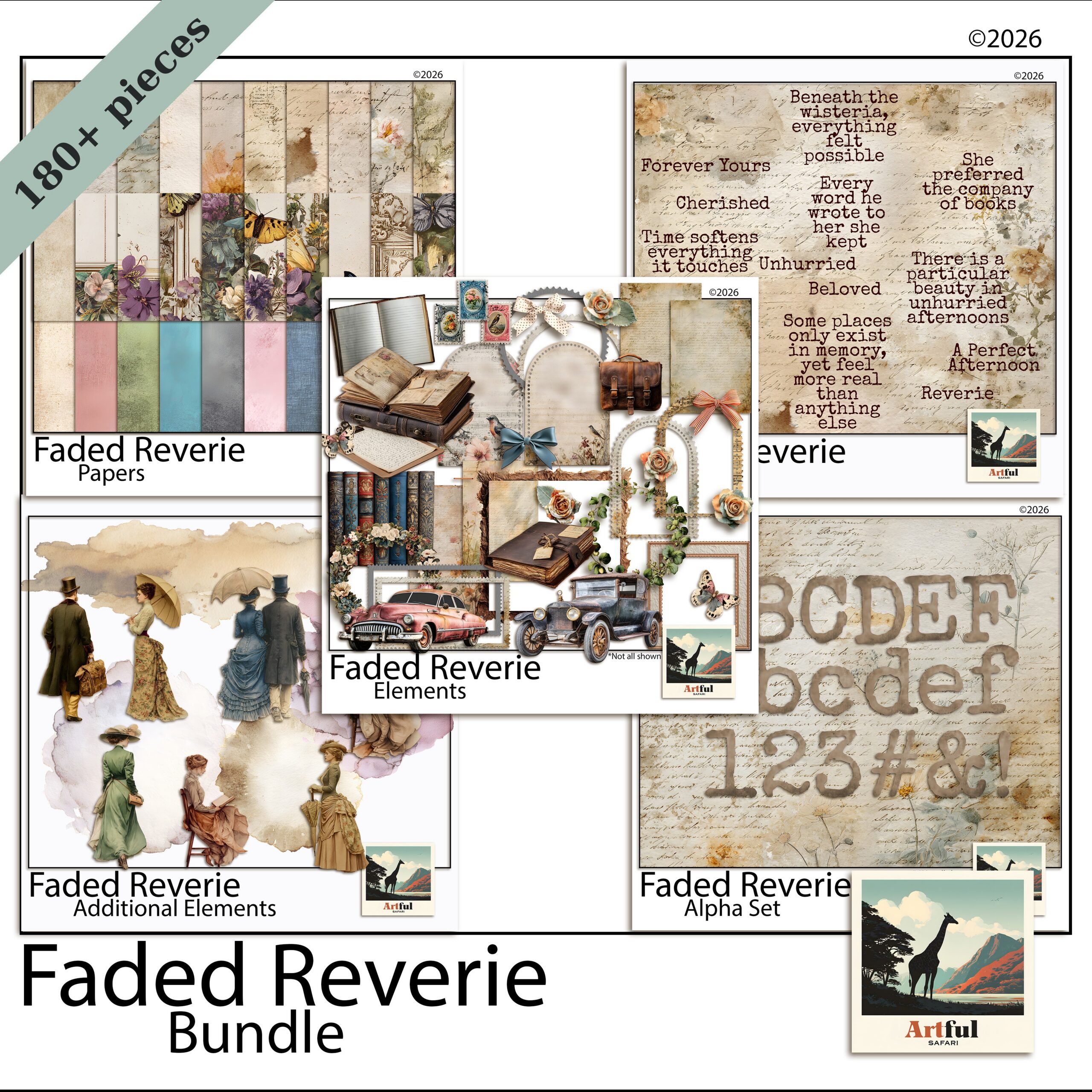
Scrapbooking is the older, more structured of the two. You pick photos from one occasion, choose a coordinated kit of papers and elements, and arrange a page so the eye lands on the picture first.
The craft sits in the design choices: a focal photo, a few supporting shots, a title, a date, a line or two of journaling. White space matters. A good scrapbook page reads at a glance years later.
Where digital scrapbooking fits
Digital scrapbooking does the same job in Procreate, Photoshop or Canva. You drop photos onto a 12×12 canvas, layer papers and clipart, and export. Same design rules, no glue and no storage boxes.
What is junk journaling?
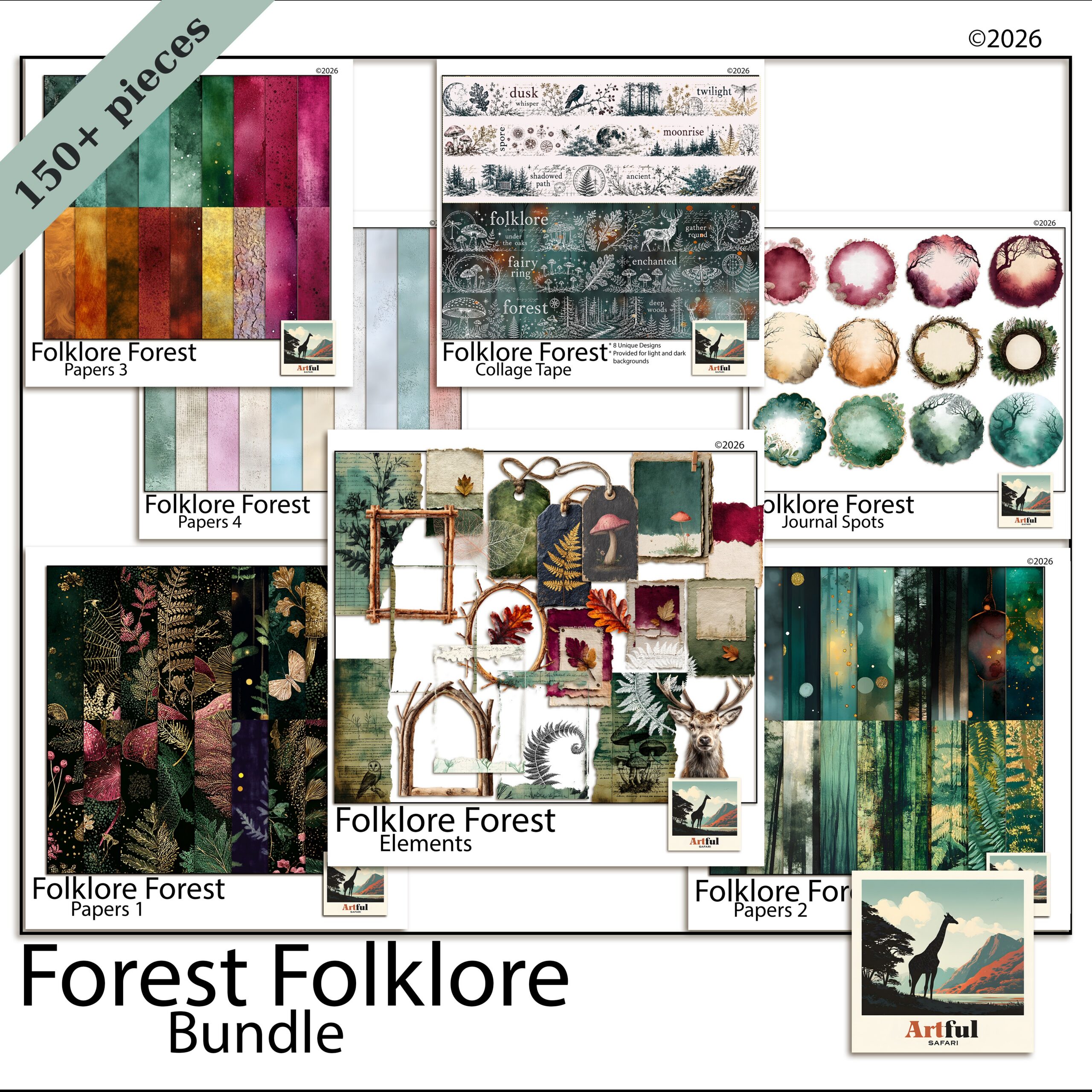
Junk journaling is bookmaking by collage. You build a book (or a digital book) from layered papers, tags, pockets, tickets, bits of old text and botanical cut-outs. The page is the project, not a frame for a photo.
There is no rule that says a junk journal has to be neat. Pages overlap, edges peek out, and a finished spread looks like a stack of lovely things pressed flat. It suits people who like the making more than the planning.
Digital vs physical junk journals
A physical junk journal is a real book you glue and stitch. A digital one is the same aesthetic built in layers on a tablet, using junk journal papers and ephemera PNGs. If you are new to the whole idea, my What Is a Junk Journal? guide walks through it from scratch.
Supplies and time: how they actually compare
The kit lists overlap, but the way you use them differs.
- Scrapbooking leans on coordinated paper packs, photo frames and alphabets for titles. You use fewer pieces per page, placed deliberately.
- Junk journaling wants variety: aged papers, ephemera, tags, masks, stamps. You use more pieces per page, layered loosely.
Time-wise, a single scrapbook page can take an hour because every element is a decision. A junk journal spread can come together faster because the layered, imperfect look forgives a lot. It can also become a rabbit hole if you love fussing with texture.
What about cost and longevity?
Cost splits the same way the supplies do. Scrapbooking, done physically, leans on fresh coordinated kits and acid-free papers chosen to last decades next to photos. Junk journaling reuses scraps, packaging and offcuts, so it can cost almost nothing once you have a glue stick.
Going digital flattens both. One bundle prints or layers across dozens of pages, nothing yellows, and a backup means the work never gets lost to a spilled cup of tea. If you are weighing the formats more broadly, this sits alongside the wider digital-versus-physical question every memory keeper hits eventually.
Scrapbooking vs junk journaling: which one suits you?
Pick by temperament, not by which looks prettier online.
- You have specific photos to honour (a wedding, a baby, a big trip): scrapbooking. It is built to make pictures the hero.
- You love paper and tactile mess more than planning: junk journaling. The collage is the reward.
- You want a daily creative habit: junk journaling, because you can sit down with no photos and still make a page.
- You want a clean keepsake to hand someone: scrapbooking, because it reads clearly without a tour guide.
Plenty of makers do both. I scrapbook our holidays and junk journal on quiet weekends, and the two feed each other. Skills you learn layering a junk page make your scrapbook backgrounds richer.
The mistakes people make switching between them
Most of the frustration I hear comes from applying one hobby’s habits to the other.
Scrapbookers coming to junk journaling
They try to make every page balanced and tidy, then wonder why it feels stiff. Junk journaling rewards overlap and imperfection. Let edges stick out. Glue something at a slight angle. Leave a torn corner. The looseness is the look, not a failure to plan.
Junk journallers coming to scrapbooking
They layer until the photo disappears under texture. A scrapbook page has a job: show the picture. Pull back the embellishments, give the photo room, and let one or two elements support it rather than ten competing for the eye. If you cannot find the photo in two seconds, the page is too busy.
The fix in both directions is the same. Decide which hobby you are doing before you start the page, and follow that hobby’s rules instead of mixing them mid-spread.
Can you do both digitally with one set of supplies?
Mostly, yes. Digital papers work for either hobby. The difference is in the extras: scrapbooking wants photo frames and title alphabets, junk journaling wants ephemera, tags and masks.
If you are starting digital and want one purchase to cover both, a botanical junk journal bundle gives you the textured side, and a coordinated scrapbook bundle gives you the clean side. Buy for the hobby you will actually do most weeks.
Key takeaways
- Scrapbooking is photo-led and designed; junk journaling is material-led and collaged.
- Both can be digital, with the same papers but different extras (frames vs ephemera).
- Choose scrapbooking for specific events, junk journaling for a daily making habit.
- Doing both is normal, and the skills cross over.
Frequently asked questions
Is junk journaling just messy scrapbooking?
No. Junk journaling is collage bookmaking built around paper and ephemera, with photos optional. Scrapbooking is photo-first and designed to keep pages tidy and readable.
Can you turn a scrapbook into a junk journal?
You can borrow each other’s techniques, but they stay different formats. A scrapbook holds designed photo pages; a junk journal is a built book of layered pages you add to over time.
Which is cheaper to start, scrapbooking or junk journaling?
Digital makes both cheap, since one set of papers covers a lot of pages. Physically, junk journaling can be cheaper because you reuse scraps and packaging instead of buying fresh kits.
Do I need photos for a junk journal?
No. A junk journal can be pure collage, journaling and ephemera with no photos at all, which is part of why people use it as a daily creative habit.