
Journaling quotes get collected far more often than they get used. A line copied into a notes app or saved from a book sits there, and the page it was meant for stays blank. The fix is mostly practical: decide where a quote goes, how big it is and what it sits next to.
This guide covers five ways to put journaling quotes on a digital page so they read as part of the layout. The examples come from nature journal and scrapbook spreads, but the same moves work for any theme.
Table of Contents
Why journaling quotes work best as a small, deliberate line
People have been copying lines they like into notebooks for centuries. The old name for the habit is the commonplace book, a private collection of passages kept for later. A quote on a journal page does the same job: it records what stuck with you that day.
The difference on a page is scale. A quote that fills a third of the page competes with your photos and your own writing. A short line set small, with room around it, lets the page do the talking.
So the first rule for journaling quotes is to keep them shorter than your own words on the same page. Your notes are the main text. The quote is a label or a margin note.
1. Pick journaling quotes that match what is on the page
A quote about noticing small things belongs next to a photo of a snail on a fence post. The same line next to a birthday cake photo reads as filler.
Before you place anything, write down what the page is about in one sentence. Then choose the quote that answers it, or sits slightly to one side of it.
Field notes tend to suit short, observational lines. Phrases like “found along the way” or “just off the trail” work because they describe how the photo was taken. That makes them journaling quotes with a reason to be there.
2. Give each quote its own patch of space
Clutter around a quote makes it harder to read, and it makes the page look as if nobody decided where things go. Leave a margin of plain paper on at least two sides of every stamped or typed line.
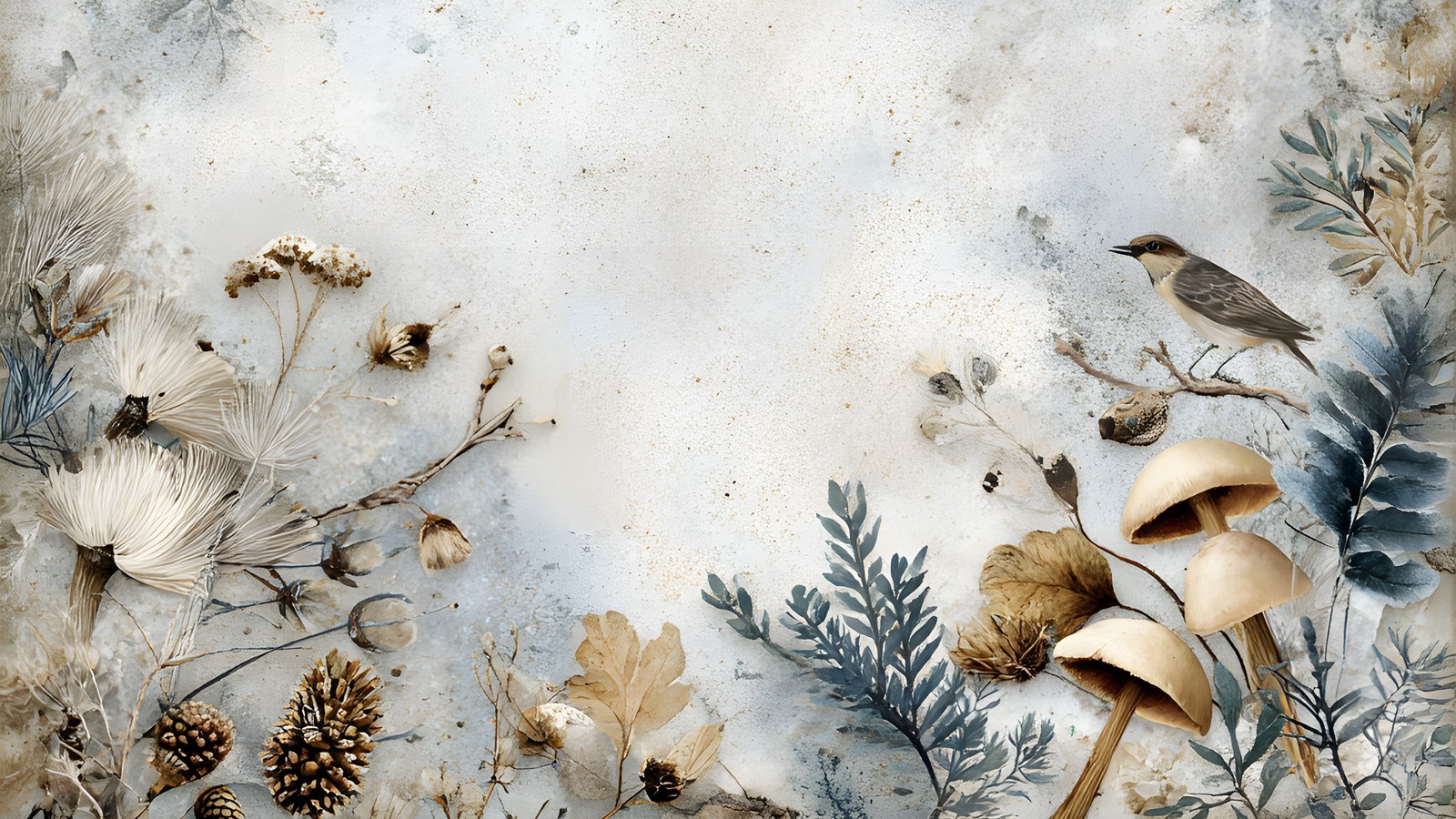
A textured background helps here, because the paper itself adds interest and you do not need to fill every corner. If you are choosing paper for a quote page, the guide to textured background paper covers which surfaces stay quiet behind text.
Keep the line near an edge or a corner rather than dead centre. Off-centre placement looks like a note someone added later, which is the feel most journal pages are after.
3. Match the type to the mood of your journaling quotes
Typeface carries as much meaning as the words. A neat serif says tidy and printed. A worn rubber-stamp look says the line was pressed onto the page by hand, slightly crooked, with the ink uneven.
For nature and field journals, stamped type is a good fit because it looks like a label from a field notebook. The rubber stamp has a long history as a quick way to mark paper, and the cracked, partial ink is part of the appeal.
Pick one style of type for your journaling quotes across a spread and stay with it. Mixing three fonts on two pages makes the quotes look like they came from different books.
4. Layer the quote with one or two real elements
A quote on bare paper can look lonely, but a quote buried under ten stickers is lost. One or two small elements beside it is usually enough.
Try a feather tucked under the corner of the line, or a pressed fern behind it. If you want more ideas for filling a page with natural materials, the nature journal pages post walks through several layouts, and the mushroom journal post shows how misty forest papers carry a quote.
Colour matters too. Brown and charcoal ink sits well on cream, grey and pale blue papers. If your paper is already busy, set the quote on a plain strip so the ink does not disappear into the pattern.
5. Use journaling quotes as page titles and section breaks
The easiest job for a quote is to act as the title. A line like “notes from the field” at the top of a page tells you what the spread is for before you have written anything.
You can also use quotes to split a long journal into sections. A line at the start of each month or each trip gives the book a rhythm, and it makes flicking back through it more pleasant.
For a scrapbook, the same trick works as a caption under a photo. Keep it to a single line and let the picture do the work.
Putting it together with a stamped quote kit
To see all five moves on one page, take a pale textured paper, a single photo and one stamped line. Place the photo off to the left, set the line below it near the margin, and add a feather or fern beside the photo. That is a finished page.
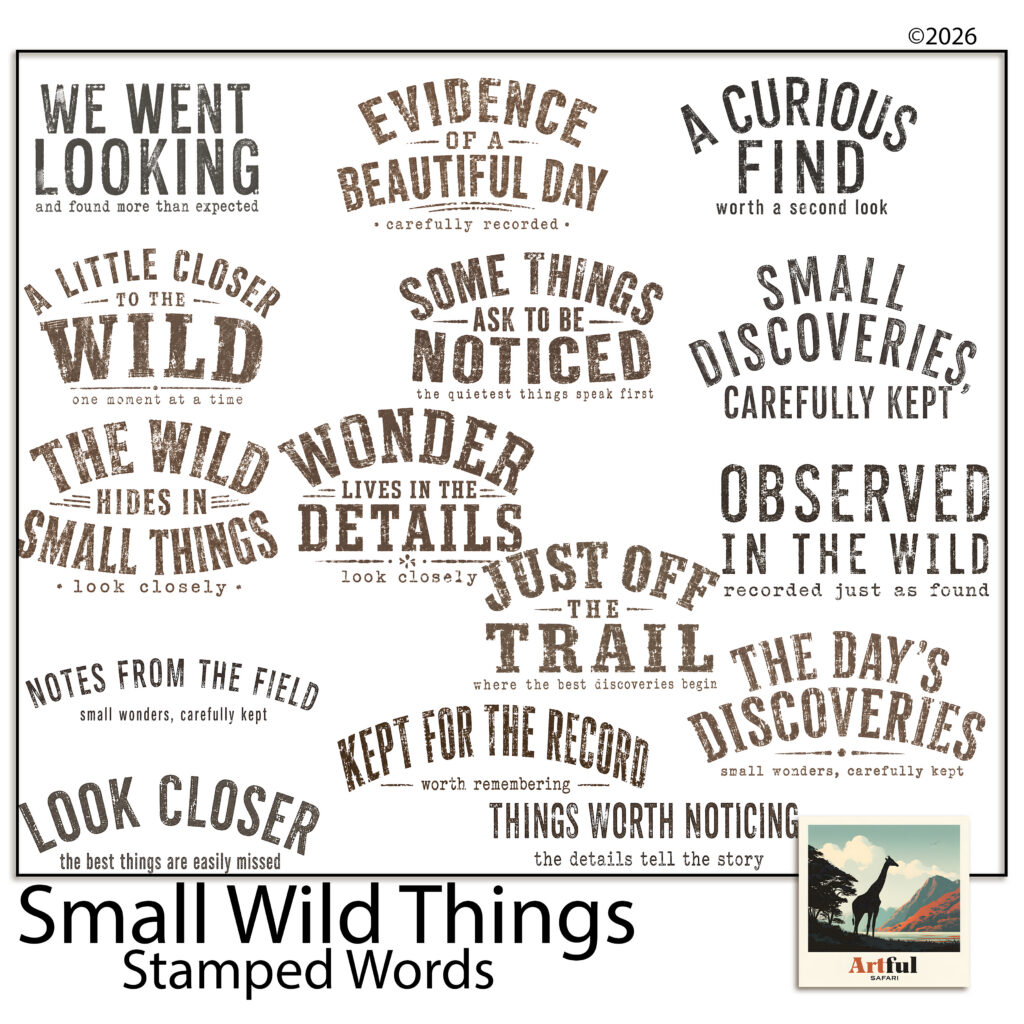
The Small Wild Things Stamped Words kit is built for exactly this. It has 20 stamped phrases as transparent PNGs, each an arched headline in cracked brown or charcoal ink with a smaller line underneath. You drop one onto a page and the ink sits on the paper like a real stamp.
Because the files are transparent, you can resize a phrase to suit the page or tuck it behind a photo edge. That flexibility makes the journaling quotes easy to reuse across a whole book without any two pages looking the same.
Common mistakes with journaling quotes
Most problems come down to size and quantity. The first is going too large, so the quote overpowers the photo. The second is using a quote on every page until none of them feel special.
Another is picking a line only because it sounds good. If you cannot say why it belongs on that page, leave it for a different one.
The last is forgetting to credit. If a line comes from a book or a person, note the name in small type underneath, which also helps you find the source later.
A simple way to start
Choose one page you have already half made. Add a single short line from your collection of journaling quotes, set it small, and leave space around it.
If it feels right, repeat on the next page. If it feels crowded, make it smaller or move it nearer the edge.
Most journals only need a handful of journaling quotes spread across the book. The rest of the work is your photos, your notes and the things you noticed on the way.