
What is a junk journal? It’s a handmade book bound from salvaged and mixed papers, old book pages, envelopes, maps, tags and patterned scraps, that you fill with writing, photos, lists and small keepsakes.
There are no neat-grid rules. You reuse the bits most people throw out and build something layered and worth keeping, which is why it’s an easy craft to start with whatever you already have on the desk.
When you’re ready to make one, our printable junk journal kits give you matching papers to start with, and many include ephemera too.
Table of Contents
What is a junk journal, and why do people make one?
A junk journal is a bound book made from odds and ends rather than blank store-bought pages. The junk is the point: ticket stubs, brown paper bags, sheet music, fabric offcuts, packaging, anything with a bit of texture or history gets a home on the page.
People keep them for a few reasons:
- To hold memories from a trip, a year or a season without the pressure of a tidy photo album.
- To use up paper scraps and pretty offcuts that feel too good to bin.
- To have somewhere to write and stick things that isn’t a fresh, intimidating notebook.
If a blank page makes you freeze, a junk journal helps. The page starts busy, so you’re adding to something instead of staring at white space. I find that one detail is what gets most people over the first-page hump.
Junk journal vs scrapbook vs planner: what’s the difference?
They overlap, which is where the confusion comes from. The quick split is about purpose and how much structure each one wants.
| Format | Mainly for | How structured | Typical pages |
|---|---|---|---|
| Junk journal | Free mixed-media keeping and writing | Loose, no rules | Layered papers, pockets, tuck-spots, journaling |
| Scrapbook | Showing off photos around a theme | Planned layouts | Photo, paper, title, journaling block |
| Planner | Organising time and tasks | Dated and gridded | Calendars, lists, habit trackers |
A scrapbook page usually has one or two hero photos. A junk journal page might have no photo at all, just layered paper, a pocket and a few lines of writing. If you love the layering but rarely print photos, that style probably suits you better.
Digital vs physical: which kind should you make?
A physical journal you stitch, fold and glue by hand. A digital one you build on a tablet or computer in apps like Procreate, Photoshop, GoodNotes or Canva, dropping papers and elements onto layers and rearranging until it sits right.
- Physical: real texture, you can tuck in a real ticket, but it takes space, supplies and a bit of mess.
- Digital: nothing to store, undo fixes every mistake, and one set of papers makes endless pages. No glue drying time.
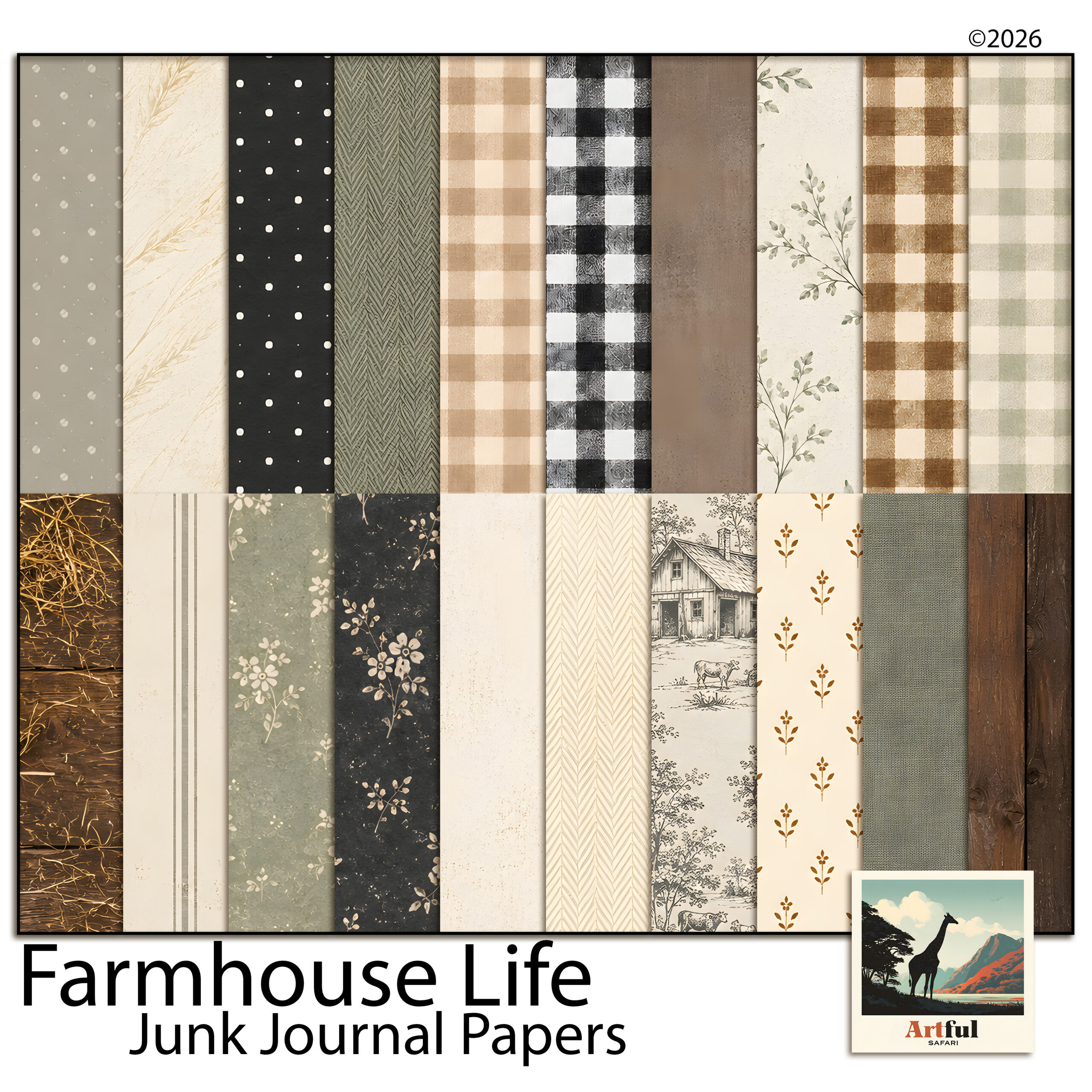
The two aren’t rivals. These papers are the one digital download you genuinely can print: many makers buy a digital set, print the sheets at home on a heavier paper, then cut and bind a real book. The Farmhouse Life Junk Journal Papers work that way, designed to sit at A4 or Letter so a home printer can handle them.
What actually goes inside a junk journal?
Most pages are built in layers, bottom to top:
- A base paper for the whole page, often an aged or patterned sheet.
- Pockets and tuck-spots made from folded paper or an envelope, to hold loose bits.
- Ephemera, the small printed extras: tags, labels, tickets, stamps, journaling cards.
- Your own bits, the writing, a photo, a pressed flower, a note to your future self.
There’s no quota. One page might be a single sheet with a line of writing. The next might have four tucked cards and a fold-out. That swing is normal and part of the look.
How do you start a junk journal this week?
Keep the first one small so you actually finish it.
- Pick a theme you care about, a holiday, a child’s year, your garden, so the pages have a reason to exist.
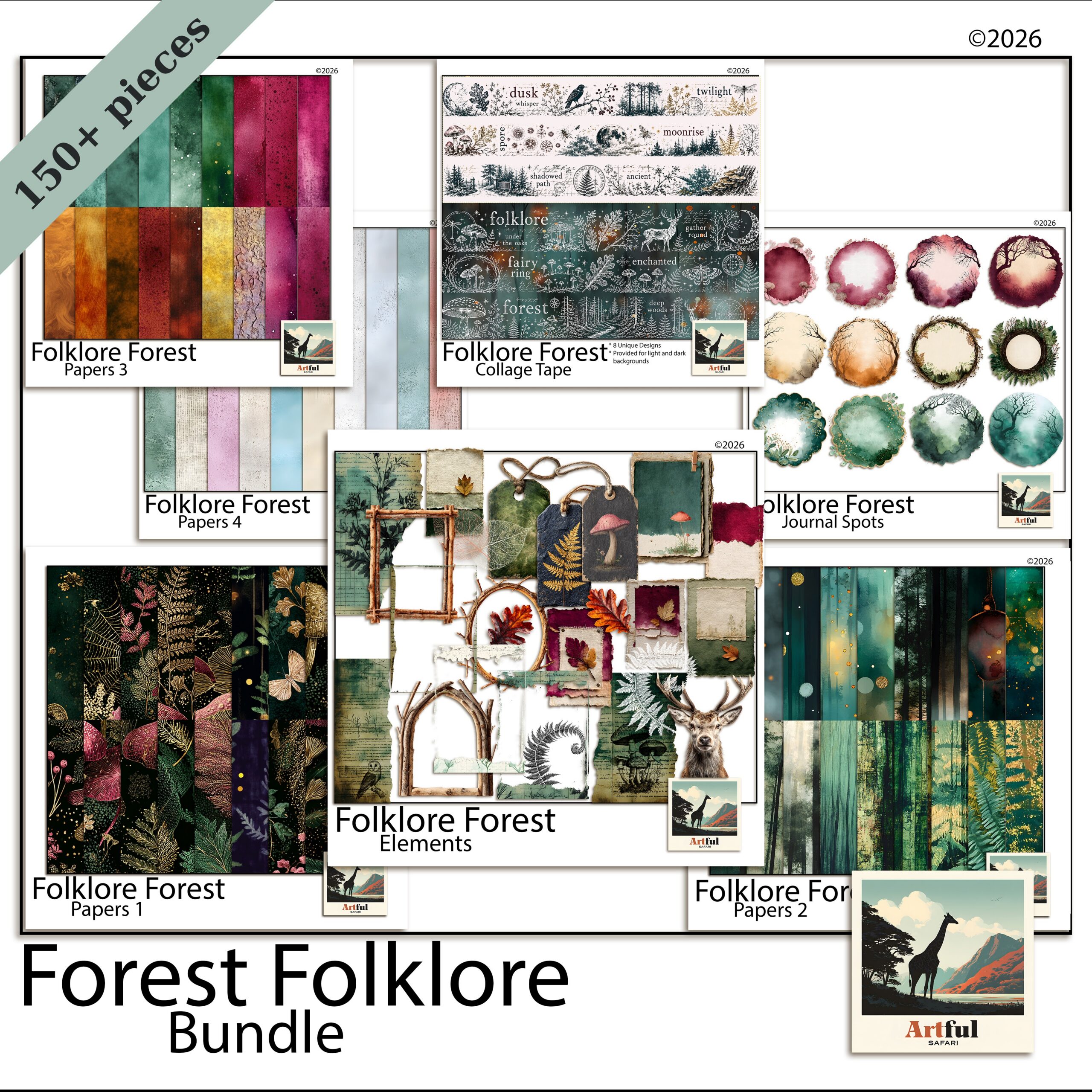
- Gather a base set of papers. A themed bundle like the Folklore Forest Botanical Junk Journal Bundle gives you matched papers, ephemera and elements without hunting for pieces that go together.
- Decide digital or physical. On a tablet, start a new page and drop a base paper on the bottom layer. Building a real book? Fold five or six sheets in half and stitch the spine.
- Fill one page, not the book. Base paper, one pocket, one card, a couple of lines of writing. Done.
- Come back tomorrow and do the next page. The habit matters more than any single spread.
Once you’ve made a page or two by hand, building one on a tablet is a small leap. My How to Make a Digital Junk Journal guide walks through it in six steps.
What mistakes do beginners make?
Almost everyone hits the same few snags on the first book. None of them are serious, but knowing them up front saves a lot of frustration.
- Trying to fill every page perfectly before moving on. The book grows over weeks. Leave half-finished pages and come back to them.
- Buying supplies instead of making pages. It’s easy to collect papers and ephemera for months and never bind a single book. One matched set is enough to start.
- Over-gluing on paper, over-layering on a tablet. A page can breathe. Some of the best spreads are a single sheet with one tucked card.
- Worrying it isn’t good enough to keep. The point is the keeping, not a gallery. Wonky edges and crossings-out are part of the look.
The makers who keep at it are the ones who finished a small, messy first journal rather than planning a perfect one. Done beats neat every time here.
Is a junk journal a good first paper craft?
It’s one of the friendliest crafts to start, for a reason worth spelling out: there’s no blank-page fear and almost no wrong move. A scrapbook page can feel like it needs the right photo and a tidy layout. A junk journal asks for none of that.
It also costs very little to try. A printable paper set, a printer, scissors and glue will get a physical book going. On a tablet, one app and one digital paper set is the whole kit. You can decide whether you love it before spending more.
And it scales with you. The first book might be five rough pages about one weekend. A year later you might be stitching signatures, adding pockets and fold-outs, and keeping a journal per season. The craft stretches as far as you want to take it, which is rare for something this easy to begin.
If you’re still deciding between a junk journal and a more photo-led project, think about what you actually want to keep. Lots of photos you’re proud of point towards a scrapbook. A drawer of tickets, letters, recipes and odd bits of paper points squarely at a junk journal. Most people who try both end up keeping both, for different jobs.
Key takeaways
- A junk journal is a handmade book made from mixed and salvaged papers, filled with writing, photos and keepsakes.
- It’s looser than a scrapbook and freer than a planner, with no layout rules to follow.
- You can make one physically by hand or digitally on a tablet, and the papers are the one digital download you can print to bind a real book.
- Start small: one theme, one matched paper set, one finished page at a time.
Frequently asked questions
What is the point of a junk journal?
It’s a place to keep memories, writing and keepsakes without the pressure of neat layouts, while reusing paper scraps and ephemera you’d otherwise throw away.
What is the difference between a junk journal and a scrapbook?
A scrapbook is built around photos with planned layouts and a theme. A junk journal is looser, often photo-free, and focuses on layered papers, pockets and writing.
Do you need special supplies to start a junk journal?
No. You can start with paper scraps, an old book, glue and a pen. A themed digital or printable paper set just gives you matched pieces so it looks pulled together faster.
Can a junk journal be digital?
Yes. You can build one on a tablet or computer in apps like Procreate, GoodNotes or Canva by layering digital papers and elements, with nothing to store and easy undo.
How many pages should my first junk journal have?
Keep it small, around five or six folded sheets, so you finish it. A short completed journal beats a thick one you abandon halfway.