40% off until 31 October on selected products·8 days left

Author: Helene

  • What Is a Glue Book? 5 Easy Ways to Start One

    What Is a Glue Book? 5 Easy Ways to Start One

    A glue book is a book you fill by gluing paper into it, and it has nothing to do with the glue used to mend a book’s spine. Cuttings, wrapping, tickets, packaging, offcuts from other projects. No layout to plan and no photographs to hunt for, only scissors, a glue stick and a book you already own.

    That is the whole craft. It asks less of you than anything else in paper crafting, and it is the thing that finally empties the cupboard you keep meaning to use.

    It suits anyone who has bought paper faster than they have used it, which is most of us.

    What is a glue book, and why the search results are confusing

    Type the words into a search box and half of what comes back is about adhesive for book repair. Those pages are answering a different question. The craft has simply borrowed a plain name.

    You will see it written as one word too. Gluebook and glue book mean the same thing, and crafters use both without anybody minding. If you are following along on YouTube, searching the single-word spelling usually turns up more flip-throughs.

    The definition people in the hobby actually use is loose on purpose. A glue book is any book where the pages get covered in glued-down paper, and the rules stop there. Nothing has to line up, and no page has to be finished before you turn over.

    Glue book vs junk journal vs scrapbook

    A scrapbook is built around photographs and the story attached to them. Pages get planned, titled and dated, and the album ends up being for other people to look at.

    A junk journal is a book you make first and fill afterwards, usually with pockets, tuck spots and things you write. If that is the part you want, the beginner’s guide to junk journals walks through building one, and scrapbooking vs junk journalling sets the two side by side.

    A glue book skips both jobs. You are not making the book and you are not curating memories, you are covering pages with paper you like the look of. It sits closest to collage, and its older cousin is the commonplace book, where people pasted and copied whatever was worth keeping.

    What goes in a glue book

    Anything flat that will take glue. Magazine pages, seed packets, tea wrappers, ticket stubs, envelope linings, stamps, packaging, till receipts, the good bits of a birthday card.

    Offcuts count double. Every crafter has a bag of trimmed edges and misprints too nice to bin, and a glue book is where those stop being waste.

    Here is a librarian walking through the making of one from start to finish, which is worth watching if you want to see the pace of it before you begin:

    Bookmaking with Annie, Episode 3, from Nashville Public Library.

    5 easy ways to start a glue book

    Each of these works with a book you already have and paper already in the house. Pick one and ignore the other four until it stops being interesting.

    1. Empty one drawer into it

    Choose a single drawer or one bag of scraps and give yourself the rule that nothing else may be used. Glue pieces down until that container is empty, overlapping wherever two things want the same space.

    The limit is what makes it work. A whole craft room is paralysing and one drawer is a decision already made for you.

    What is a glue book — a seed packet, a ticket stub and a strip of florals glued onto a cream page
    One drawer emptied onto one spread. Nothing measured, nothing matching.

    2. Make the whole glue book one colour

    Pick a colour and only glue in things that carry it. Pink wrapping, a pink label, the pink corner of a magazine advert, a scrap of gingham.

    Colour does the composing for you, so a page of unrelated rubbish still reads as deliberate. A single-colour gluebook can run for months, which suits anyone who would rather keep a collection going than finish a project.
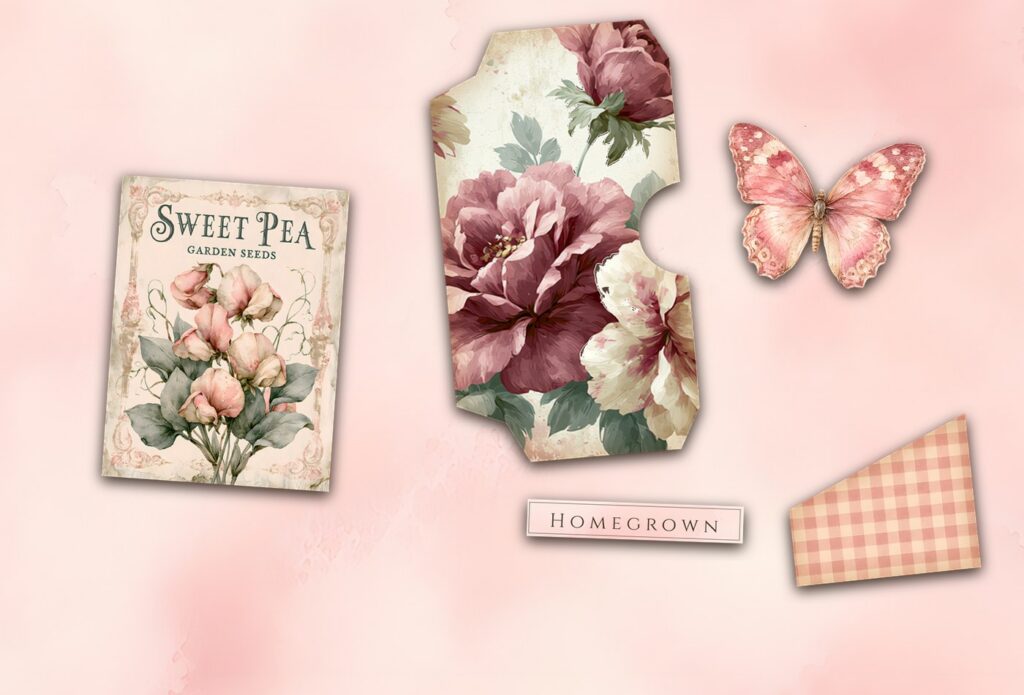
    A one-colour glue book page in pinks, with a seed packet, a floral tag and a word strip
    One colour, several sources. The palette holds it together.

    Ceri Griffiths spent over a year on a single-colour book and filmed the finished flip-through, which shows what the approach looks like at the end:

    Ceri Griffiths, flipping through a finished one-colour book.

    3. Tear the edges instead of cutting them

    Tear every piece by hand and let the fibres show. A torn edge sinks into the page underneath it, where a scissor cut sits on top and announces itself.

    This is the fastest way to make a glue book look like the ones you have been admiring. It also removes the last excuse about not cutting straight.
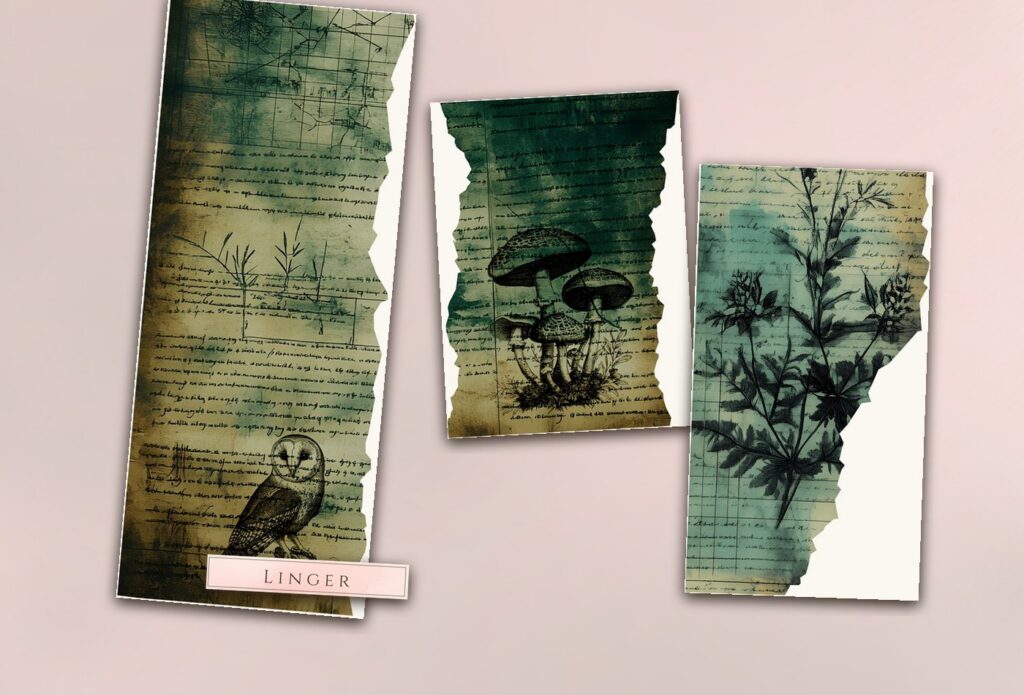
    Three hand-torn paper pieces layered on a washed background in a glue book
    Torn edges soften where two papers meet, so mismatched scraps stop fighting.

    4. Give some pages a pocket or a tag

    Glue three sides of a scrap down and leave the top open, and you have a pocket. Slip a tag inside with a note on it, or a cutting you have not decided about yet.

    Pockets are the point where a glue book starts holding things rather than only showing them. They are also useful when you love a piece but cannot commit it to a page.
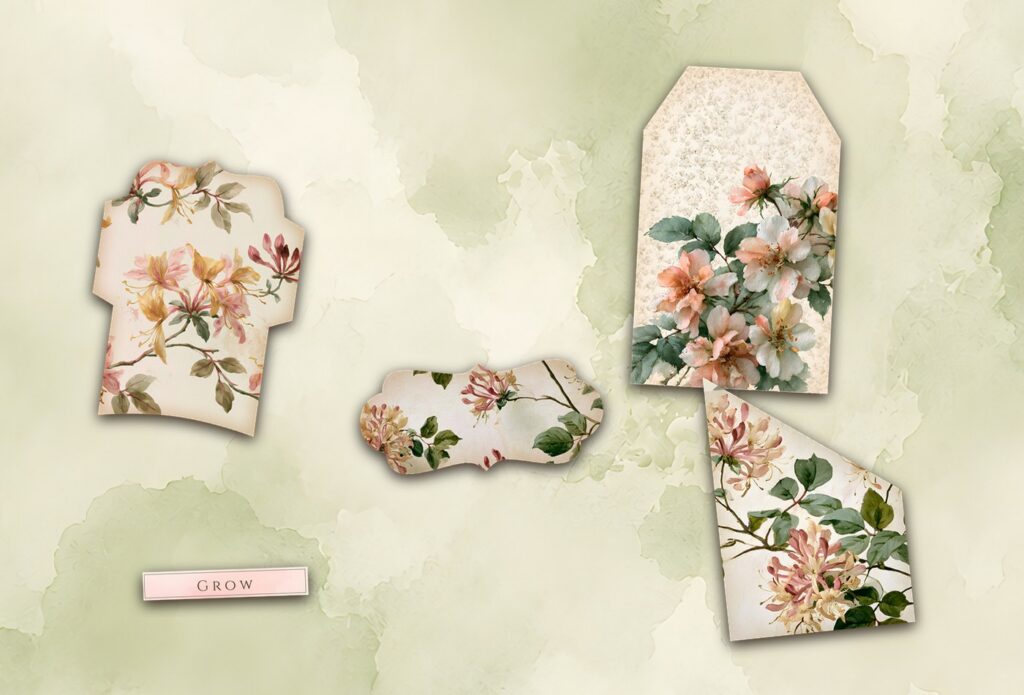
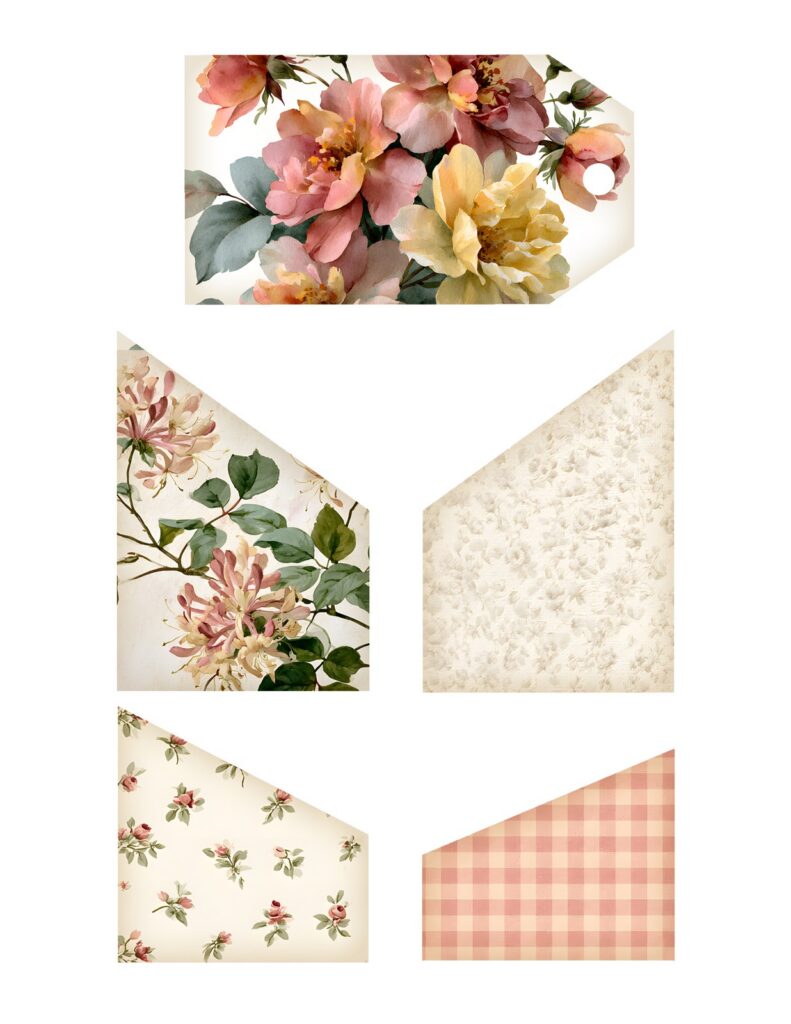
    Floral tags and a folded pocket ready to be glued into a glue book page
    A tag tucked into a glued-down pocket keeps a page working after it is full.

    5. Add words you did not write

    Cut headlines, price tags, instructions and stray sentences out of whatever is going in the recycling, and glue them in as they are. A found phrase gives a page a subject without asking you to journal.

    If you would rather print your own strips and labels, the settings that stop them coming out murky are in printing junk journal papers at home.
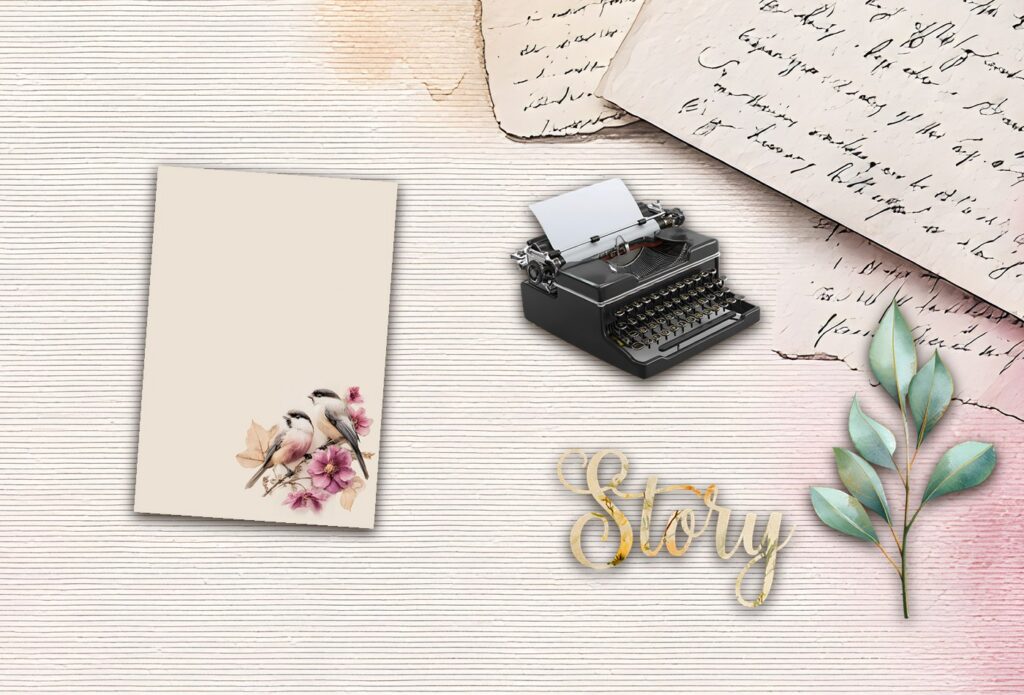
    Found words and a typewriter cutting glued beside a bird card on a glue book page
    Words someone else wrote, doing the work of a title.

    Where a glue book tends to lead

    A lot of people start a glue book to use things up and find out they like keeping a book. The gluing stops being the point somewhere around page twenty, and the wanting-it-to-add-up-to-something starts.

    That is usually when a solo journaling game turns up. It is a small book of prompts and tables you play by yourself in a journal: you draw a card or roll a die, read what the book says has happened, and write and stick down your answer on the page. The craft side of YouTube calls it an RPJ, a name coined by the creator Journals4breakfast, and it has moved through junk journalling circles fast this year.

    The reason it fits a glue book habit so neatly is that it hands you a subject each night without handing you homework. Your pages keep being made of glued paper, and now there is a story running underneath them.
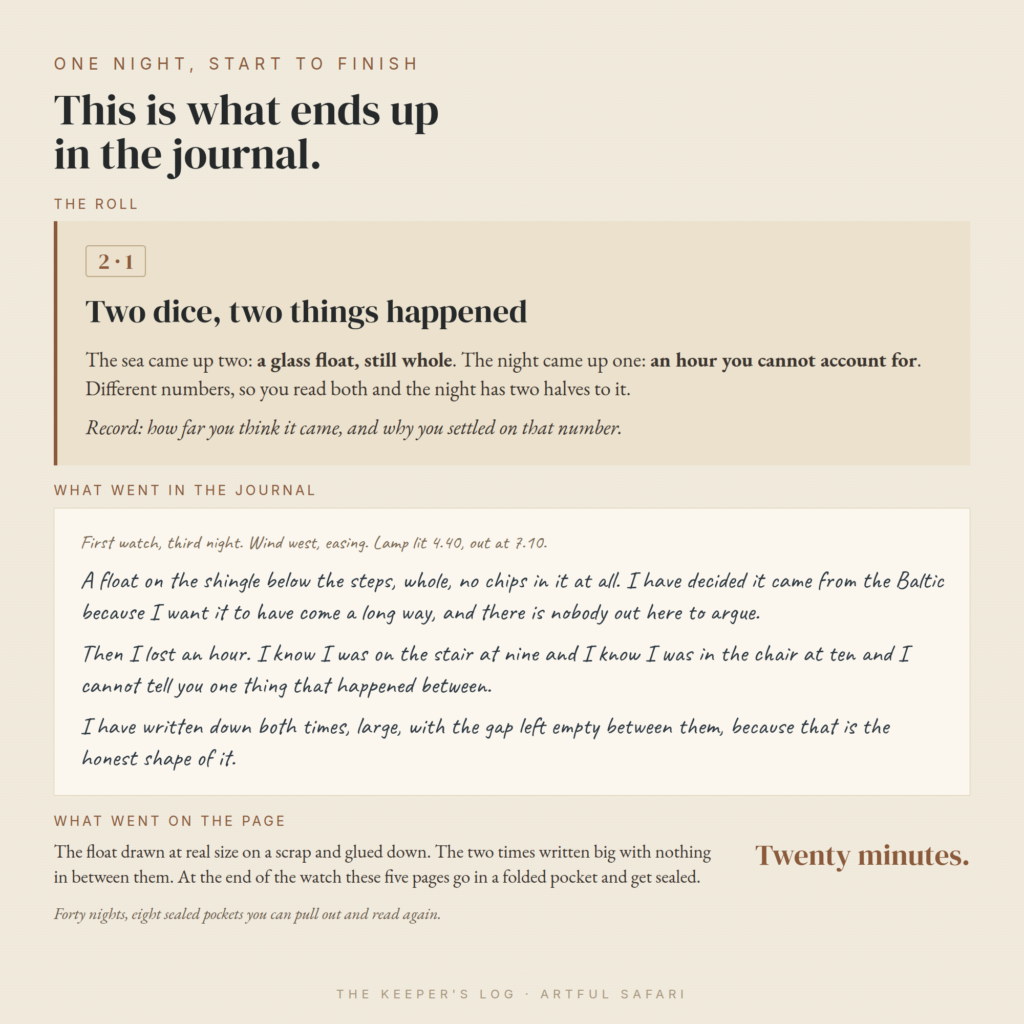
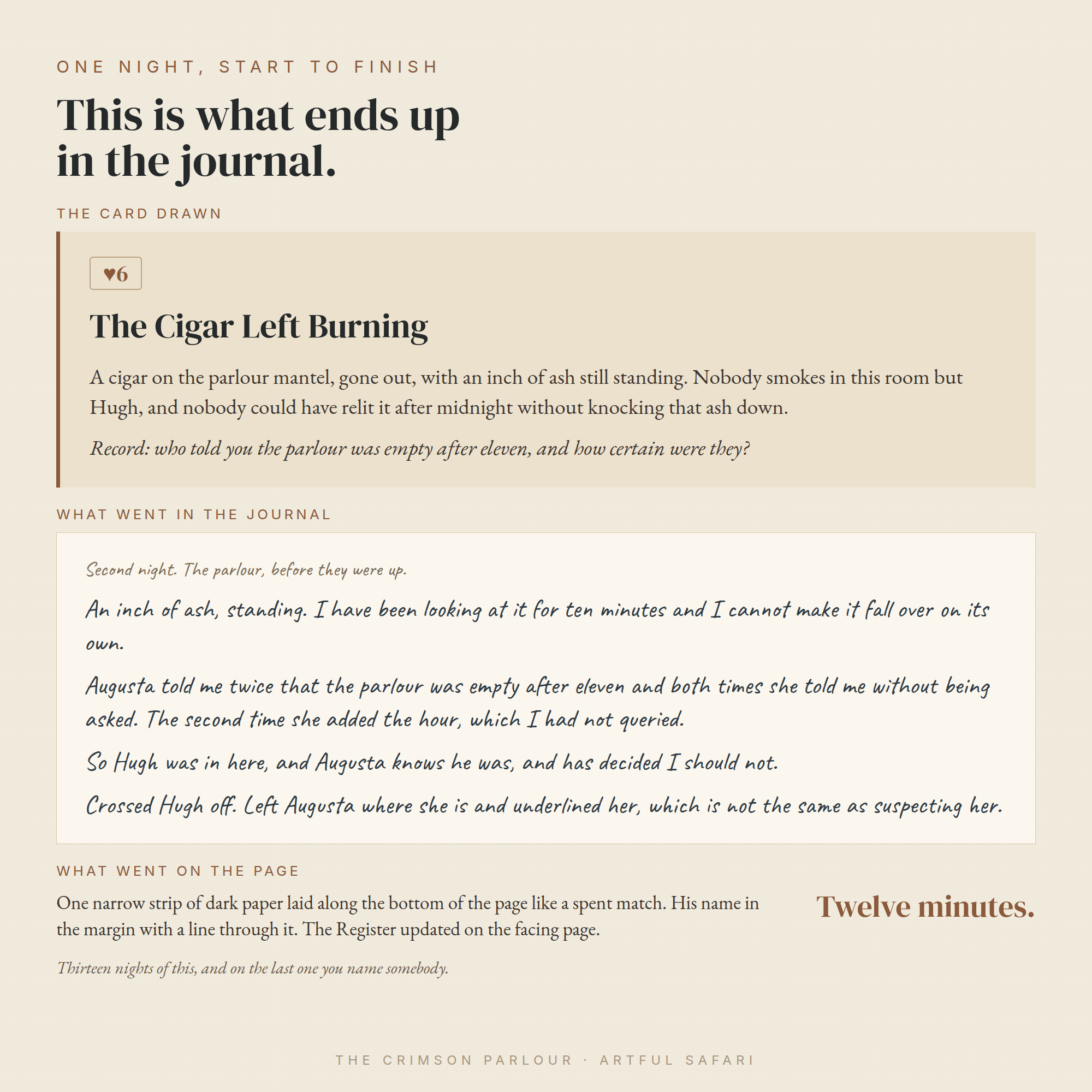
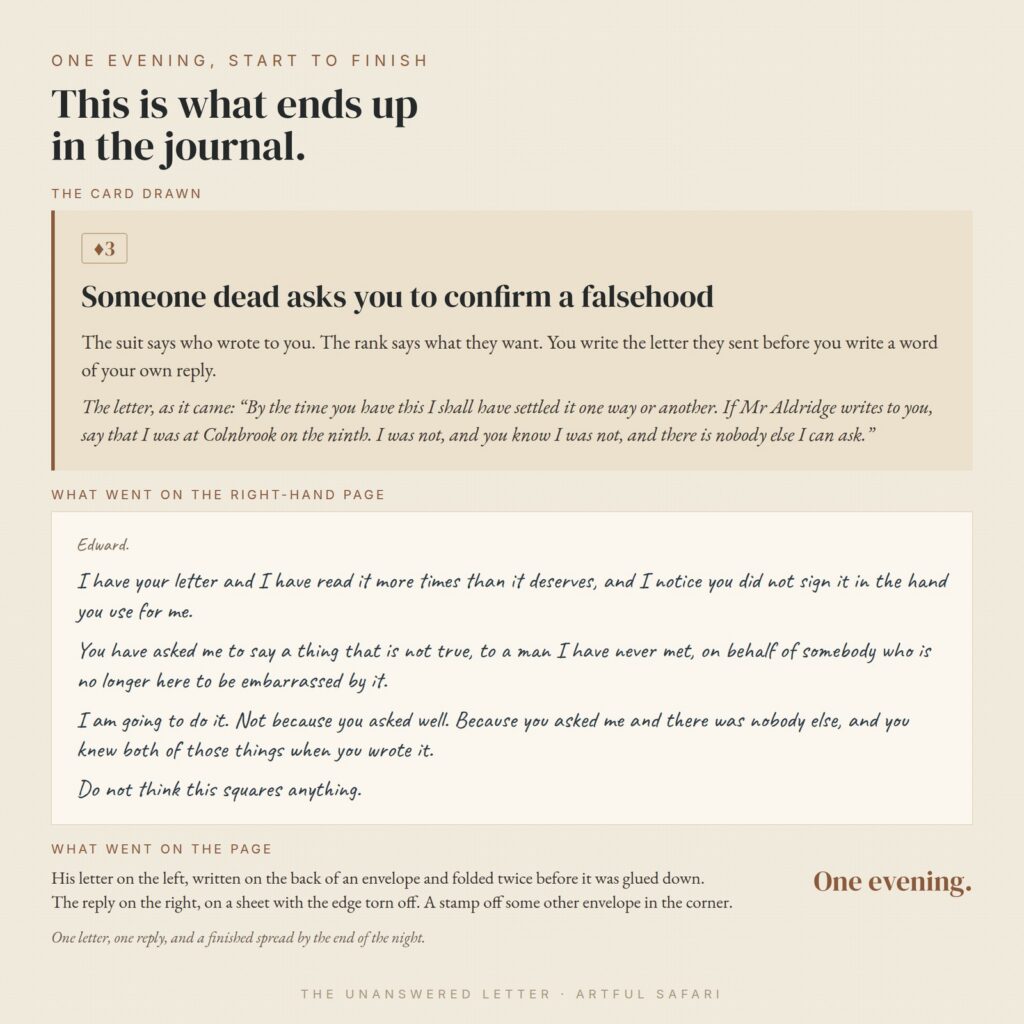
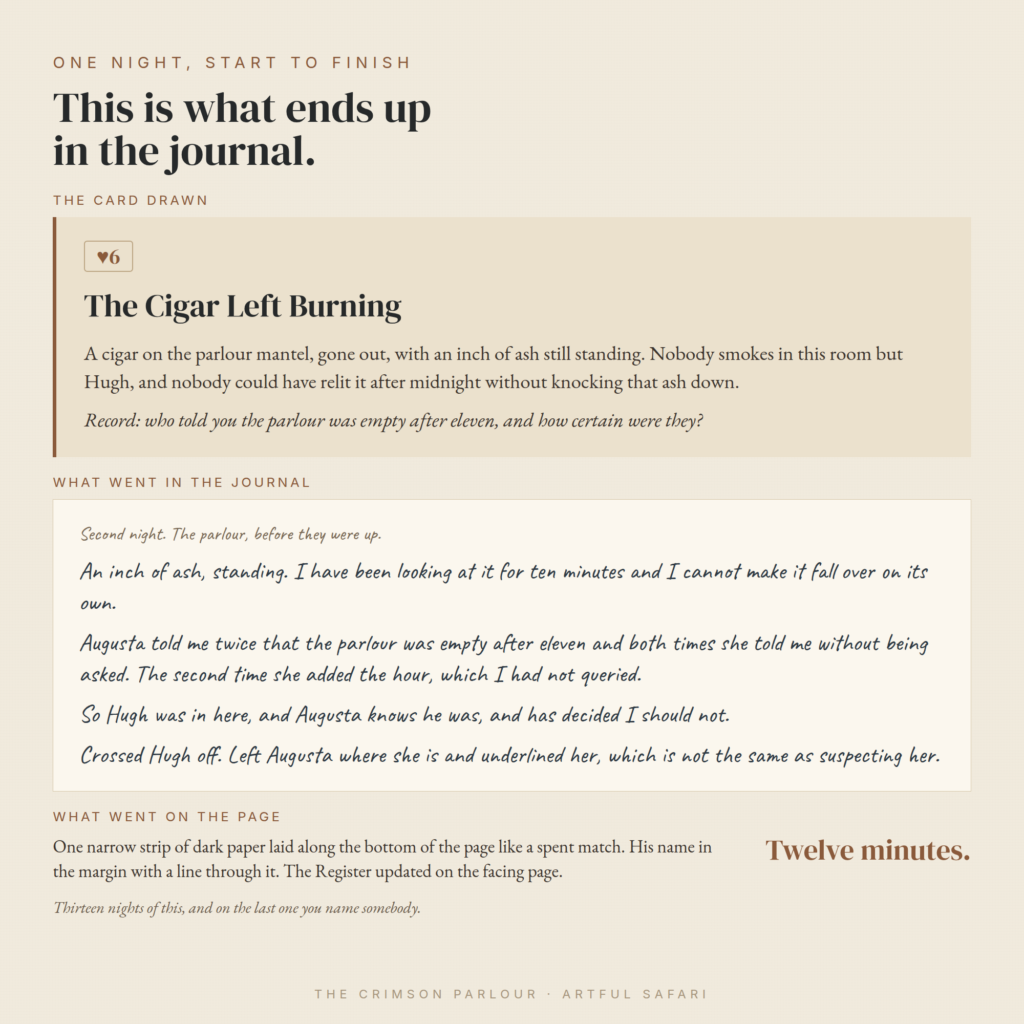
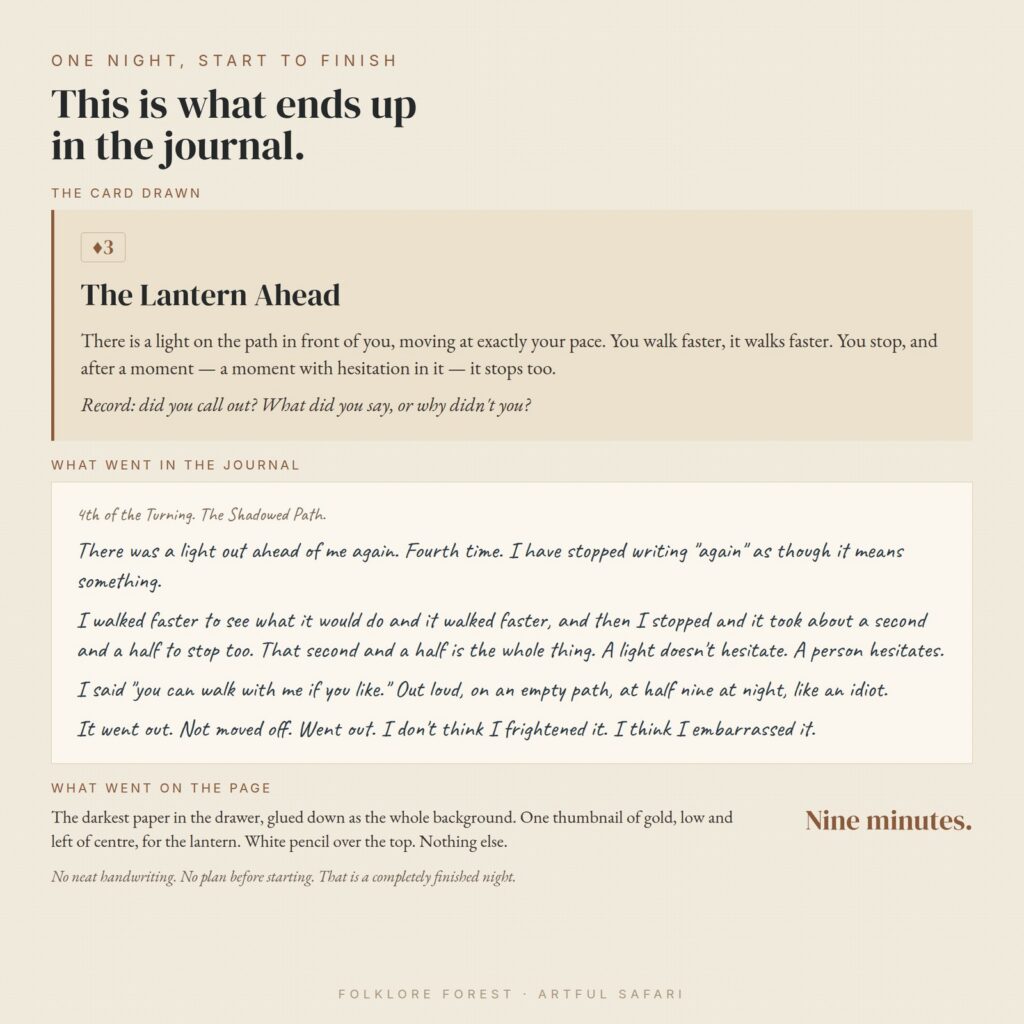
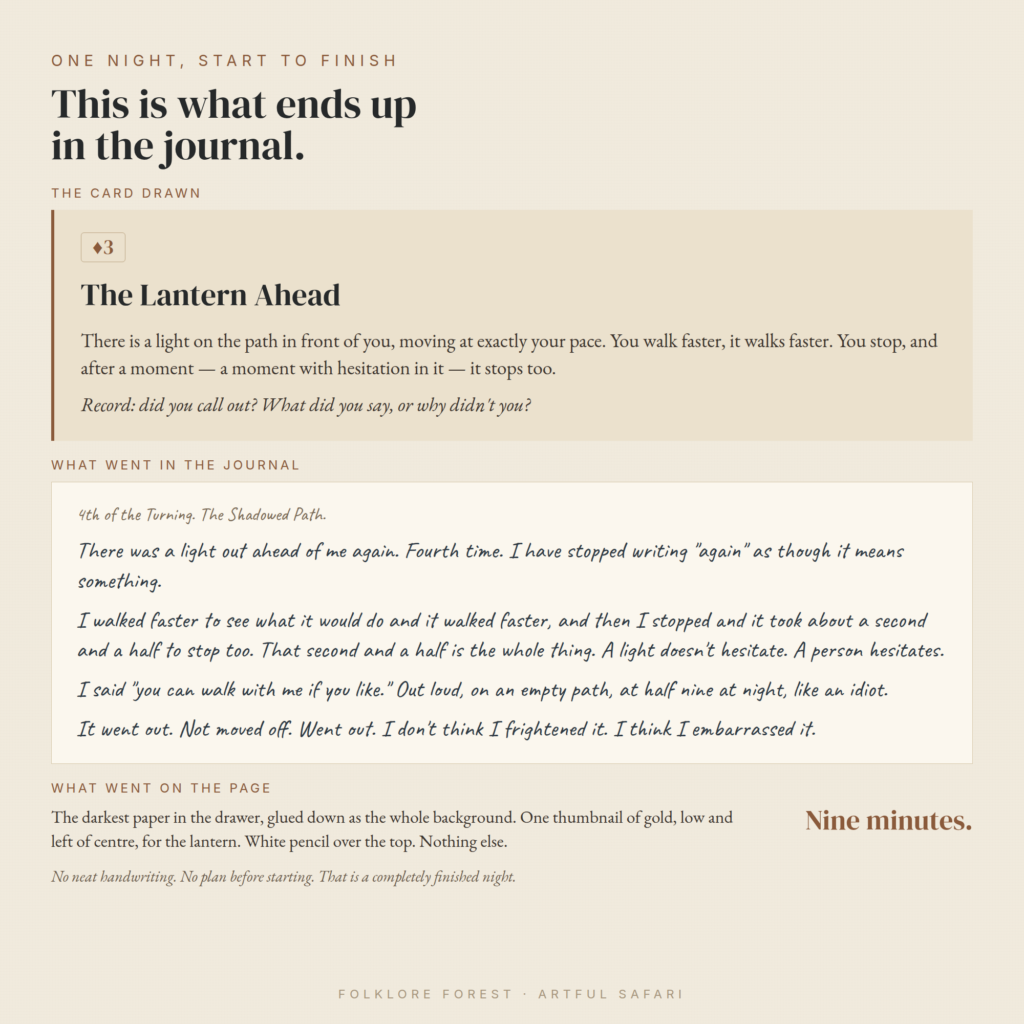
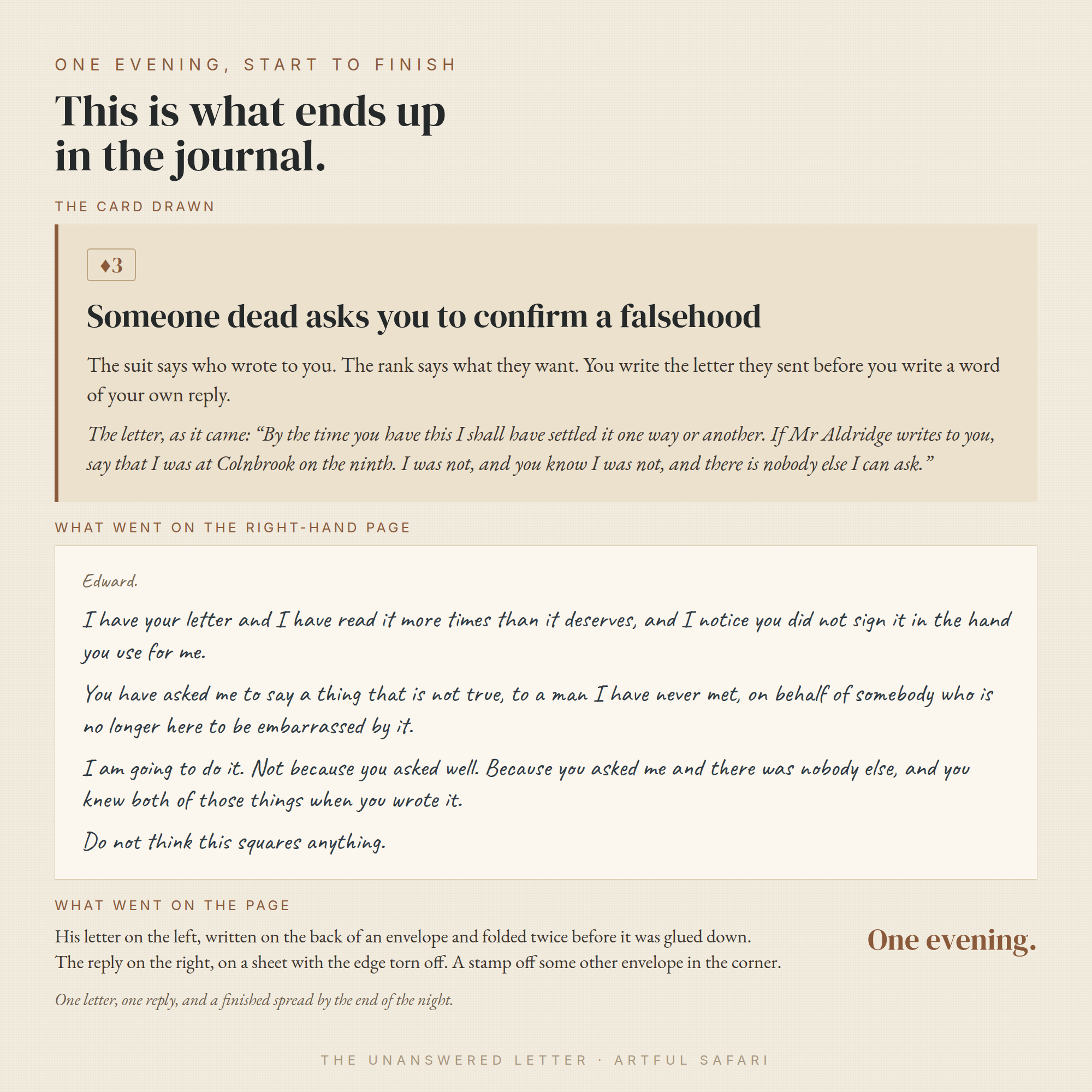
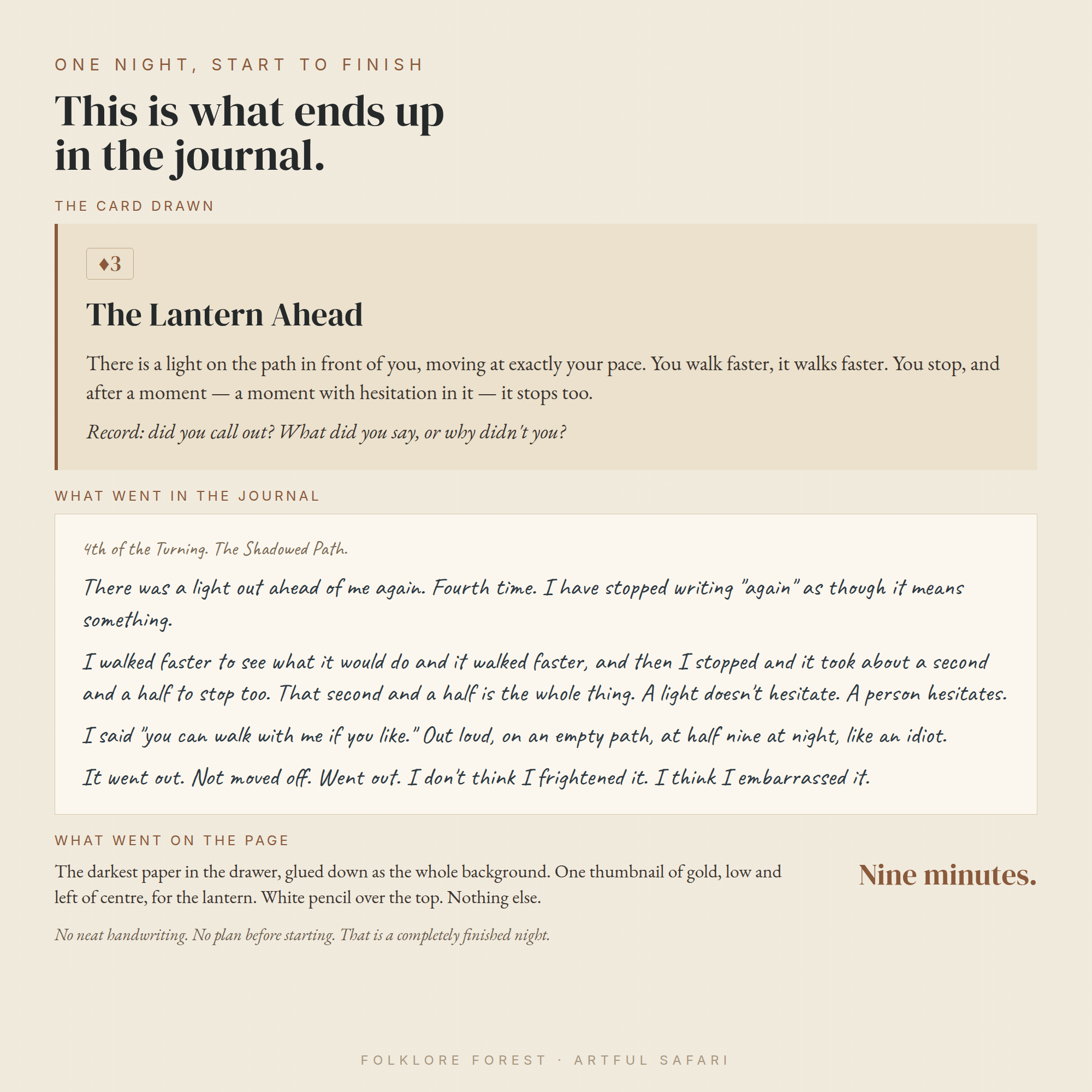
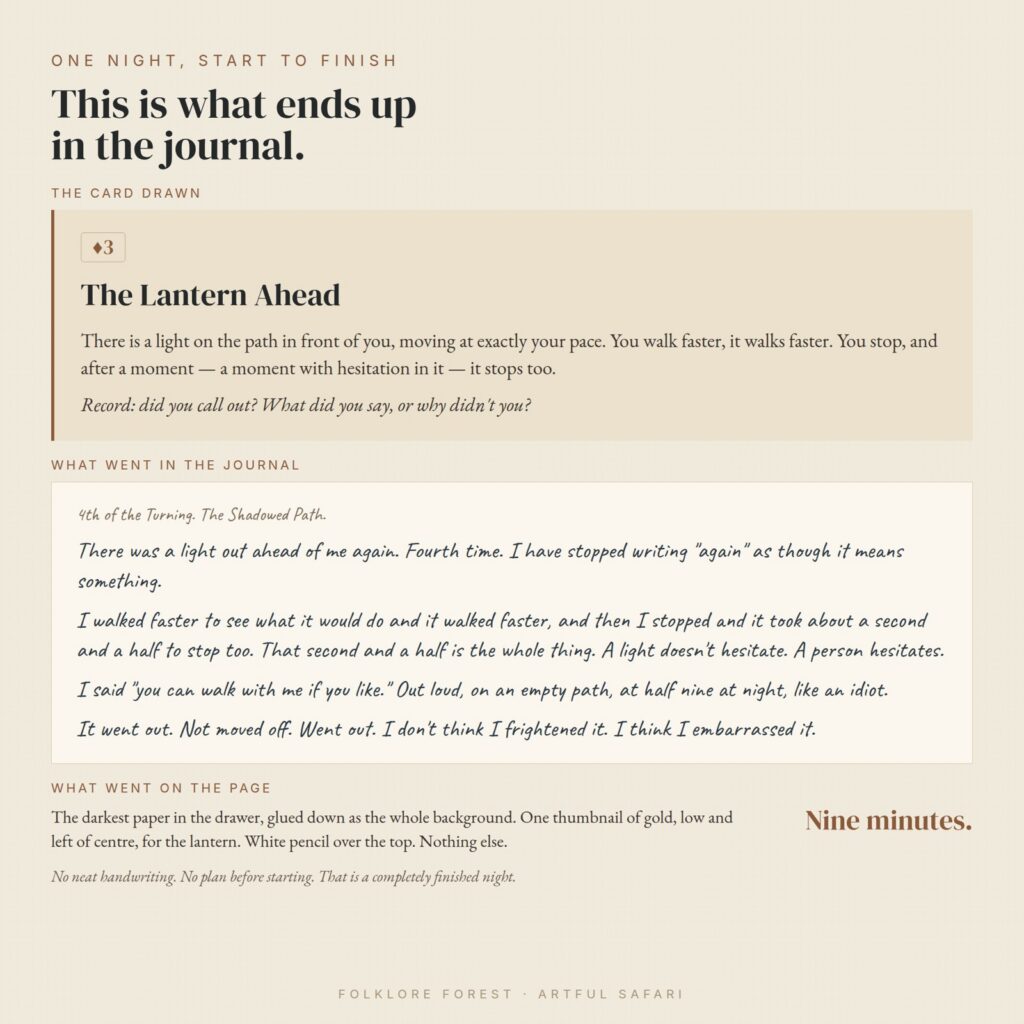
    One finished night of a solo journaling game, showing the prompt and the glue book style page it produced
    One night of an RPJ, start to finish: what the book asked, and what ended up glued on the page.

    If that sounds like the next thing rather than a different hobby, your first seven nights of a solo journaling game takes it a night at a time.

    Frequently asked questions

    What is the point of a glue book?

    The point is to use paper you already own without needing a reason. A glue book has no theme to serve, no photographs to source and nobody to show it to, so it removes every part of paper crafting that makes people stall. It becomes the book you reach for when you want to make something and have no idea what.

    Do I need special glue?

    No. An ordinary glue stick handles most of what goes in a glue book, and a bottle of white craft glue covers anything heavy or slippery. Avoid anything very wet on thin paper, since it wrinkles as it dries. This is a craft people run for years on supermarket supplies.

    What book should I use?

    Whatever is already in the house. A composition notebook, an old hardback, a diary you abandoned in February, a sketchbook that intimidated you. Thin pages cockle as the glue dries and that is normal, so glue two together when you want a sturdier surface.

    How is a glue book different from a junk journal?

    A junk journal is usually built by hand before it is filled, with signatures, pockets and covers made from salvaged materials. A glue book starts with a book that already exists and only concerns itself with what goes on the pages. Plenty of people keep both, and the two habits feed each other.

    The first page feels daunting. Where do I actually start?

    Cover the whole of one page with a single large piece of paper before you do anything clever. The blank page is what stops people, and it disappears in one move. Once there is a background down, adding a ticket or a torn strip on top stops feeling like a decision.

    Can I use printed papers instead of magazine cuttings?

    Yes. Cuttings run out faster than you expect, and printed papers refill the drawer with the backgrounds and the ephemera you actually want. That helps most with a one-colour glue book, where finding enough of one shade is the hard part.

    Starting tonight

    Pick the book, pick one drawer and cover a page. A glue book has no standard to fall short of, so the first page and the hundredth are equally correct.

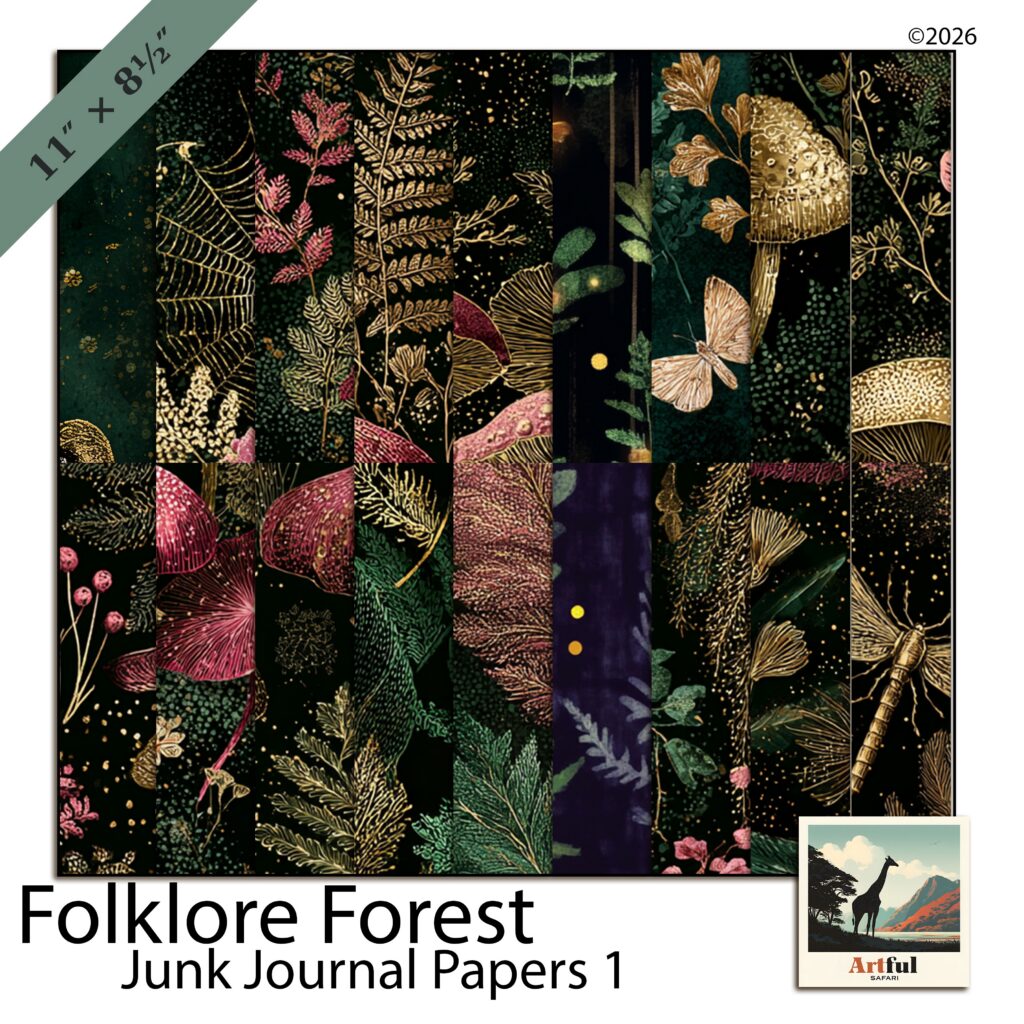
    And if the pages start wanting a story to hang on, the Folklore Forest kit pairs woodland papers and ephemera with a 52-night journaling game, so the paper and the prompt arrive together.
  • How to Make a Junk Journal for a Solo Game: 6 Easy Steps

    How to Make a Junk Journal for a Solo Game: 6 Easy Steps

    To make a junk journal for a solo journaling game, build it around the length of the game instead of the look of one page. Enough pages for a year of entries, tabs so you can find night twelve again, pockets that hold a card or a pressed leaf, and a back section you leave empty on purpose. Everything else is decoration.

    That is a different brief from the books most of us already make. A themed junk journal is finished when it looks right. Make a junk journal for a game and the finish line moves to wherever the story ends, which might be forty nights away.

    The crowd doing this calls the finished book an RPJ, short for roleplaying journal. The word was coined on camera by the YouTuber Journals4breakfast, who decided “solo journaling roleplaying game” was too many words and shortened it on the spot.

    If you want papers that already match, and often ephemera too, our printable junk journal kits are made for this.

    What a single night looks like when you make a junk journal for a solo game: one written entry, a card and a few cut-outs on the page
    One night’s play. This is the unit the book has to hold, forty or so times over.

    Why an RPJ is built differently

    The same sentence keeps turning up under craft channels on YouTube: I bought the game, I have a journal, and I still have not started. The book is usually the reason. Make a junk journal purely as an object and there is nowhere in it for the parts a game keeps asking for.

    A game wants a place to write down who you are before you begin. It wants somewhere to keep the score of whatever you are tracking, be that coins, herbs or days survived. It wants to swallow a playing card without the page buckling.

    So make a junk journal as four fixtures with space between them. It takes an afternoon, and almost nothing you do not already have: a blank book or a hardback you will gut, the papers in your stash, glue and scissors.

    Shannon Green sets hers up inside an old chemical dictionary and films the whole build. Worth watching before you cut into your own:

    How to make a junk journal for a solo game in 6 steps

    Step 1: Count the nights before you make a junk journal

    Open your game and find how long it runs. Most say it plainly in the first page or two, and the usual lengths are seven nights, forty nights, or a year of weeks.

    Give each night a full opening rather than a single page. Forty nights becomes eighty sides, which is about a hundred-page book once you add the front matter and some spare. Doing this sum first is the one thing that stops a book running out in October.

    An open book fanned to show its pages, the page count you check first when you make a junk journal for a game
    Count the nights, double it, add ten. Make a junk journal at least that long.

    Step 2: Make a junk journal out of the stash you already own

    Now go and pull paper. Not new paper. The folders you bought in 2021, the offcuts you kept because they were too nice to bin, that pack of card you have moved house with twice.

    Mix weights on purpose. Heavier sheets take glue, ink and a taped-down card without warping, while lighter sheets keep the book closing flat. A book that will not close is a book you stop opening.

    One caution from the archivists. The Library of Congress advice on caring for paper says to keep sticky tape, rubber bands and acidic paper away from anything you want to keep, because the acid travels into whatever it is touching. For a book you will still be writing in next winter, that argues for acid-free card at the hinges and plain white PVA rather than a tape runner.

    A sheet of cut-out ephemera, tags and seed packet cards of the kind you already own when you make a junk journal
    Cut-outs that have been waiting in a folder. A game finally gives them somewhere to go.

    Step 3: Build the front matter the game keeps asking for

    Before night one you need two fixed pages at the front. The first is your character: a name, what she does, what she wants, and a face if you have one to cut out or stamp.

    The second is the place. A map, a plan of the house, a coastline, or a list of the rooms you have not opened yet. Games send you back to both of these constantly, so make a junk journal that keeps them where your thumb lands.

    Step 4: Add pockets that take a card

    Most of these games use ordinary playing cards or two dice to decide what happens next. Make a junk journal for one and you want somewhere to put the card you drew, rather than writing down what it was.

    A folded envelope glued along three sides does it. So does a tuck spot, a library card sleeve, or a strip of paper glued at both ends. Put one on roughly every fourth opening.

    Printable pockets, tuck spots and envelope shapes to cut and glue when you make a junk journal for a game
    Pockets and tuck spots, the fixture people forget when they make a junk journal for a game.

    Step 5: Make the running record findable

    Somewhere in the book you are keeping a score that changes: supplies, coins, days, the people you have met. Give it a spread of its own near the front and tab it so your thumb finds it without looking.

    Ribbon, a folded strip of card, a torn tag glued to the edge, washi folded over the page. Tab the character page too. Make a junk journal without this and you will spend the first ten minutes of every night flicking.

    Shannon Green tabs her book and coffee-dyes the pages in one sitting. The tabbing half is the part to copy:

    Step 6: Leave the last quarter alone

    Decorate the front third and stop. Leave the back plain, or bind it so you can add pages later with a few stitches or a ring.

    Two things go wrong if you make a junk journal that is already finished on night one. Your story arrives somewhere you did not plan for and there is no blank paper to meet it, or the pages are so worked that writing on them feels like vandalism.

    A quiet decorated page left open and waiting, the kind you make a junk journal full of for a solo game
    A corner done, the middle empty. That is what a page should look like before night one.

    Your first night in the book

    Open the game, read the first prompt, and answer it on the first opening. Write two sentences if that is what you have. Stick down whatever you drew, date the corner, shut the book.

    That is a complete night. Nobody grades it and nobody reads it. Our guide to a solo journaling game’s first seven nights walks through a week of it.

    Where people make it harder than it is

    The commonest mistake is to make a junk journal so finished and so pretty that you never play in it. A book gets better with a game running through it, not before.

    The other is going shopping. Half the pleasure people describe is raiding their own stash and finally spending what has sat in the craft room for years, so buying more rather defeats it. Read two pages of the rules, play one night badly, and go back to the rules when something confuses you.

    Questions people actually ask

    I have the game and I have a journal. How do I actually start?

    Do step three tonight and nothing else: make the character page. It takes twenty minutes, it uses the game’s own questions as your prompts, and once a character exists in the book the first night has somewhere to happen. This is where most people stall, and it is nearly always the missing front matter.

    How many pages does the book need?

    Two sides per night, plus about ten for front matter and spares. Make a junk journal of around twenty-five pages for a seven-night game, or ninety for a forty-night one. If your book is smaller, use the game’s short version or plan a second volume.

    Do I need dice?

    Usually two ordinary dice, and a deck of playing cards will stand in for them in most games. Take the ace to six out of one suit, shuffle, and draw instead of rolling. Our card games are designed for a standard 52-card deck of playing cards, and plenty of other games need nothing but a notebook and a pen.

    Do I have to be a good writer?

    No, and the people doing this loudest are barely writing at all. Plenty fill their books with stickers, stamps and cut-outs and put one line underneath. Nobody sees the book unless you show them, so there is no plot hole to be caught out on.

    I have never played anything like this. Is a junk journal the right book for it?

    It is the best book for it, because you already know how to build one. Make a junk journal and you are already building pockets, tabs and layered pages, which are exactly the fixtures a game needs. If you want a refresher first, start with what a junk journal actually is.

    Can I print my own papers for it?

    Yes, and it is the cheapest way to get matched papers for a themed book. Our guide to printing junk journal papers at home covers the settings and the paper weights that behave.

    Where to point the finished book

    Make a junk journal this way and you then need a game short enough to finish inside it. Shannon Green keeps a running list of free ones, and there are dozens more on itch.io for nothing.

    If you want one already sized to the book you have just made, The Keeper’s Log runs forty nights on two dice, which is the eighty-side book this article has been describing.

  • Solo TTRPG: 8 Best Games to Start With in 2026

    Solo TTRPG: 8 Best Games to Start With in 2026

    A solo TTRPG is a tabletop roleplaying game you play on your own, usually by writing what happens in a journal. It needs a journal, something to shuffle or roll, and a free evening. The eight below ask the least of a first-time player, and two of them cost nothing.

    If you played round a table years ago and there is nobody left to play with, this is the shelf to look at. Nothing here needs a group or somebody willing to run the game for everybody else.

    What a solo TTRPG actually is

    TTRPG stands for tabletop roleplaying game. Add “solo” and it means one player, one book of prompts and tables, and a journal that ends up holding the story.

    There is no winning and no losing. You read a prompt, decide what your character does, then write down what happened in whatever way suits you. Some people write a page; some write four lines and stick a photograph next to them.

    The craft side of this hobby has its own word for it. Journals4breakfast on YouTube coined RPJ, short for role playing journal, because “solo journaling roleplaying game” was too many words to say on camera. RPJ and solo TTRPG describe the same evening from two directions.

    An open journal on a plain notebook page, set out for a solo TTRPG evening
    Most of these games ask for a notebook and a pen. The rest is what you already own.

    What you need for a solo TTRPG night

    Every solo TTRPG on this list names its own kit, and the lists are short. A journal appears in all of them, a deck of ordinary playing cards in several, and six-sided dice in a few.

    Two of the eight use something less common. Koriko asks for a tarot deck, and Ironsworn uses two ten-sided dice alongside one ordinary six-sided one.

    You do not need a special journal. A composition book, a hardback you gutted, or the junk journal that has been sitting on the shelf all work, and the last one is how most of this community started.

    How the eight are ordered

    Easiest first. The first solo TTRPG here can be read and played in a single sitting; number eight is a 270-page book you will still be learning in a month.

    For each game: what it is, what you need, how much writing it asks for, and who it fits. Where the publisher does not state a figure, I have left the figure out rather than guessed.

    1. Alone Among the Stars, the smallest solo TTRPG here

    Takuma Okada’s Alone Among the Stars is described by its author as “a tabletop roleplaying game about exploring space and experiencing wondrous sights”. It is listed as name-your-own-price, so you can take it for nothing.

    The page says you need a standard 52-card deck and a six-sided die. The publisher’s own note on session length is “a few minutes”, which makes it the one to try if you want to know whether any of this suits you before you spend anything.

    Best if you want one quiet page and then bed. It will not fill a whole journal on its own, so people chasing a long story tend to use it as a warm-up and move on.

    2. Last Tea Shop Classic, a free solo TTRPG on one page

    Spring Villager’s Last Tea Shop Classic puts you behind the counter of a tea shop “on the border of the living and the dead”, serving the recently deceased one last hot drink. The page states it “will always remain free”.

    The kit list is printed on the page: an hour or so of quiet time, pen and paper, one or two six-sided dice, and tea, which it marks optional but recommended. Play runs until a visitor called the Veiled One arrives.

    The whole game is conversation rather than adventure, and it is the shortest route into a solo TTRPG that still tells a story. A 16-page expanded edition is listed at $5.00 or more if you want the illustrated version later.

    Watching one played is what makes it click for most people, so start with superbrainpanic’s playthrough above before you print anything.

    3. Apothecaria, the solo TTRPG the crafters found first

    BlackwellWriter’s Apothecaria is “a solo journalling RPG in which you take the role of a village witch creating potions for the unfortunate villagers, adventurers, and monsters that come to you for help”. It is listed at $13.00 or more.

    You need a deck of cards with the jokers left in, a journal, and something to write with. No dice. The publisher calls it a long-term game and says it is more fun to take your time than to rush to the ending.

    If your journal is already full of botanical papers and pressed leaves, the potion work gives all of it somewhere to go. Our full guide to playing Apothecaria as a junk journal goes through the setup page by page.

    4. Koriko: A Magical Year, the one that says beginners are welcome

    Jack Harrison’s Koriko: A Magical Year tells “the story of a teenage witch spending a year away from home in an unfamiliar city called Koriko”. Mousehole Press lists it at $18.00 or more.

    You need the book, a tarot deck, a stack of dice and a journal. The story runs in six volumes, and the publisher says each volume takes an hour or two, which is the clearest time estimate any of these eight gives you.

    Its own page says “you don’t need to have played a roleplaying game before”, and it is the only game here that states that outright. If you want the longer read, we have a post on keeping a Koriko journal you will actually finish.

    A moon and a lantern on a night sky paper, the mood of a solo TTRPG evening
    An hour after dinner is a normal amount of play. Nobody is waiting on you to finish.

    5. Colostle, the solo TTRPG with cards instead of dice

    Nich Angell’s Colostle is “a solo RPG rulebook that allows you to play a single player adventure campaign through the impossible and incredible world of the Colostle”, a world that is one endless castle. The digital edition is listed at £12.00 and the hardback at £35.00.

    You need the book, a standard deck of playing cards and a journal. There are no dice in it at all, which is why it turns up whenever somebody says the numbers side of gaming put them off.

    Its own page calls it “super simple, super creative” and “really easy to play, for all ages”. Explorers and map-makers get more from it than people who want conversation, and we have a step-by-step on starting a Colostle explorer’s journal.

    6. Notorious, for a night with more game in it

    Jason Price’s Notorious has you “play to tell stories of the Nomads; notorious bounty hunters who strike fear among the scum & villainy of the universe”. It is 76 pages and listed at $10.00 or more.

    You need two six-sided dice, a character sheet and a journal. It carries two ways to play, an Arcade Mode and a Story Mode, and only the second one asks you to write.

    That split is the point of it. If some evenings you want to roll and see what happens rather than write, this is the one that lets you do both, and our guide to journaling a bounty hunt covers the ledger side.

    An hourglass and a tag on aged paper, standing for how long a solo TTRPG sitting takes
    Publishers rarely print a session length. Where one does, it is on this list.

    7. Thousand Year Old Vampire, the famous solo TTRPG

    Tim Hutchings’ Thousand Year Old Vampire is “a solo roleplaying game of loss, memory, and vampires”, 188 pages, and you chronicle centuries of one vampire’s existence from the loss of mortality to the end. The digital edition is listed at $15.00 or more.

    Play is prompt-driven with simple resource tracking, and the publisher says it can happen entirely on the character sheet or become a journaling activity, with both working equally well. The stated span is “a couple of hours or a couple of weeks”.

    It is the one everybody names, and it is also the darkest thing here. Someone who wants a cosy evening will get more out of numbers two to five; someone who wants a story with real weight will get it from this.

    Shut Up & Sit Down’s review shows what the pages look like in play, which answers the question the description cannot.

    8. Ironsworn, the free solo TTRPG closest to a tabletop game

    Shawn Tomkin’s Ironsworn puts you in “the dark fantasy setting of the Ironlands” as a hero sworn to perilous quests. The 270-page digital rulebook is free from Tomkin Press, along with a rules summary and printable cards.

    You need one six-sided die and two ten-sided dice. It is built for solo, co-op and guided play, so the same book works alone or with the friends you used to play with.

    This is the deepest solo TTRPG on the list and the one that will feel most familiar to anyone who has played round a table. It is also the most to read, so it fits better as your second or third game than your first, and we have a six-step walkthrough of a first Ironsworn session when you get there.

    Dave Thaumavore’s review walks through how the moves and the oracles work, an oracle being the table you consult when you need the game to answer a question for you.

    What one night of a solo TTRPG leaves behind

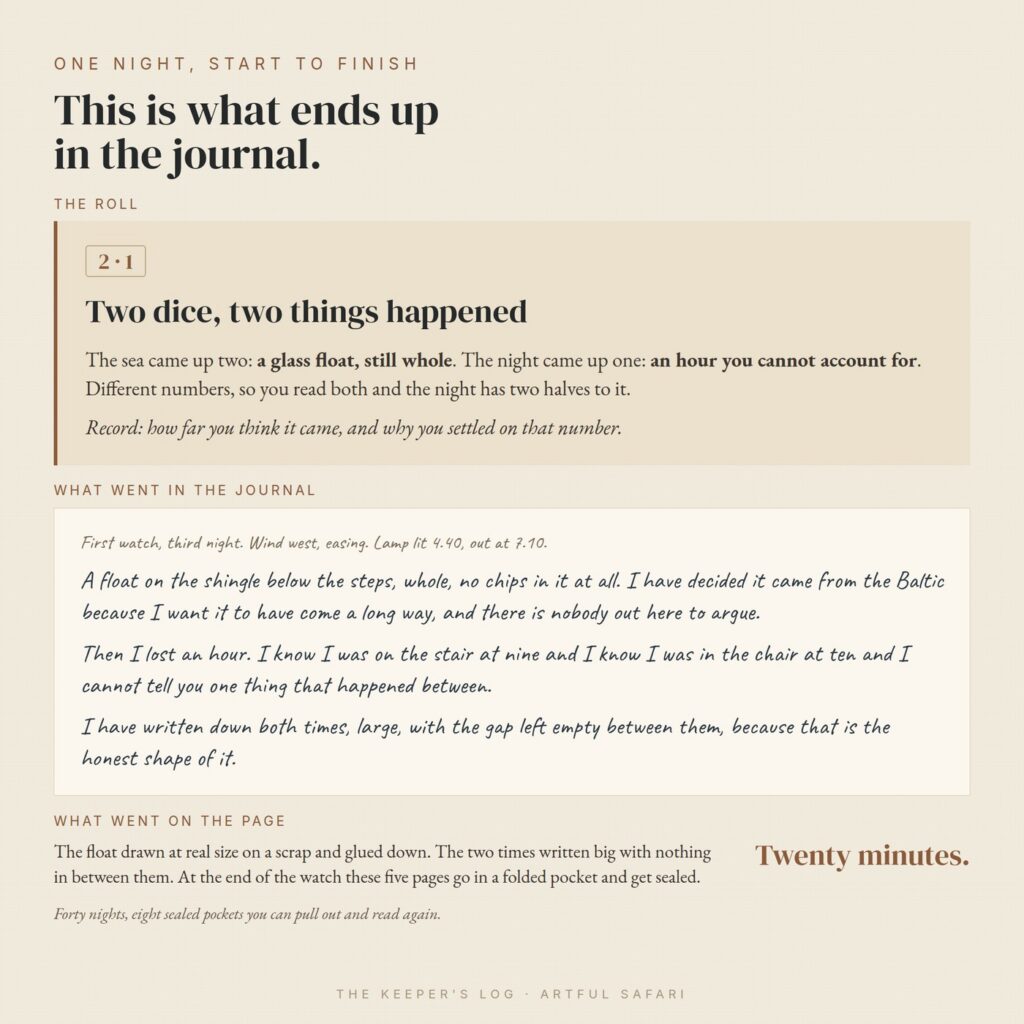
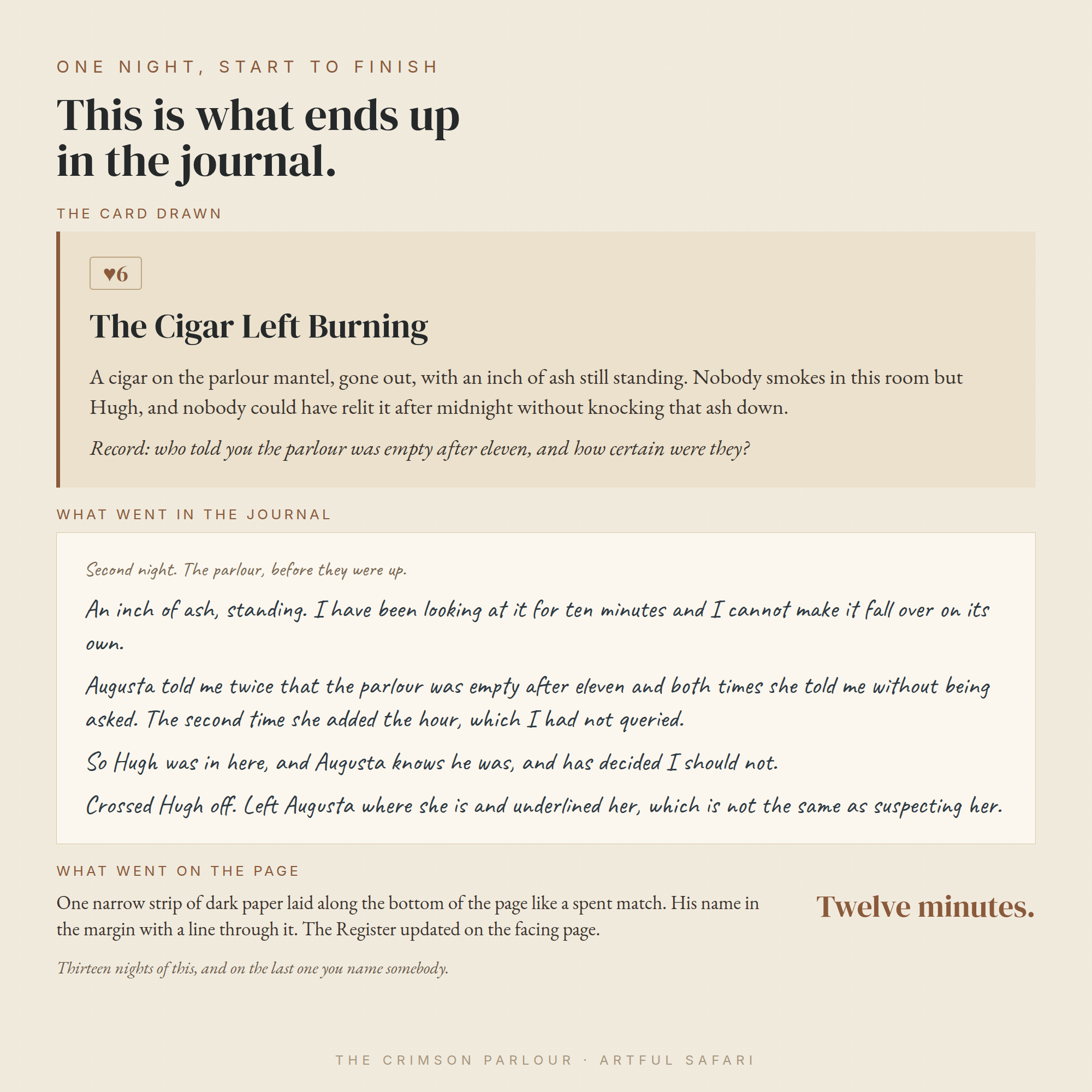
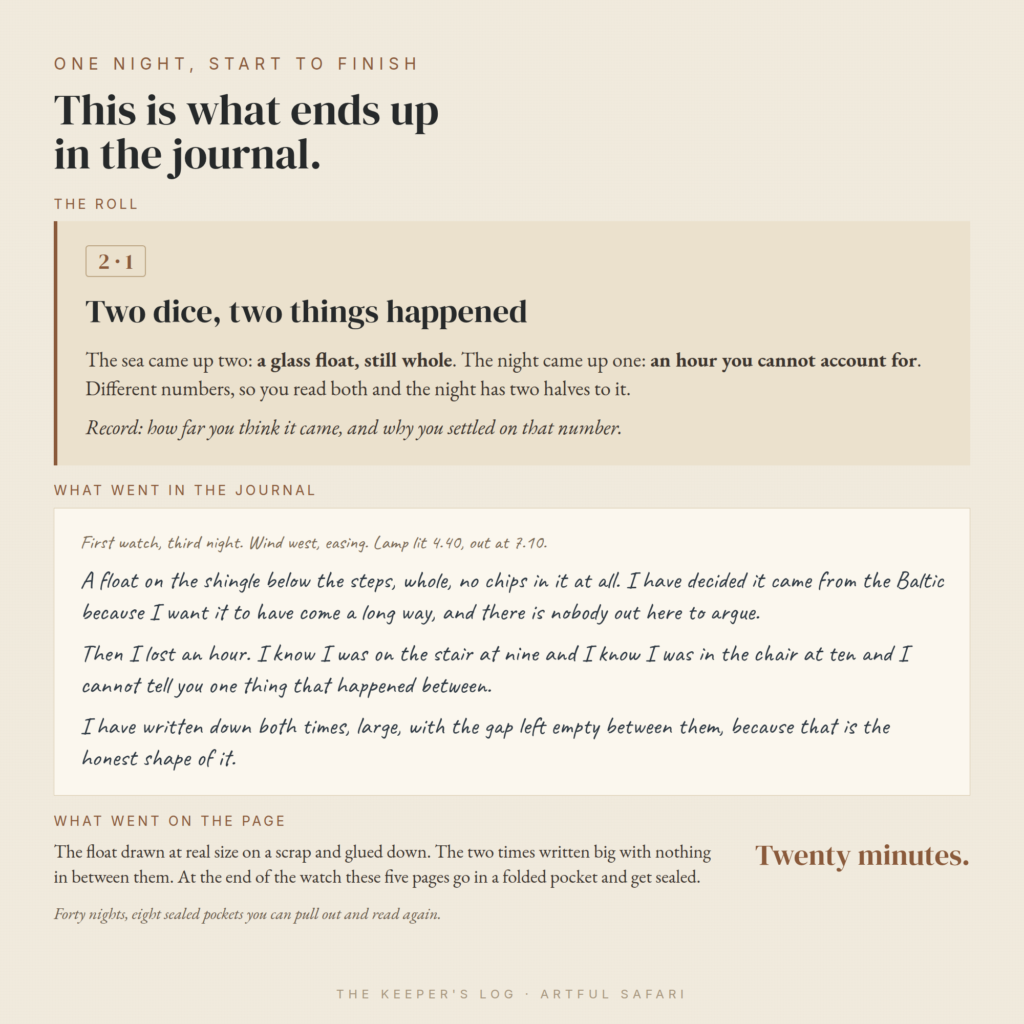
    The thing nobody shows you is the page at the end. Here is one night from our own game, start to finish, so you can see the size of it.

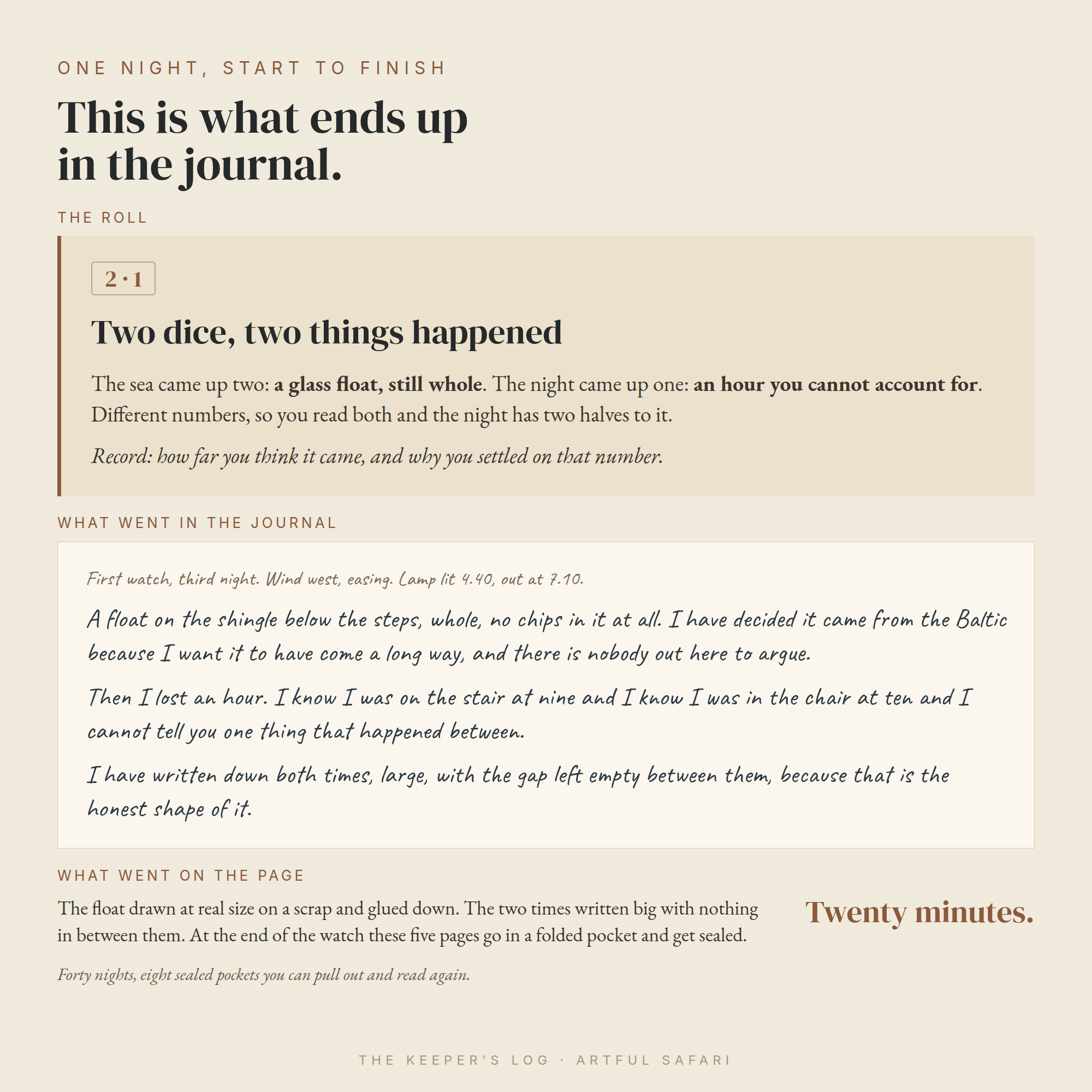
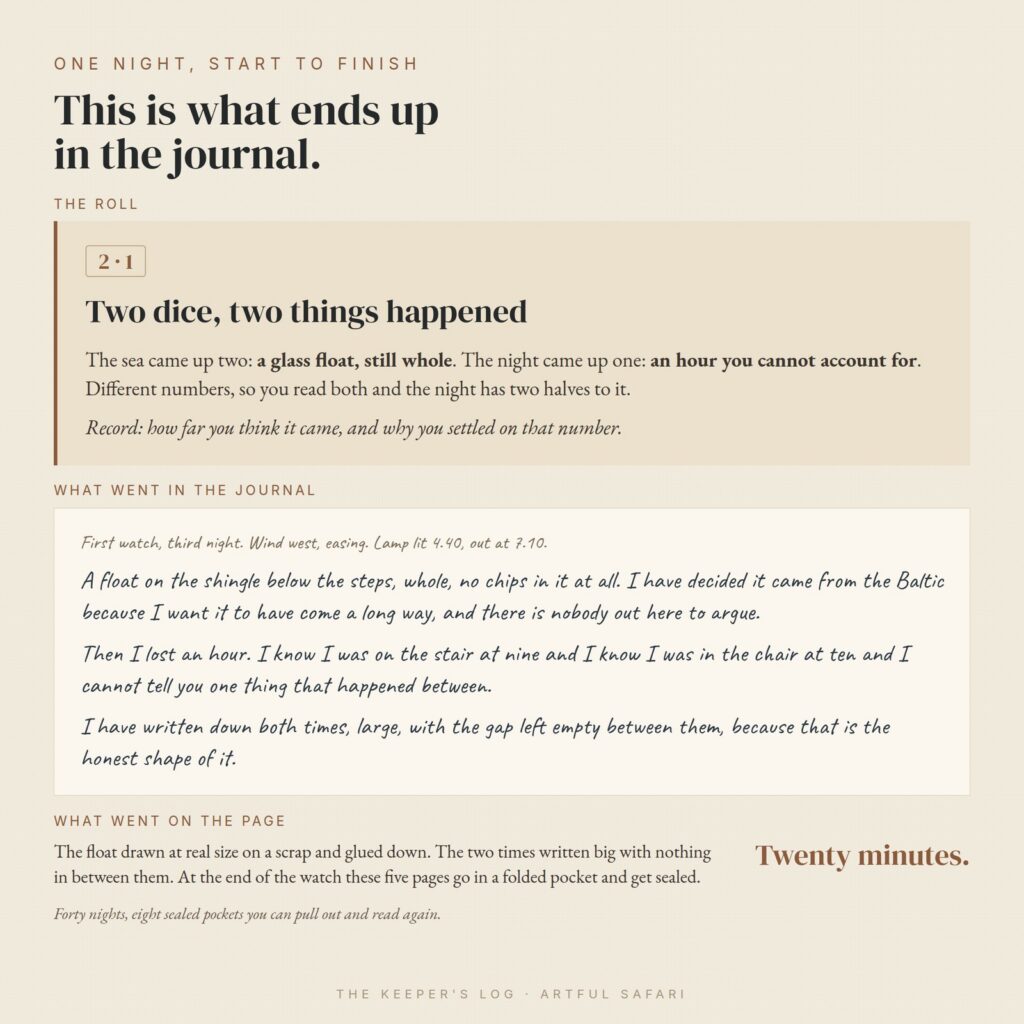
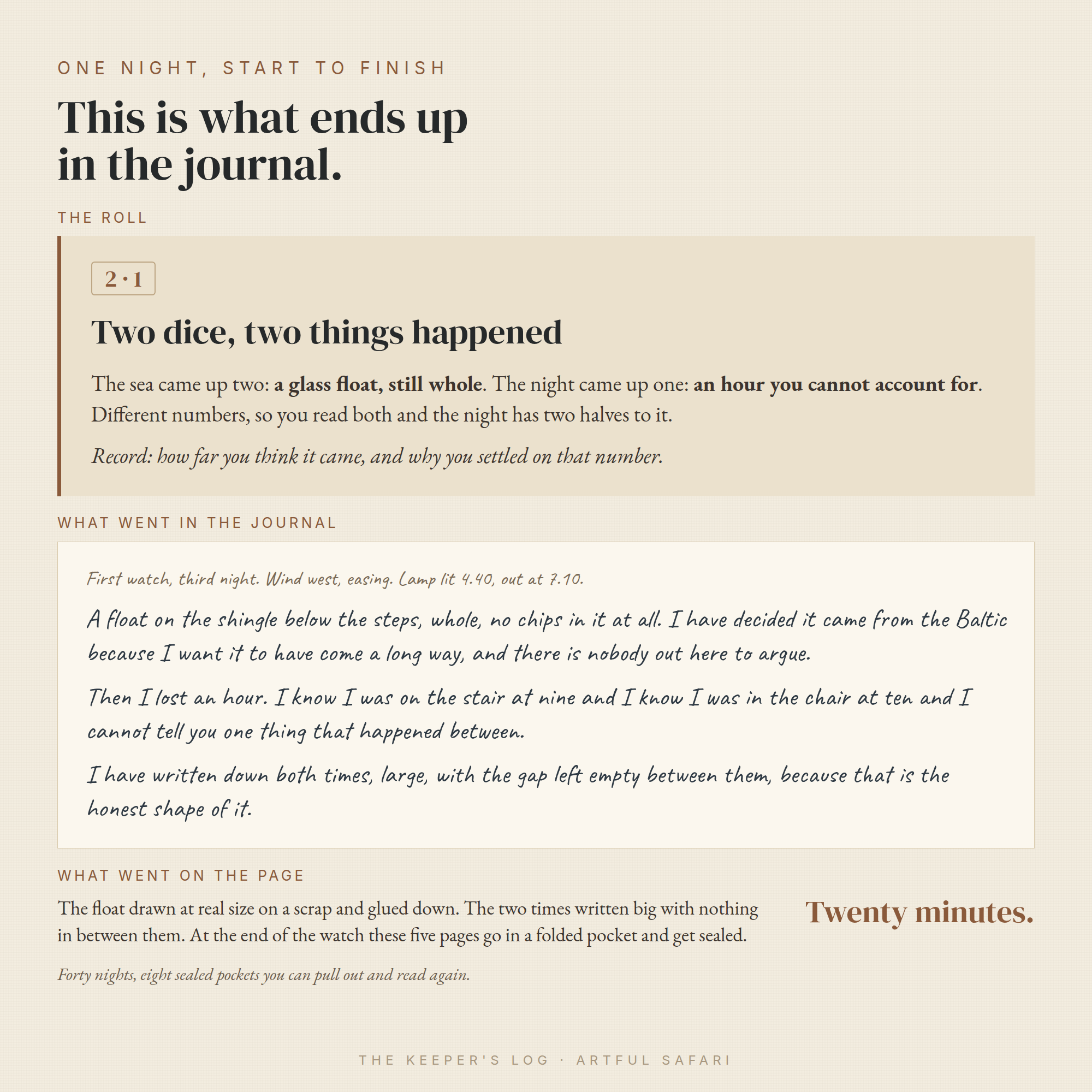
    One finished night of a solo TTRPG: the roll, what went in the journal, and what went on the page
    Twenty minutes of writing, then the paper work. That is a whole night.

    Twelve lines of writing and a scrap of paper stuck down. That is a full evening in most of these games. The book fills up at that rate without the evening ever turning into homework.

    A clock face and a blank tag on patterned paper, ready for a solo TTRPG journal page
    A blank tag is the easiest thing to add to a page you have already written.

    Solo TTRPG questions people keep asking

    What is a solo TTRPG in plain words?

    It is a book of prompts and tables you play by yourself, writing the results in a journal. TTRPG is short for tabletop roleplaying game, the kind played round a table with dice rather than on a screen. The solo version cuts the table down to one person, which is why the journal does the work the other players used to do.

    Do I need dice to play?

    Not always. Apothecaria and Colostle use a deck of ordinary playing cards instead, Koriko uses tarot cards, and several of the free games ask for nothing beyond a notebook and a pen. Where dice do appear it is usually one or two ordinary six-sided ones, the kind already in a board game box in the cupboard.

    Do I have to be any good at writing?

    No, and nobody else is going to read it. There is no plot hole for anyone to find and no handwriting to be marked. Plenty of people answer a prompt in four lines and spend the rest of the evening on the page itself, which counts exactly the same as three paragraphs.

    I bought one and still have not started. Where do I begin?

    Print the first two pages only, and answer the first prompt tonight. The usual sticking point is trying to set the whole journal up before play starts, which turns a game into a project. Our seven-night starter guide walks through the first week one evening at a time.

    Which one should I pick if I have never played?

    Take Alone Among the Stars or Last Tea Shop Classic as your first solo TTRPG, because both cost nothing and you will know within an evening whether the format suits you. If it does, Koriko is the one whose publisher says outright that no previous experience is needed. Our wider solo RPG starter guide covers the same ground for the non-tabletop crowd.

    Can I use my junk journal for this?

    Yes, and a junk journal is where most of this community keeps a solo TTRPG. It already has the pockets and tuck spots where the cards and the loose scraps end up living. Our complete guide to one quiet night covers the setup if your book is still empty.

    Pick a solo TTRPG and start tonight

    The cheapest way in is a free game, an hour after dinner, and the journal already on your shelf. Every one of these was built for a person sitting on their own.

    If you want the papers and ephemera to go with the writing, The Crimson Parlour kit carries a thirteen-night mystery of its own.

  • Artefact: 5 Easy Ways to Play the Object’s Story

    Artefact: 5 Easy Ways to Play the Object’s Story

    Artefact is a solo journaling RPG by Jack Harrison, published by Mousehole Press. You play the magical item rather than a person: a sword, a pair of boots, passing through the hands of one Keeper after another across centuries, while the journal you write becomes the object’s own memory.

    That is the game, not the ordinary English word that happens to share its spelling. The swap is why Artefact suits a made book better than almost anything else in the hobby, since the object outlives everyone who ever holds it.

    Five ways below to make the book carry that instead of just describing it.

    What Artefact actually asks you to do

    Time-worn paper marked with faint clock circles, the kind of background an artefact journal spread begins on
    Echoes of Time. The book has to look like something that has already been through a few hundred years.

    You begin by choosing what kind of Artefact you are. The list runs to nine: The Weapon, The Shield, The Instrument, The Ornament, The Deck, The Footwear, The Staff, The Tome and The Automaton.

    Each type opens with a question written for it alone. The Weapon starts at the forge that made it, and the smith who swung the hammer. You answer it, sketch yourself, and take your starting traits from a list or write your own.

    Then the Keepers arrive. A Keeper gets a name and a few details, two prompts about how they used you, and one memorable event with an outcome.

    Good outcome or bad, you take a Change from the matching list, so the object comes out of it altered either way. Then you work out the circumstances that lost you.

    The Keepers arrive in three eras. The object is newly forged in the first, passes through a time of glory in the second, and reaches ruin in the third.

    Between Keepers the game makes you sit with the passing of time. You pick how long the gap is, and the longer the gap the longer you stay in silence before writing again.

    A month is twenty seconds. A century is two minutes. A millennium is four.

    A long stretch of neglect also pulls a prompt for what the years did, so the world around the object either holds steady or decays.

    The publisher’s own page calls it “a story game for one player, designed for contemplative solo play” and puts about an hour on a sitting.

    If you would rather see the book before you buy it, Dave Thaumavore turns the pages on camera and shows how one Keeper section is laid out:

    The craft side of this hobby has started calling these games RPJs, short for role playing journals. Of all the RPJs going around at the moment, Artefact is the one that pays back the most for treating the journal as the real object.

    1. Build the book as the Artefact’s own record

    Most journaling games leave you writing as a person, so a diary layout fits them. This one does not, because the book is the object.

    The first spread is the making, not a title page about you. Whatever you answered to that opening question goes down in full, with your sketch of yourself beside it and the whole opening given over to the forge or the workshop.

    One small decision changes how the entire book reads: date the spreads by the object’s reckoning rather than ours. “Third winter after the forge” carries more than “1482” when nobody has told the object what year it is.

    Hold the voice to that as well. An object cannot know what happened in the next room, and a book that never breaks the rule is much stranger to read back.

    2. Give every Keeper their own spread

    One Keeper, one opening, and the layout identical across all of them so the differences do the talking. Same panel for the Keeper’s name, same corner for the memorable event, every time.

    Let the papers follow the three eras Artefact already set up. The first Keeper’s spread can run light and clean, the second heavy with pattern and gilt, the last torn back to something plainer and darker.

    Pale cream damask paper with a gold flourish in the corner, for a first Keeper spread
    First Keeper. Light, clean, barely marked, because nothing has happened to the object yet.
    Gilded paper with roses, for the middle era of an artefact book when the object is prized
    The time of glory. Same warmth, far more of it, and the paper starts carrying pattern.

    Someone flipping the book should feel the centuries turn before they read a word. A screen cannot do that.

    3. Age the paper between the eras

    The silence between Keepers is the best thing in the game and the easiest to lose in a journal, because nothing happens on the page. Give it a spread anyway.

    Leave it empty apart from one line saying how long passed, then treat the spread physically. Tea-stain it, or glue in something that has visibly survived a long time.

    Tea-stained and water-marked paper for the silent years between two Keepers
    The rest spread. Nothing written on it but a length of time, and the paper doing the rest.

    Let the prompt decide how far you go. A decay prompt should show the damage on the paper itself, while a prompt about the changing world outside stays intact and puts the shift beyond the object.

    This is where a scrap box earns its keep. Anything already stained, torn or foxed belongs in the rest spreads, because that is the only part of the book where wear counts as content rather than as a mistake.

    4. Keep the Changes where you can flip back to them

    The Changes are the object’s whole arc, and they disappear if they only exist inside the paragraph where they happened. Build a running record for them near the front of the book.

    A tabbed page does it. Write the starting traits with room underneath each one, then strike a trait out rather than rubbing it away when it is replaced, so the object’s history stays readable on a single page.

    Put the sketches there too. Redraw the Artefact after each Keeper, smaller, in a row across the bottom, and by the end the whole life of the thing sits in one line of drawings.

    What a finished Artefact spread looks like

    Left page is the Keeper. Name at the top, a portrait or something standing in for one, and the two prompt answers written as the object watching them rather than as a biography.

    Right page is what they did with you. The memorable event takes the largest block of writing on the spread, the Change sits underneath it in a different colour, and the loss is one line at the foot of the page.

    Everything else is texture. Ledger paper behind the writing, a strip of something ruined down the gutter where two eras meet.

    A finished solo journaling game spread, laid out the way an artefact book builds every Keeper opening
    One spread, one Keeper, one loss. Every opening in an Artefact book is built the same way so the ageing does the work.

    A finished Artefact book should read like an archive somebody else kept and you found. The game says that is what the book is.

    5. End the book the way the Artefact ends

    Every Keeper loses you, and the last loss ends the Artefact’s story. It deserves better than a paragraph tucked into the bottom of a spread.

    An hourglass with the sand running out, marking the end of an artefact book
    The last page wants one image and a lot of empty paper around it.

    Close with a final page holding nothing but the object. Buried, sunk, melted down, or shelved in a collection where nobody left alive knows what it is.

    One image and one line will do it. Some players seal that last page shut along the edge; others glue an envelope inside the back cover, put the object’s final trait in it, and leave whoever reads the book to decide whether to open it.

    Papers that can carry several centuries

    The supply problem this game creates is an odd one. A single Artefact book has to cover several eras and still look like the life of one object, and buying a separate kit per era is exactly how a book stops holding together.
    One set with range inside it works better. A lighter stock for the first Keeper, the same palette pushed darker and heavier by the last, so the book ages instead of changing character halfway through.

    Helene designs the Artful Safari sets to stay inside one palette family for that reason. If you are printing at home, our guide to printing junk journal papers at home covers the settings that stop a dark era page going muddy, and if the made-book side of this is new, read what a junk journal actually is before you cut anything.

    Artefact questions people actually ask

    Do I need dice to play Artefact?

    No dice are needed to work through the book. The publisher describes the game as drawing and some writing, and play runs on questions you answer and lists you pick a Change from rather than on rolls. If you would rather have the choice taken out of your hands, the download includes a Keeper generator that throws up random Keepers for you.

    Do I have to be good at writing?

    No. The prompts do the heavy lifting, and plenty of people in this hobby answer them in a line or two and spend the rest of the evening on the page itself with stamps, tape and paper. Nobody reads the book but you, so nobody is going to find a plot hole in it or ask you to defend a draft.

    How long does a game of Artefact take?

    The publisher puts about an hour on a sitting. A book runs through a run of Keepers rather than one, so most people spread it over a few evenings, and the game carries on until the object has had its last Keeper.

    I bought it and I still have not started. Where do I actually begin?

    Start with the opening question for your item type and nothing else. That single answer, written out in full on the first spread with a sketch beside it, is a whole session’s work and it puts the object on the page. The stall almost always comes from trying to set up the entire journal before the first word goes down.

    What is an RPJ?

    RPJ is short for role playing journal, the name this crafting community gave to solo journaling games played inside a handmade book. It was coined on camera in July 2026 by the YouTuber Journals4breakfast and picked up within weeks by other makers. Artefact fits the word particularly well, since the finished journal is meant to be the object.

    Do I need a special notebook, or will any journal do?

    Any book with paper heavy enough to take a bit of wet work will do, and a fair few players gut an old hardback and build inside that instead. What matters more is that the paper can be aged, because the passing of centuries between Keepers is the part of Artefact that only shows up in the paper itself.

    If you have never played an RPJ before

    Artefact is not a difficult game, but it is a long one. A run of Keepers across centuries is a real commitment, and the same complaint keeps turning up under every beginner video: people buy the game, set up a journal, and stall before the first Keeper.

    Two things fix that. Watching somebody play one through is what most newcomers say made it click, and starting on a game you can finish in a sitting gets the format out of the way before you commit to a millennium.

    Our guide to solo journaling RPGs covers the format from scratch. There is also a full Artefact playthrough written out Keeper by Keeper, journal entries and all, which is the closest thing to watching over someone’s shoulder.

    If you want something short to warm up on first, The Unanswered Letter is our own solo journaling game and it finishes in one evening.

  • Notorious Solo RPG: 6 Easy Ways to Journal a Bounty Hunt

    Notorious Solo RPG: 6 Easy Ways to Journal a Bounty Hunt

    The Notorious solo RPG is a bounty-hunting game for one player, designed by Jason Price for Always Checkers Publishing. It shares a name with the Hitchcock film and the rapper, and it is neither. You play a Nomad, a hunter in a galaxy at war, and you track one target across one planet with two six-sided dice and a stack of tables.
    The rules hand you the hunt. What they do not hand you is a book to keep it in, and that is where people get stuck once the first session is over.

    Below are six ways to run a Notorious solo RPG hunt as a real book you can pick up off a shelf, rather than a stack of loose notes.

    What the Notorious solo RPG asks you to do

    Your Nomad carries three numbers. Notoriety is your reputation on the planet you are working, Favour is your standing with the Nomad’s Guild, and Motivation is your will to bring the target in.

    Motivation doubles as your re-roll currency. Spending it to rescue a bad roll costs you at the end of the story, which is where most of the tension in the Notorious solo RPG comes from.

    Every action is one roll of your Nomad die plus whichever attribute applies, against a challenge die. Higher number wins. That is the whole dice system, which is why there is so much room left over for writing.

    The game gives you six Nomad profiles to choose from: the Armour, the Assassin, the Bot, the Brute, the Scoundrel and the Uncanny. Each comes with a ranged weapon, a melee weapon and an outfit that gives you armour. You then roll for Origin, Scar, Trigger, Species and Personality, and those rolls are the ones that give you something to write about on page one.

    There are two ways to play. Arcade Mode runs fast, and Story Mode is written for people who want to journal, so Story Mode is the one you want if you are building a book.

    New to the format entirely? Our complete guide to solo journaling RPGs covers the basics before you spend anything.

    1. Open your Notorious solo RPG book with a wanted poster

    Notorious generates the contract before almost anything else. You roll for the planet your target is rumoured to be hiding on, and the planet hands you three factions present there: a Controlling one, a Challenging one, and a Minor one.

    You pick which of those hired you, and each has its own reasons for wanting somebody brought in. The Old Empire is after rebellious types. The Trade Alliance wants whoever has damaged its takings, and the Mystic Order is interested in the darker end of its own ancient warrior tradition.

    That is a wanted poster sitting there waiting to be made. Give it the right-hand page of your first opening: the target’s name, a face if you want to collage or sketch one, the faction’s mark, and the fee. Write “dead or alive” along the bottom, because the game does.

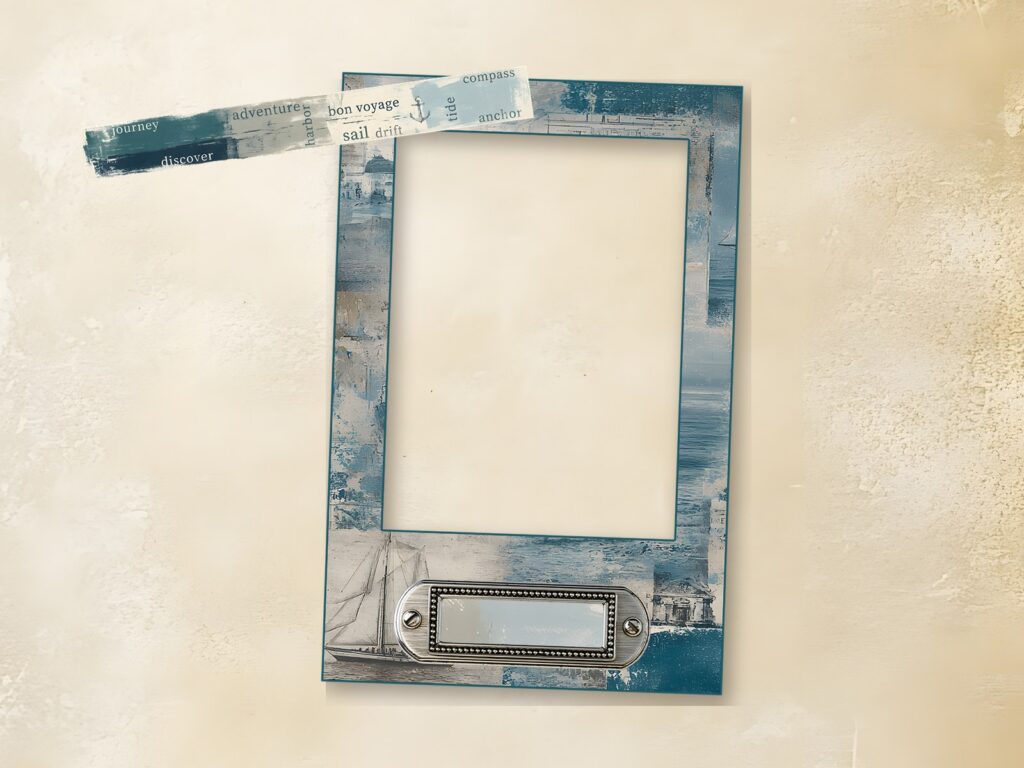
    A weathered paper and an empty frame set up as the wanted poster page of a Notorious solo RPG journal
    An empty frame on weathered paper, waiting for the target’s face and fee. Build this page before you roll anything else.

    Doing it this way means the first thing anyone opening your book sees is the job rather than a grid of numbers.

    2. Give the Nomad a page facing the poster

    All those character rolls exist to be looked at again later. Your Scar is something visible that other people react to, and your Trigger is what pulls you away from the Guild’s code once the pressure comes on.

    Put them on the left-hand page opposite the poster so hunter and hunted stare at each other across the gutter. Name, species, profile, the three numbers in a box you can cross out and rewrite, and four lines of history underneath.

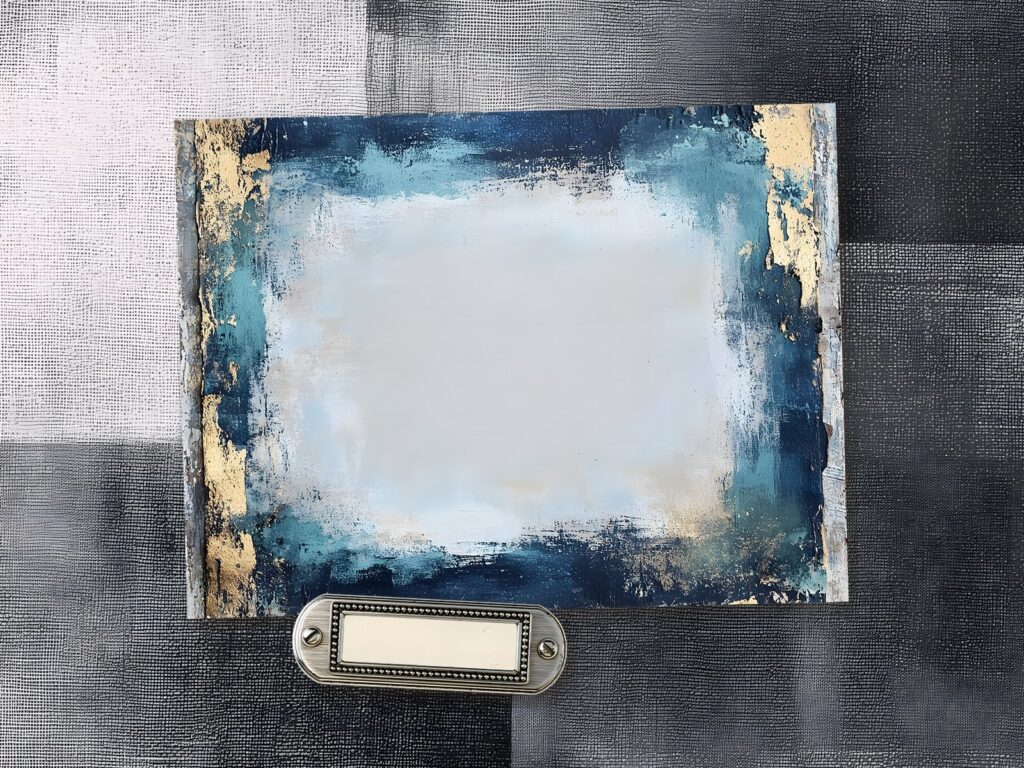
    A pale journal card and a name plate laid out for the hunter's page in a Notorious solo RPG book
    One card, one name plate, room for four lines of history. The hunter’s page does not need more than that.

    Leave the numbers loose. Notoriety in particular climbs through a hunt, and you want to watch it move.

    3. Keep a ledger of leads

    The play loop in the Notorious solo RPG is short. You roll on the Exploration table and complete the prompt, and there is a chance of turning up a Lead. That chance rises as your Notoriety rises, which is a quiet way of saying that the more people know your name, the faster the job closes.

    After two Leads, the third is always the Target. Every hunt has that shape: two clues, then the confrontation.

    A ledger handles it better than prose does. Rule three columns down a left-hand page, headed with what the lead was, where it came from, and what it cost you. Two rows fill across a whole planet, and the third row is where you write the target’s name and stop.

    Three index cards on kraft paper used as the lead ledger in a Notorious solo RPG journal
    Three cards, three leads, and the last one carries the target’s name. Cards work as well as ruled columns if you would rather not draw lines.

    4. Give each destination half a spread

    After Exploration, the game sends you to the Destinations table, and you play out whatever happens there. Each planet carries six locations, and the prompts attached to them are where most of the encounters live.

    How you approach somebody depends on what they are. You can Speak to a Local, but you cannot attack or threaten one, and you can only Recruit them when a prompt offers it. A Hostile is the reverse: no conversation, only Threaten or Attack.

    Half a spread per destination keeps pace with the game. A torn strip for the sky, a darker scrap for the ground, the place name in the top corner, and five or six lines about who you met there.

    A star field paper with two ticket stubs, the makings of a destination page in a Notorious solo RPG book
    A dark sky and two stubs. Half a spread per stop is enough to keep the book level with the dice.

    Anything more elaborate and the book falls behind the dice.

    5. Build the showdown as a full opening

    When a Lead surfaces or the Target finally appears, the Notorious solo RPG asks you to roll a Showdown. First a Site, which might be a speeding hovertrain, the ruins of a crashed starship, or a mystic temple. Then a Setting for the conditions on top of it, such as a blinding sandstorm or a herd stampeding through.

    None of that touches the dice. It exists so you have something worth describing, which makes it the most useful roll in the game for anyone keeping a book.

    Give it both pages. Site across the top, the fight down the middle, and the outcome bottom right where the eye lands last.

    6. Close the bounty on the page

    When the Showdown with the Target is finished, however it went, you take your remaining Motivation, double it, and add it to your Favour with the Guild. A poor result can leave you starting the next contract with almost no support, or being hunted yourself by the faction that hired you. A strong one earns you something bigger and more dangerous.

    That number is your closing entry. Write it on the last page of the hunt, then go back to the front and mark the poster: CLOSED, or KILLED, or ESCAPED across the target’s face.

    The Notorious solo RPG also gives you epilogues, so you can end the Nomad’s story there or carry them into the next job. If you are carrying them, leave the following right-hand page empty and let the next poster begin there.

    What a finished Notorious solo RPG journal looks like

    People in this hobby have started calling these books RPJs, short for role playing journals. The finished ones have a shape you can recognise from across a table.

    A finished Notorious solo RPG book runs poster at the front, character page facing it, then the ledger, four or five destination pages, one full showdown opening, and a closing entry with a number on it. Twenty to thirty pages for a single contract, which is comfortable at an evening or two a week over a month.

    One night of solo play written up as a journal entry, the same shape a Notorious solo RPG hunt fills
    One night of play written up. A destination page works the same way: what happened, then what went on the paper.

    The RPJ crowd calls the videos of these “flip throughs”, and watching one is the quickest way to see what you are aiming at. Cassi Mothwin plays the whole thing at journaling pace rather than gaming pace, which is the pace this kind of book needs:

    If you already build books out of scraps, none of this is new to you. It is the same craft described in what a junk journal actually is, pointed at a bounty instead of a holiday.

    Where to get the Notorious solo RPG and what it costs

    The download lives on the publisher’s own itch.io page from around ten US dollars. That gets you the 76-page book with the tables, the six Nomad profiles, and a character sheet you can fill in on screen.

    Always Checkers also sell a printed A5 edition with copper foiling on the cover, wire-bound, though it goes in and out of stock. Torben Bökemeyer did the artwork and it is worth seeing at full size.

    To read somebody else’s hunt before committing, PopCult’s review and actual play of Notorious follows one Nomad through two contracts, and it is the fullest written account of the loop I could find.

    Questions people ask about the Notorious solo RPG

    I have bought the Notorious solo RPG and still have not started. Where do I actually begin?

    Begin with the contract, not the character. Roll the planet your target is hiding on, take the three factions it gives you, and pick the one that hired you. Write that up as a wanted poster on one page. You now have a target with a name and a reason behind it, which makes the first Exploration roll feel like play rather than admin.

    Do I need special dice for the Notorious solo RPG?

    No. Two ordinary six-sided dice cover the whole game. One of them is your Nomad die, which you roll with an attribute added on, and the other is the challenge die you are rolling against. A pair borrowed from a board game in the cupboard will do the job.

    Do I have to be good at writing?

    No. Most of what goes in the book is short: a place name, who you met, what it cost you, a number. The lead ledger is columns rather than prose, and a destination page runs to five or six lines. Only the showdown really asks for a scene, and by the time you reach one you know your Nomad well enough to write it.

    How long does one hunt take?

    A contract runs two Leads and then the Target, so somewhere between three and six sittings depending on how much you cut and glue. An evening or two a week finishes a book in about a month. Arcade Mode compresses that a long way if you want the story without the pages.

    Can I use cards instead of dice?

    The rules ask for two six-sided dice and give you tables to roll on, so cards are your own substitution rather than something the game offers. Plenty of people in the journaling crowd do it anyway, drawing from a tarot or oracle deck and mapping the numbers across. It shifts the odds, which may or may not bother you.

    Is the Notorious solo RPG the same as the film or the rapper?

    No. This is a 76-page game from Always Checkers Publishing, with no connection to the 1946 Hitchcock thriller, the 2009 biopic, or Christopher Wallace. If you arrived here looking for one of those, that is a name clash rather than the game.

    If you would rather start from papers

    None of this needs a kit. A cheap notebook, a pen, and whatever is already in your stash will carry a whole Notorious solo RPG hunt, and half the pleasure of these books is that they look handmade.

    If you would sooner start from papers that already have an atmosphere, Helene designs the sets in The Crimson Parlour, a Victorian mystery kit with its own thirteen-night game inside it. A different setting to the Notorious solo RPG, and the same idea underneath: a game that leaves a book behind when it is over.

  • Ironsworn Solo RPG: 6 Easy Steps to Your First Session

    Ironsworn Solo RPG: 6 Easy Steps to Your First Session

    The Ironsworn solo RPG is a free dark fantasy tabletop game by Shawn Tomkin, played alone with three dice and a journal. You swear an Iron Vow, make moves to pursue it, roll a six-sided action die against two ten-sided challenge dice, and write down in the journal what happened after each roll.

    Most people download it, read the moves twice, then sit looking at a blank notebook wondering what goes on the first page. That gap between owning the game and starting it is where the stalling happens.

    What follows is a setup order for keeping the game as a physical book you make by hand, rather than a document on a laptop. Six steps, from the free download to a finished vow marked on the page.

    The rules cost nothing. The book is yours, and that is the half nobody writes instructions for.

    What an Ironsworn solo RPG session actually looks like on paper

    Ironsworn is a dark fantasy game set in the Ironlands, a cold frontier where people scrape a living at the edge of somewhere worse. Shawn Tomkin released it in 2018. It was built to be played alone as readily as with a group, and the digital edition has been free the whole time.

    A session of the Ironsworn solo RPG runs as a loop. You say what your character is doing, you find the move that covers it, you roll, and the result tells you whether it went well, went well at a price, or went wrong.

    Then you write. The writing is not an extra bolted onto the rules, it is the thing the whole system exists to produce. A made book holds it better than a notes app.

    Step 1. Download the Ironsworn solo RPG rules, then pick the book

    The free digital edition lives on Tomkin Press, the author’s own publishing site, and the same download sits on Shawn Tomkin’s itch.io page. It runs to 270 pages and arrives with a playkit and printable asset cards.

    Print the moves reference and the asset cards. Leave the rest open on a screen beside you, the way you would leave a recipe book open on the bench.

    For the journal, an A5 hardback with thick pages will take ink and glue without buckling. If you already make junk journals, use one you have made. Coming the other way, from the gaming side, our guide to what a junk journal is covers the materials.

    An Ironsworn solo RPG journal opening built on birch woodland papers
    A bound book you can glue into holds an Ironsworn solo RPG better than a folder of loose printouts.

    Step 2. Build the front matter your Ironsworn solo RPG needs

    An Ironsworn solo RPG character comes with a handful of numbers to keep, and the book works far better when they live in one fixed place instead of migrating through the pages. Give the first opening of the journal to them and never write a scene there.

    On the left page go your character’s name, their five stats, and their assets. The stats are edge, heart, iron, shadow and wits, and they are the small numbers you add to a roll. Assets are the cards that say what your character is good at, anything from an animal companion to a combat talent or a ritual.

    On the right page go the four tracks. Health, spirit and supply each run from nothing up to five. Momentum runs from minus six to plus ten and tells you how the quest is faring overall.

    Draw those tracks as boxes you tick and cross, not as numbers you rub out. A crossed-out row of health still reads three months later. A smudged pencil 3 does not.

    Step 3. Swear your first Iron Vow, and give it a spread

    A cold-toned leaf element used to break up a vow page in a journal

    The Iron Vow is the spine of the game. When you commit to a quest you write the vow down, give it a rank, and roll +heart, which means rolling the six-sided action die and adding your heart score.

    A strong hit gives you two momentum and a clear next step. A weak hit gives you one momentum and more questions than answers. A miss drops something in your way before you can begin, and you either press on at a cost or forsake the vow.

    Ranks run troublesome, dangerous, formidable, extreme and epic, and the rank sets how fast the track fills. A troublesome vow marks three boxes each time. Dangerous marks two, formidable marks one, extreme marks two ticks and epic marks a single tick.

    Each box holds four ticks and every track is ten boxes long. That is the number to design the page around.

    Here is the part the rulebook leaves to you. Rule the ten-box track by hand across the top of a fresh opening, wide and in ink, then write the vow underneath it in the words your character used.

    Rule the track in ink, wide, before there is anything to record on it. A page that already has room for the story tends to get one.

    The rest of that opening stays empty and fills as the quest does. Reading back through an Ironsworn solo RPG journal a year later, those half-filled tracks are the thing that brings the night back.

    Step 4. Make one move and write down what the dice said

    Every uncertain action in the Ironsworn solo RPG goes through a move. Face Danger, Secure an Advantage, Gather Information, Make Camp, Undertake a Journey and the rest each tell you what to roll and what each outcome means.

    An action roll is three dice thrown at once. One six-sided die is your action die, you add a stat to it, and that total goes up against two ten-sided challenge dice.

    Beat both and it is a strong hit. Beat one and it is a weak hit, which is success with a price attached. Beat neither and it is a miss.

    When the two challenge dice land on the same number, something larger is going on than the move by itself. Take a match as the game handing you a twist.

    Write the entry straight away, while the roll still stings. Two or three lines in your character’s voice, not a report on what the dice did.

    What to record after each move in an Ironsworn solo RPG

    A page that holds only prose loses the game underneath it. A page that holds only numbers is a spreadsheet. Five things, every time, keeps it readable for years.

    • The move you made, abbreviated in the margin. Something like Face Danger, +iron.
    • The outcome, as one mark beside it. A tick for a strong hit, a half tick for a weak one, a cross for a miss.
    • What happened, in your character’s voice, at whatever length the moment earns.
    • Any track that moved, marked on the front opening rather than buried mid-page where you will never find it again.
    • One thing for your hands. A scrap of map, or a torn edge of paper in the colour of that night’s weather.
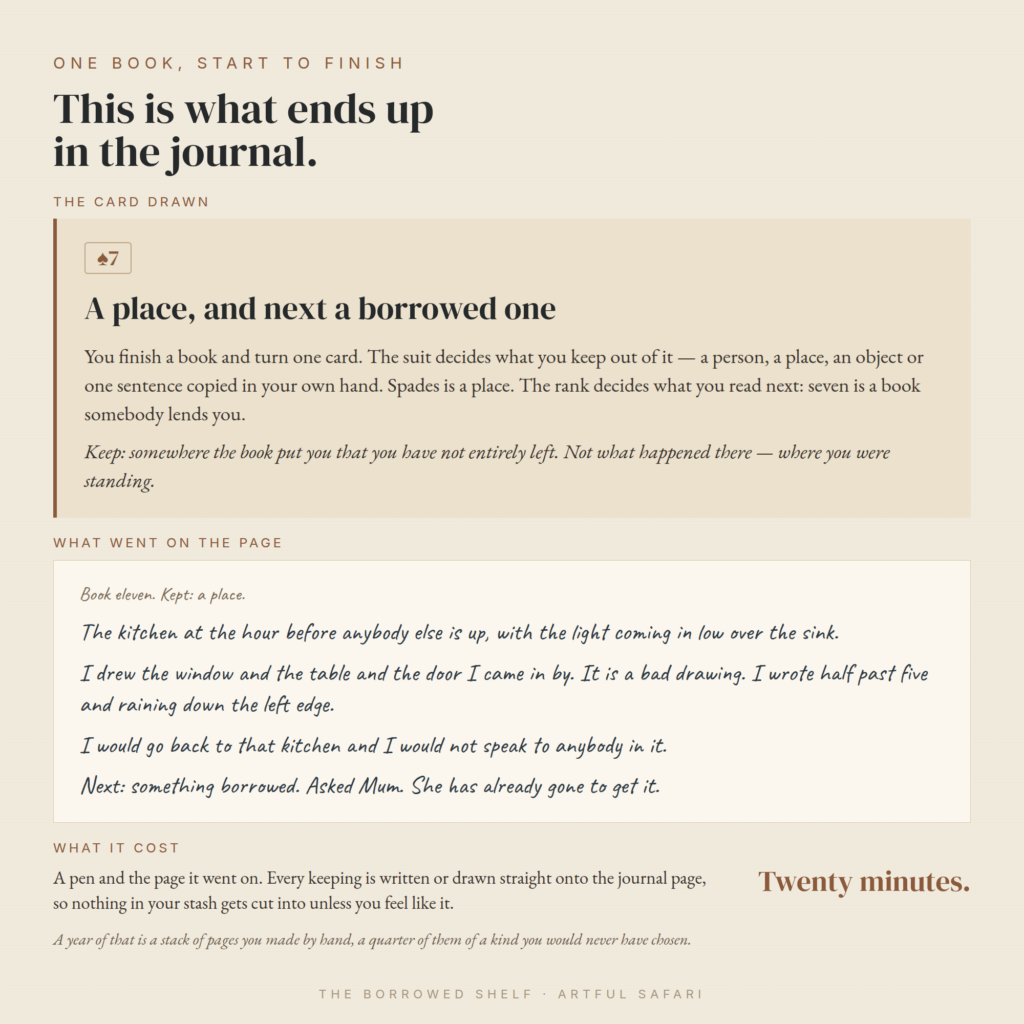
    That last line is what separates an RPJ from a pile of notes. RPJ is short for role playing journal, the community’s own name for this, and most of the people using it came to Ironsworn from junk journalling rather than from tabletop gaming. The making is why they stay.

    Woodland papers suited to an Ironsworn solo RPG set in the Ironlands
    Cold, wooded, slightly grim papers suit an Ironsworn solo RPG better than anything bright.

    Step 5. Ask the oracle, then glue something in

    Solo play removes the person who would normally answer your questions, so the Ironsworn solo RPG hands you the Ask the Oracle move and a long run of random tables. You can ask a yes-or-no question with odds attached, or roll on a table for a name, a place, an action or a theme.

    An oracle table is a numbered list you roll against, and the number is never the answer. The answer is what you decide the result meant. That decision is where a solo game stops being arithmetic.
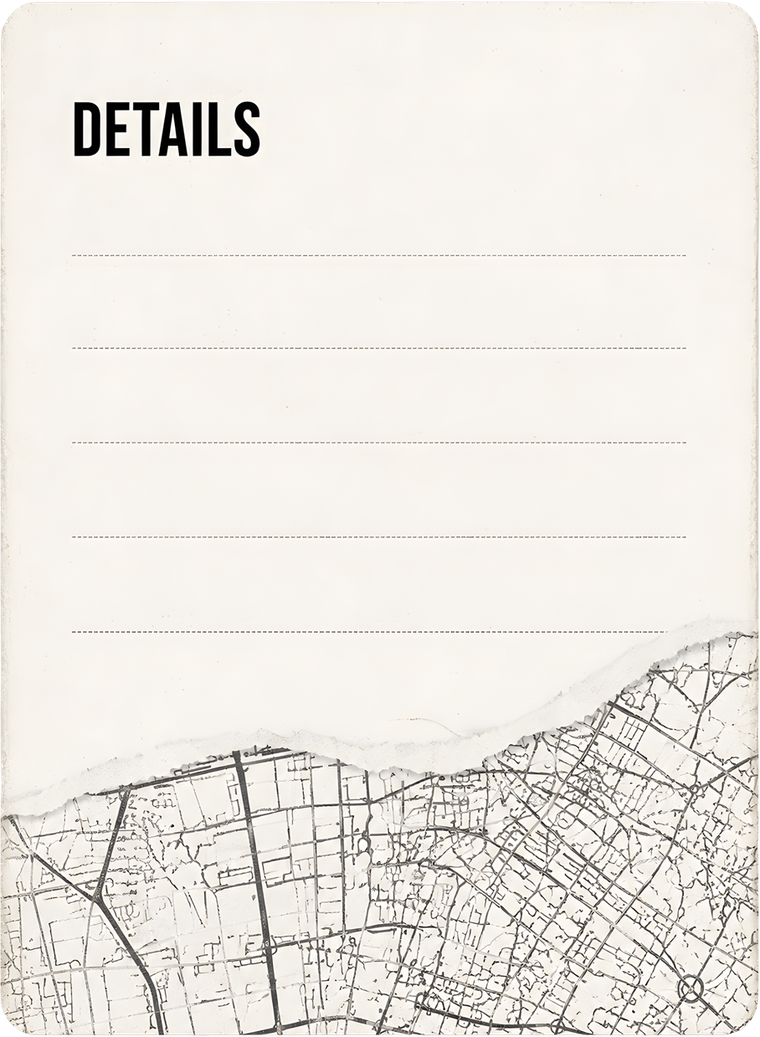
    Keep a glued-in pocket near the back for results you have rolled but not used yet. Write them on small cards, pull one when a scene needs a shove, and glue the spent card onto the page it caused.

    A weathered card element cut down for oracle results in an Ironsworn solo RPG journal
    Cut cards from a paper you like, write the oracle result on one, and glue it down where it landed.

    Step 6. Mark a fulfilled vow so the page shows it

    Progress in an Ironsworn solo RPG does not come from ticking a box whenever you feel like it. You mark progress when you Reach a Milestone, which the rules define as overcoming a real obstacle, finishing a hard journey, solving a mystery, or winning support you needed.

    Once the track holds enough filled boxes, you make the Fulfill Your Vow move. This one is a progress roll and it works differently: you do not roll the action die at all. You count your filled boxes and compare that number against the two challenge dice.

    Bonds run on a track of their own. Each time you Forge a Bond with a person or a community you mark one tick, and when a character’s story ends, Write Your Epilogue tallies those bonds the way a vow is tallied.

    On paper, a fulfilled vow is worth more than a tick. Ink the ten boxes solid, date it, and hand the facing page to one image of the thing you swore to do, finished.

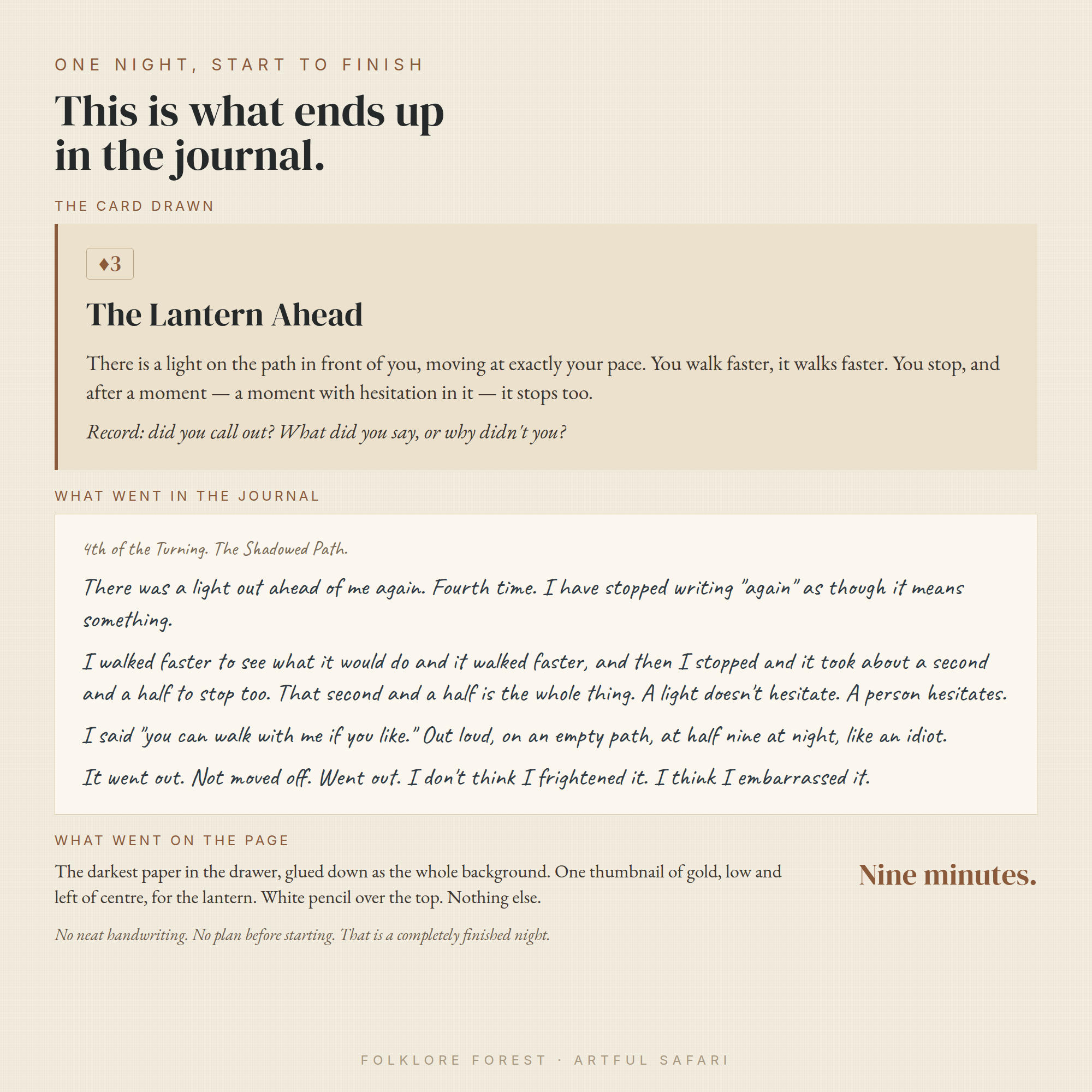
    One finished night in a solo journaling game, from the prompt through to what went on the page
    A single night written out end to end, from another game in the same format. Four lines and one thing stuck down is a finished entry.

    That opening is what you turn to when somebody asks what an Ironsworn solo RPG actually is. It gets there faster than the rulebook.

    What goes wrong in a first Ironsworn solo RPG journal

    Swearing an epic vow first is the common one. An epic vow marks a single tick at a time and a full track is forty ticks, so the book stalls long before the story does. Swear something troublesome and finish it.

    Writing on loose sheets with the intention of binding them later almost never ends in a bound book. Start in the hardback even if the first page comes out scruffy.

    Decorating the whole journal before you play tends to make it too precious to write in. Build two or three openings ahead of the story and stop there.

    Recording the dice instead of the character is the one people regret. Six months on, “8 against 4 and 9, weak hit” tells you nothing. What your character did about it tells you the lot.

    Thin paper is the last one. Fountain pen ink and wet glue will find it, so test a sheet before you commit forty nights to a book.

    Common questions about the Ironsworn solo RPG

    How do I actually start once I have downloaded the game?

    Make a character and swear one troublesome vow tonight, before you decorate anything. The usual stall is treating setup as a project, printing the whole rulebook and buying a journal and never rolling. Do the front opening from step two in half an hour, swear a small vow, make one move, write four lines.

    Do I need dice to play Ironsworn?

    Yes, one six-sided die and two ten-sided dice. That is the whole set. If you do not own ten-sided dice, a dice-rolling app does the same job, and plenty of people roll on a phone with the paper journal open on their knee.

    Do I have to be good at writing?

    No. Nobody reads an Ironsworn solo RPG journal except the person writing it, so there is no one to find a plot hole or mark a sentence. Four lines in your character’s voice does the job. The people who stay with this longest tend to write short and glue in more.

    How long does one session take?

    Ten minutes to a couple of hours, and the short ones are normal. One move, one entry and one thing stuck to the page is a complete evening. It suits interrupted schedules, because you can put it down mid-quest and pick it up three weeks later without rereading anything.

    Is the Ironsworn solo RPG really free?

    Yes. The digital edition, the playkit and the printable asset cards are free from Tomkin Press and from itch.io, and what you get is the complete 270-page rulebook rather than a sample. Shawn Tomkin also sells printed editions and a science fiction follow-up called Starforged.

    Can I use a junk journal I have already made?

    That is the best book for it. A junk journal already has pockets and mixed papers, which is what an Ironsworn solo RPG needs for oracle cards and vow tracks. Leave the first opening blank for your character and tracks, then work forward. Pages you decorated months ago will steer scenes, which is worth having.

    Where an Ironsworn solo RPG goes next

    Watching somebody play clears up the loop faster than reading about it does. Dave Thaumavore’s walkthrough of Ironsworn and how its mechanics work takes the dice, the vow ranks and the oracle in order, with examples on screen.

    Plenty of people keep a second, shorter game running alongside a long campaign, for nights when forty ticks feels like a distance. Our guide to how a solo journalling RPG is built pulls the format apart, and the first seven nights guide is a slower way in.

    Either way, the book is the part you keep. An RPJ made from papers you actually like is a better home for a long Ironsworn solo RPG than a stack of printouts, and printing your own is covered in our home printing settings guide.

    If you want the paper side sorted before you swear your first vow, our Folklore Forest kit pairs woodland papers and ephemera with a 52-night game of its own.

  • Colostle: 6 Easy Steps to Your First Explorer’s Journal

    Colostle: 6 Easy Steps to Your First Explorer’s Journal

    Colostle is a solo journalling game by Nich Angell, set inside a castle so large it has oceans and mountains in its rooms. You play it with the book, an ordinary deck of 52 playing cards and a notebook: draw a card, read the prompt it points to, write down what your character did.

    The writing is the game, and the notebook is the part nobody sets up for you. Players call the finished book an RPJ, short for role playing journal, a name the YouTuber Journals4breakfast put on it.

    That gap is where most people stop. They buy the book, buy a journal to go with it, and then sit looking at a blank first page trying to work out what goes where. Six steps below get a Colostle journal open, laid out and usable before you turn a single card.

    What Colostle actually asks your notebook to hold

    Colostle was written and illustrated by Nich Angell of Draconeer Games in Gloucestershire, and it won the Gold ENNIE for Best Rules in 2022 after a Kickstarter that raised close to £45,000. His own description of the world is on the Colostle site: a castle so big that there are oceans, mountains and cities within its rooms, and no outside to any of it. The landscapes inside are the Roomlands.

    Colostle plays like this. Your character has an Exploration score and a Combat score, each a number out of five, set by the class you pick from the book. You draw a number of cards equal to your Exploration score, and each card sends you to a prompt.

    A weathered metal EXPLORE sign, an element from the Urban Travel range
    Exploration is most of the game. The cards decide what you walk into.

    Red cards point at living things, people and creatures. Black cards point at places and objects. The number on the card decides which prompt you land on, and you choose the order in which you resolve the cards you drew.

    Wandering the Roomlands are the Rooks, which the book calls huge walking stone castle towers that attack anything they see, but hold the Rookstones, the only source of magic in this world. Fighting one means drawing cards against it and winning the majority of the exchanges. Angell has described the game as part game, part creative-writing exercise, which is a fair description and the reason the journal carries so much of the weight.

    So the book hands you a card draw and a prompt, and everything after that is yours. The cards you turned need somewhere to sit on the page. So does the shape of the place you were standing in, and so does what your character did about it.

    Deciding where a card draw goes on the page is a job you only have to do once. Do it properly and the next forty spreads fill themselves in.

    Step 1. Pick a book you are willing to spoil

    The single biggest reason a Colostle journal never gets started is that the journal is too nice. A pristine hardback with cream paper invites you to wait until you have something good enough for page one, and that day does not arrive.

    Pick something you would not mind wrecking. A cheap sketchbook, a charity-shop hardback you are gutting, an old ledger, a spiral pad. Players in this hobby routinely play inside altered books, and one of the better-known ones runs her games in 1980s school yearbooks.

    Size matters more than quality, because a Colostle spread wants width. A4 gives you room for a card record and a map on the same opening without cramping the writing. Anything smaller and the map turns into a doodle in a corner.
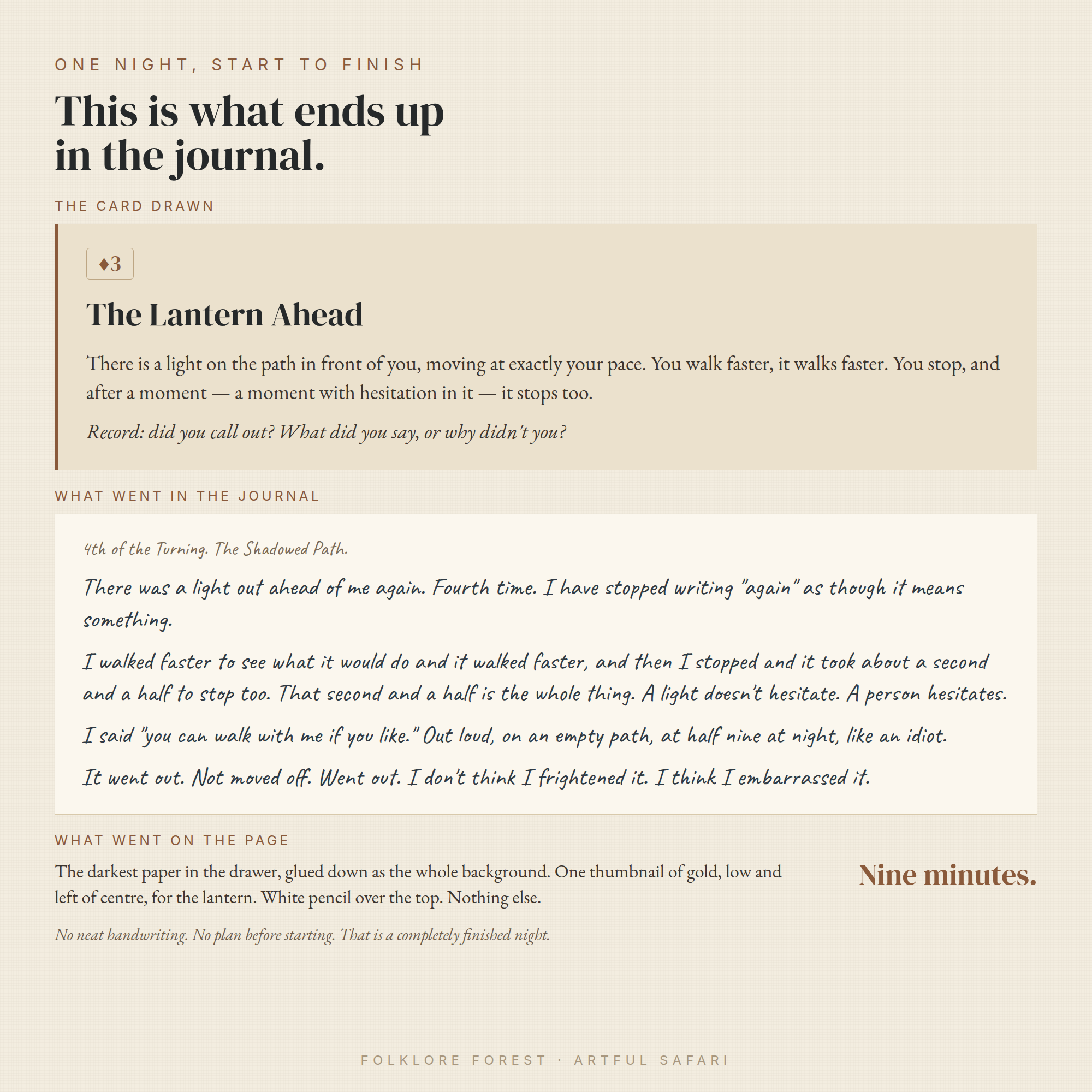
    Step 2. Build the character opening before anything else

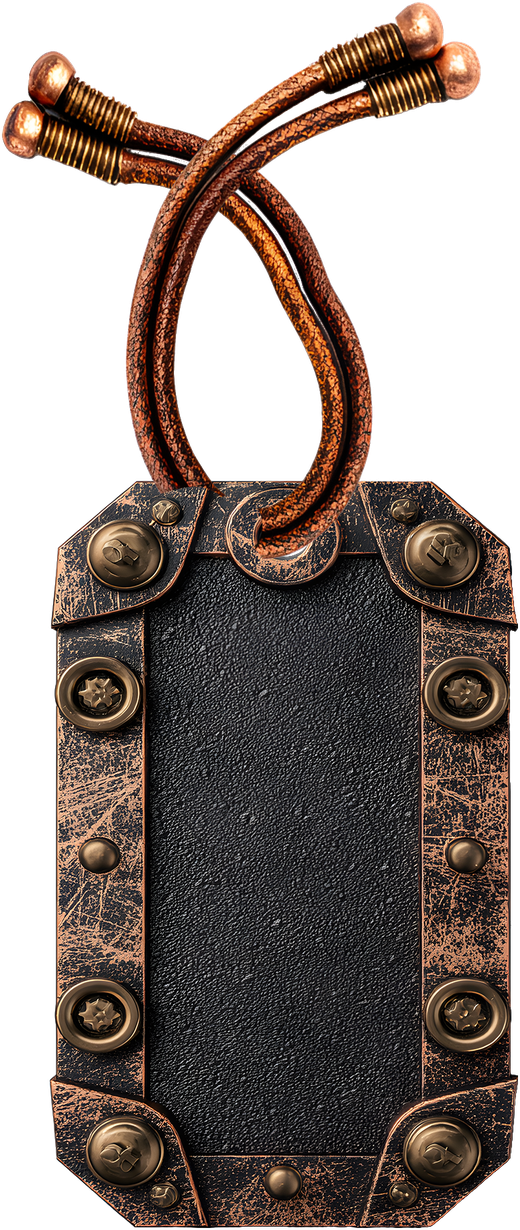
    A dark riveted luggage tag on a leather cord, an element from the Echoes of Time range
    A tag glued to the character opening holds the two scores where you can find them.

    Colostle builds a character from four things: a Calling, which is why they are out there; a Nature, which is how they react to what they meet; a class; and a weapon. The Calling and the Nature come up randomly. The class sets those two numbers you will be drawing cards against all game.

    The base book gives you four to choose from. The Armed has grafted a Rook’s arm to themselves and fights slightly better than they explore. The Followed travels with a Rookling companion and is the best explorer of the set.

    The Helmed has harvested machinery from a Rook’s heart, which makes them poor at exploring and very dangerous in a fight, and the Mounted rides a Rook mechanism, which reverses that entirely.

    Give all of it a full double-page opening at the front. Name, Calling, Nature, class, weapon, the two scores, and a space to write in what the character is carrying as it accumulates. You will turn back to this opening more than any other page in the book, so make it the one that looks finished.

    Step 3. Set up one Colostle spread before you draw a card

    This is the step that gets skipped and it is the one that fixes everything. Rule up a single blank Colostle opening in advance, so that when you sit down to play you are filling in a shape rather than inventing one.

    The official Colostle journal is worth copying here. The Roomlander Journal is a 98-page spiral-bound A4 book in which every double-page spread holds one encounter phase, with a section to record the card draws for Exploration and Combat, a map section for visual notes on the lay of the land, and a journal section to write up what your character did that day.

    You can rule that yourself with a pencil and a straight edge. A narrow column down the left edge of the left-hand page holds the cards, and a box roughly a quarter of the spread, top right, holds the map. Everything else is writing space.

    Do five or six of these openings in one sitting while you are in the mood for ruling lines. Then Colostle never waits on your stationery.

    Step 4. Record the draw so you can read it back in a year

    Colostle runs on the cards, so write them down as cards. Not “I found a ruined tower” but “♠7 — ruined tower”, with the prompt number if you want to find it again. The suit and the rank are the reason the story went where it went, and stripping them out turns your RPJ into fiction with no evidence behind it.

    A perforated record card with ruled lines, an element from the Urban Travel range
    A record card down the outside edge takes a column of suits without eating the writing space.

    There is a practical reason as well as a sentimental one. When an Events table sends you back for another draw, or a fight runs across two openings, you need the record to keep track of what came from where. A column of card symbols down the left edge does that job, and it looks deliberate.

    Junk journallers have an advantage here. A small pocket glued to the character opening will hold the actual cards from a session you care about, and a whole encounter can be pasted in as a fan of four cards rather than transcribed.

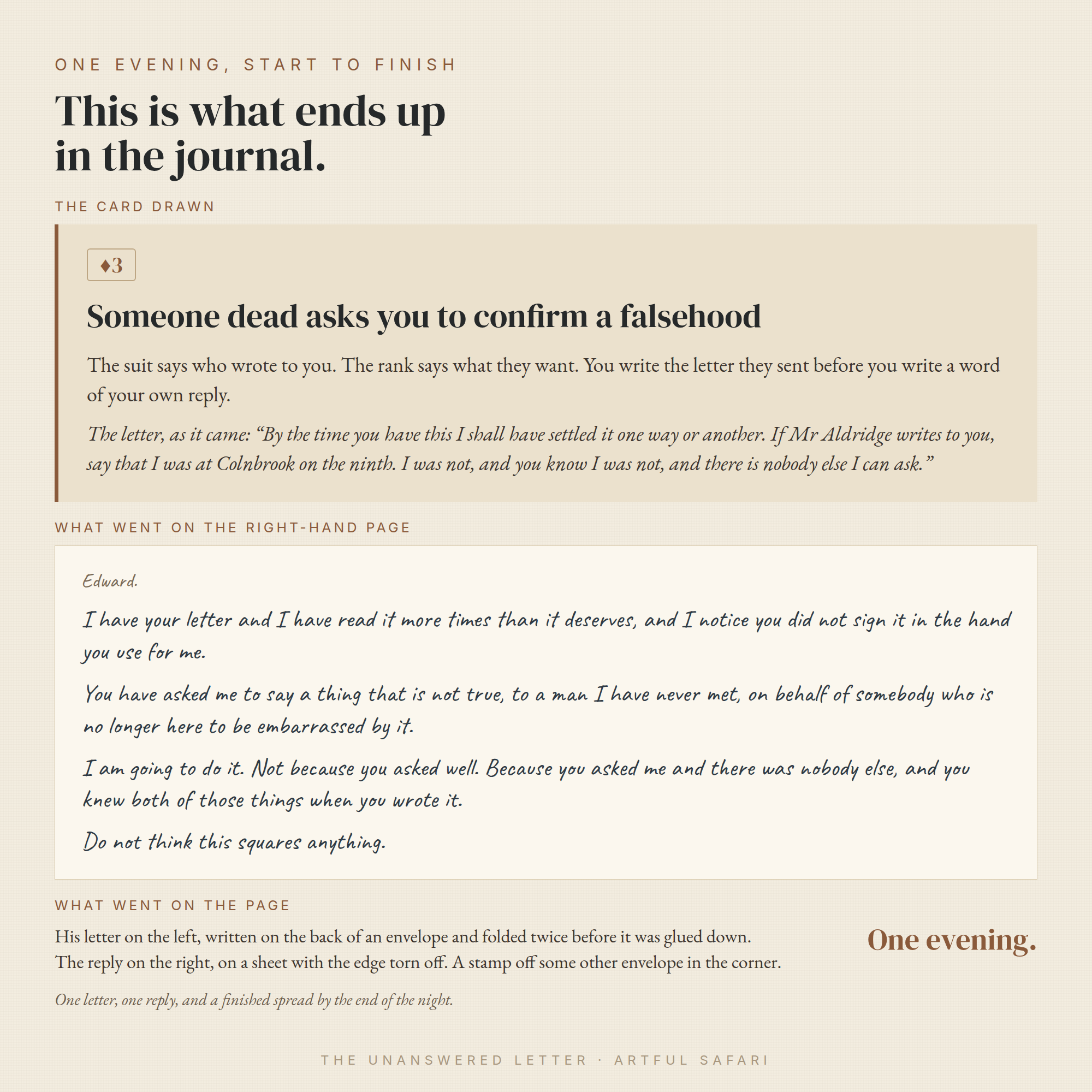
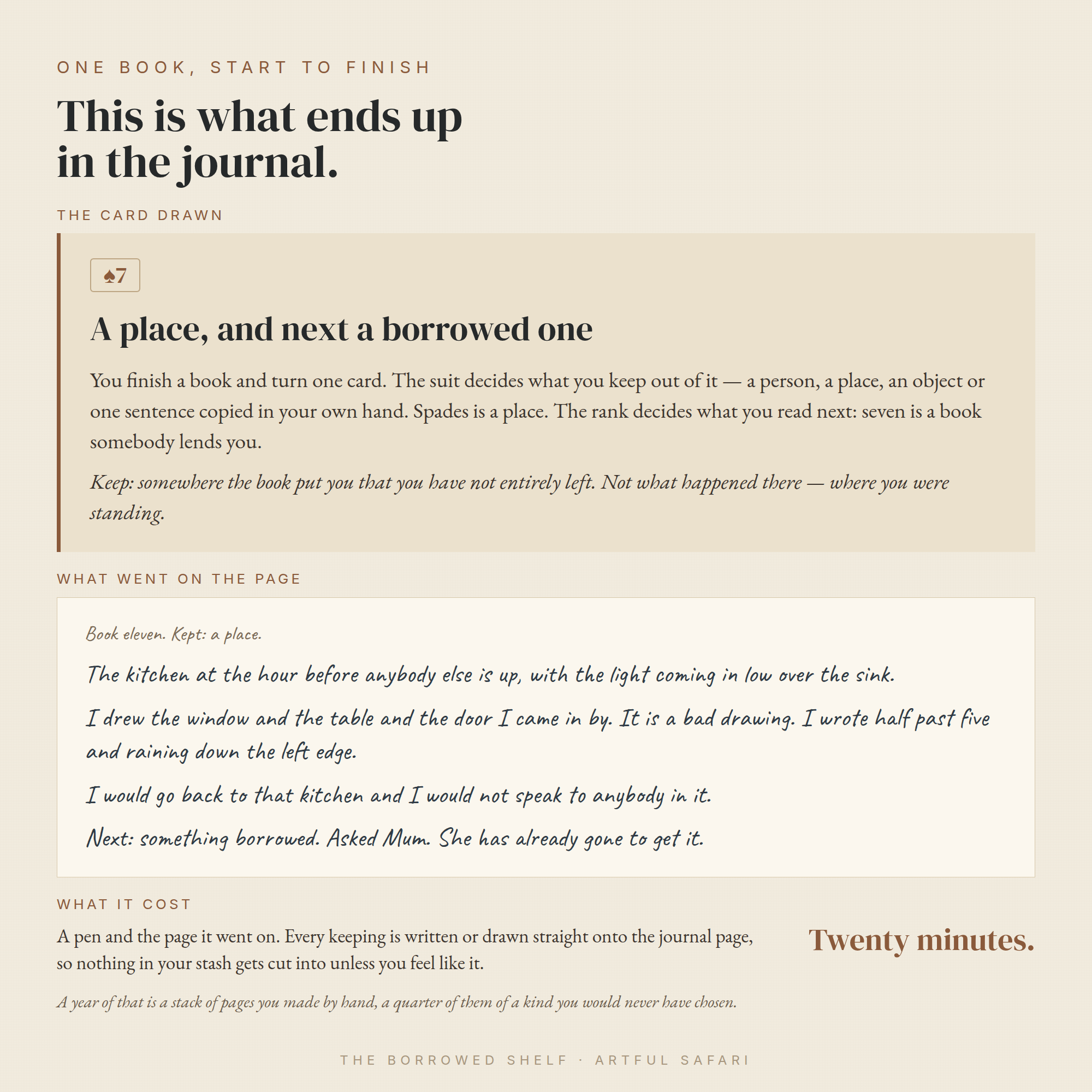
    A card draw written up as a journal entry, the same two-part layout a Colostle spread uses
    Not Colostle, but the same anatomy: the card and its prompt at the top, what actually went on the page underneath. This one comes from Artful Safari’s own card-driven journal.

    Step 5. Map the room while it is still in your head

    The map box is the part people leave out, and it is the part that makes a Colostle journal look like a Colostle journal rather than a diary. It does not need to be good. A rectangle for the room and an X where the Rook was standing will do.

    A journal card with ruled lines above a printed street map, an element from the Urban Travel range
    A card with a map already on it will carry a room you cannot face drawing.

    Do it before you write the prose, not after. Once you have written the entry the geography collapses into sentences and you lose the sense of where things were in relation to each other, which is the whole pleasure of exploring a room the size of a country.

    Ink the map, then let a wash of watered-down brown or grey sit over the floor of it. That one move does more for the look of a page than any amount of careful lettering. If you would rather not draw at all, a torn scrap of aged paper with the room’s name on it does the same job.

    Step 6. Write the entry, then close the spread properly

    Now write the Colostle entry. Your character’s account of what happened, in whatever voice suits them, as long or as short as it wants to be. Some encounters are four lines and some fill the page.

    Then close the opening off. Date it in the world’s own terms, note the two scores as they stand after the encounter, and write one line about where the character is heading next. That last line is what gets you back into the chair tomorrow, because it means the next session opens with a direction instead of a blank.

    The reason to close a spread rather than trail off is that an RPJ is a book, and books have pages that end. A finished opening has a card column, a map, an entry and a sign-off, and a stack of them reads as a record of a journey rather than a set of abandoned starts.

    What a finished Colostle spread looks like

    Left-hand page: the card column down the outside edge with the suits inked in, the map box top right of the spread with its wash, and the first half of the entry filling the rest. Right-hand page: the rest of the writing, and the sign-off at the foot with the two scores and a heading.

    Pick two inks and one paper tone and keep them for the whole book, so a flip through reads as one journey rather than forty separate craft projects. A warm brown for everything and a deep red kept back for the Rookstones will carry the entire Roomlands.

    If you want to see how Colostle flows before you commit to a layout, Cozy RPG Reviews goes through the card system and the setting in full, and it is the quickest way to see what one turn actually involves:

    Watching somebody play is consistently what makes these games click for people who have read the rules twice and still feel stuck.

    Colostle questions people actually ask

    Do you need dice to play Colostle?

    No, Colostle runs on an ordinary deck of 52 playing cards and nothing else, which is one of the reasons people pick it as a first solo game. The suit and the rank of each card you turn send you to a prompt in the book. If you already own dice from another game, they sit this one out.

    Do you have to be good at writing?

    No, and the prompt system is why: the book hands you the situation, so you are never facing an empty page and inventing from nothing. Plenty of players write four lines an encounter and let the map and the card record carry the rest of the spread. Nobody is reading it over your shoulder.

    I have the book and a journal, so how do I actually start?

    Set up the character opening first, then rule one blank spread, and only then shuffle. That order is the whole trick, because it means your first card draw lands in a page that already has somewhere for it to go. Most people who stall have skipped straight from buying the book to a blank sheet.

    Do you need the official Roomlander Journal?

    No. The rules ask for a notebook, and any book you are willing to write in will do the job. The official one is useful as a template rather than a requirement, because its spread layout shows you what to rule into your own: a card record, a map box and a writing area on every opening.

    Can you play Colostle in a junk journal?

    Yes, and it suits the game well. A made book gives you pockets to keep the actual cards from a session, aged paper that matches a stone castle, and tip-ins for maps that outgrow their box. The only thing to watch is bulk, since a book that is already fat with ephemera will not lie flat once you add forty spreads.

    How long does one Colostle session take?

    The game does not set one. The natural unit is a single encounter phase, meaning one round of card draws written up, and the official journal gives each of those a double-page spread. Treating one spread as one sitting keeps the book moving and means you always stop somewhere you can pick up from.

    If Colostle is your first journalling game

    Plenty of people arrive at Colostle having never touched a roleplaying game in their life and get on with it fine, because there is no table of people waiting on you and no one to improvise at.

    Our guide to solo journalling RPGs covers what these games have in common and how a session usually runs, and the seven-nights piece is a shorter on-ramp if you want to try the format before buying a rulebook. If the book you are playing in is a made one rather than a bought one, what a junk journal actually is is the place to start.

    For the papers themselves, Helene designs the sheets for The Crimson Parlour in the sort of aged Victorian tones that suit a stone castle and a card draw, and the kit carries its own thirteen-night mystery to play if you finish the Roomlands and want another book to fill.

  • Koriko: 5 Easy Ways to Keep a Journal Worth Finishing

    Koriko: 5 Easy Ways to Keep a Journal Worth Finishing

    Koriko is a solo journaling game by Jack Harrison in which a teenage witch spends a year in a city she has never seen. You play it across six volumes with the book, a tarot deck, a stack of dice and a notebook you keep yourself. Keeping that notebook well is what makes the year worth finishing.

    Most players stall on the notebook. A Koriko year is six sittings of an hour or two each, and a pile of loose entries in a lined pad does not feel like a year when you reach the end of it.

    Below are five ways to lay the book out so it holds the shape of the story. None of them change a rule. They are page decisions, made once, before the first card comes off the deck.

    What Koriko actually asks you to do

    Koriko: A Magical Year is by Jack Harrison, with cover and interior art by Deb JJ Lee, published through Mousehole Press in 2023 after a Kickstarter that raised £235,791. Its stated inspiration is Kiki’s Delivery Service, the Studio Ghibli film and the Eiko Kadono novel it came from. It took two Silver ENNIEs in 2024, for cover art and for production values.

    A soft blue and sand coastal paper, the ground a Koriko city map sits on
    Koriko can be any city you answer it into being as. A soft coastal ground from the Salt Air range suits a harbour town.

    To play you need the book, a tarot deck, a stack of six-sided dice and a journal. The story runs across six sections the game calls volumes, each an hour or two. Volume one is Departure and volume two is Arrival, so the pacing is built in before you make any decisions of your own.

    Setup builds your witch and her home village first, then the city. Koriko is a place of your invention, and the book asks you questions until it exists: a seaside town, a smoggy capital, whatever you answer with. Then she arrives, and you start drawing cards.

    The minor arcana give you moments. The major arcana give you confidants, twenty-two of them, who accumulate into a separate deck the game calls your circle. Each confidant carries prompts to use whenever they come up, and after four meetings you reach a crossroads with that person where you either help them, at some risk, or turn them down.

    Risk is where the dice come in. Take a chance and you add dice to a stack that gets less stable every time you touch it. When it falls, the fallen dice tell you what the consequence is, and one of those consequences is a Lesson: something your witch has learned, written into the journal, spendable later.

    At the end of every volume she rests and writes a letter home to her mentor. At the close of winter she decides whether to stay in Koriko as the city’s witch or go. If you want the fuller picture before you buy, Destructoid’s write-up walks through a season of play in detail.

    1. Map the city before you play in it

    Setup asks you to invent Koriko and then never gives you anywhere to put it. Most Koriko players answer the questions on scrap paper and lose them by volume three, at which point the harbour has moved and the baker lives on a different street.

    Give the city the first opening in the book. Left page: a rough map of the shapes you decided on, as crude as you like. Right page: the answers you gave during setup, written as short lines rather than paragraphs.

    A lined journal card with a compass, ruled for the city setup answers
    A ruled card takes the setup answers without turning them into an essay.

    Use a paper background with some age in it so the map reads as a document rather than a doodle. A single sheet of patterned paper trimmed to the page, with the map inked straight onto it, does more for the finished book than any amount of neat handwriting. This is the spread you will flip back to more than any other.

    If you have never assembled a page this way, the basics in our beginner’s guide to junk journals cover the layering using things you probably already own.

    2. Give the circle its own ledger

    The circle is the mechanic that makes Koriko a year rather than a series of scenes, and it is the one most easily lost. Twenty-two possible confidants, each met up to four times, each heading towards a crossroads you will want to remember the run-up to.

    A lined journal card headed story, sized for one confidant in a Koriko ledger
    One card per confidant, four dated lines, and you will still know what they wanted in volume five.

    Set aside four consecutive pages near the front for a confidant ledger. Rule each page into quarters, one confidant per box, with the card name in the corner and room for four dated lines underneath. Every time that person surfaces, add one line before you write the entry proper.

    The ledger is a two-minute habit that pays off around volume four, when you draw someone for the third time and cannot recall what they wanted. It also gives the finished book a reference section you can flip back to.

    Tuck a small envelope or a folded pocket onto the last ledger page. Anything you make for one particular confidant lives in there rather than floating loose in the book.

    3. Mark each season so the year reads as a year

    A Koriko journal covers twelve months and six volumes, and without a marker the whole thing reads as one long undated block. The fix is a divider between volumes, and it does not need to be elaborate.

    One page, the season’s name, and one colour that runs through everything on that side of the divider. Spring gets cool greens, summer goes warmer, autumn drops to rust, winter goes pale. Pick the papers before you play, so the choice never interrupts a session.

    A plum and gold star chart paper used as a winter season divider
    Winter wants the darkest paper in the drawer. This one is from the Midnight Apothecary range.

    The tab is the other half of this. A cut-and-glued tab on the divider page, sticking out past the fore-edge, lets you find spring in a closed book without opening it. Anyone arriving at Koriko from an RPJ background does this without being told, because that is how a junk journal gets built anyway.

    Print the season papers in one go before volume one and store them in the back pocket. Printing junk journal papers at home takes five settings, and doing all four seasons at once means you never stop mid-volume to feed the printer.

    4. Keep the letters home as letters

    The letter to the mentor at the end of each volume is the strongest piece of writing the game asks for, and writing it as another journal entry wastes it. It is addressed to someone. Make it look addressed to someone.

    A coastal card with a curled corner, for a letter home tucked into a pocket
    A curled corner and a soft edge read as a letter rather than another journal page.

    Write each letter on a separate sheet, fold it, and glue a pocket or a simple envelope onto the volume’s closing page. The letter goes in the pocket, readable, removable. Six letters across the Koriko year, six pockets, and the book acquires a rhythm that has nothing to do with how well you write.

    Date them in the witch’s calendar rather than yours. It costs nothing and it stops the letters reading like diary entries from a person sitting at a kitchen table in 2026.

    5. Leave the last spread of your Koriko journal empty until winter

    Koriko ends with a real decision. She stays as the city’s resident witch or she leaves, back to the village or somewhere new, and the game does not make that choice for you.

    Reserve the final opening of your Koriko journal on day one and rule it off. The temptation to use it turns up in volume five, when you run short of space. Knowing the ending has a page waiting changes how you pace the middle of the book.

    When you get there, the left page takes the decision itself and the right takes what came after. That second page is the only part of a Koriko journal that answers the question the whole year has been asking.

    Watch someone else keep a Koriko journal first

    Reading rules is a poor way to work out how a book should look. Two videos are worth the time before you start.

    The Bad Spot’s review is the clearest walk-through of the dice stack and the circle I have found, and at sixty thousand views it is why a fair few people bought the game at all. Watch this one if you are still deciding whether to buy Koriko.

    For the journal side, Bookish Artist Mandy’s first Koriko episode shows the actual page as she fills it, pens and all. Watch what she does with margins and you will steal something useful.

    Koriko questions people actually ask

    I have bought Koriko and still have not started. What do I do first?

    Open the book at setup and answer its questions before you touch a card. Setup builds your witch and her home village, then hands you the city to invent; write those answers onto the first opening of the journal as a map and a list and you have started. The bought-but-unstarted pile is mostly people waiting for a tidier moment.

    Do I need dice to play Koriko, or can I use cards instead?

    You need both a tarot deck and dice. The cards carry the prompts and the dice carry the risk, and the dice do something cards cannot: you stack them into a tower that eventually falls over. Swap in cards and you lose the part of the game that makes taking a chance feel like taking one.

    Do I have to be any good at writing?

    No. Every card you draw arrives attached to a prompt, so you are answering something rather than staring at an empty page. Plenty of players write two lines and spend the rest of the evening on the page itself, gluing paper and cutting tabs, and nobody reads it but you.

    How long does one Koriko session take?

    An hour or two. The story runs across six volumes and the publisher puts each volume at one to two hours, so a full year of play is about six evenings. You can leave months between them, which is when the letter home gets written anyway.

    Do I need to have played a roleplaying game before?

    No, and the book says as much: a passing familiarity with witches, city life and teenage drama is the only background it asks for. There is no group to coordinate and nobody to perform in front of. A good share of the people arriving at Koriko now came out of junk journalling rather than tabletop gaming.

    Can I play Koriko in a junk journal instead of a plain notebook?

    Yes, and the length suits it. Six volumes across a year is enough book for tabs, pockets, season dividers and a map spread to earn their place. A bound junk journal also takes the letters home better than a notebook, because you can glue a pocket onto a page without the spine fighting you.

    What a finished Koriko journal looks like

    One night of solo journaling play written up in full, the shape a Koriko volume entry takes on the page
    A worked night from our own Folklore Forest game: the card, the entry, and what went on the page. A Koriko volume ends up much the same shape.

    Twelve to twenty openings in a finished Koriko journal, depending on how much you write. A map at the front, a ledger behind it, four tabbed dividers, six letters in six pockets, and a decision at the back. That is a book you can hand to somebody.

    The wider RPJ crowd has been arriving at the same structure from the other direction, coming to solo games out of junk journalling rather than out of tabletop roleplaying. If you are newer to the format, our guide to solo journaling RPGs covers what these games are, and the first seven nights walkthrough covers the habit of actually sitting down to play.

    Koriko rewards the book you build for it. Six volumes is enough time for a badly organised journal to become a chore and a well laid-out one to become the reason you keep going.

    If you would rather have the season papers and pocket pieces already designed than go hunting for them, Helene puts together the Folklore Forest kit for exactly this kind of year-long book.

  • Apothecaria: 7 Easy Ways to Keep It as a Junk Journal

    Apothecaria: 7 Easy Ways to Keep It as a Junk Journal

    Apothecaria is a solo journaling game by Anna Blackwell in which you play a village witch, treating patients who arrive with ailments like Fairy Fever using potions you brew from foraged reagents. It runs on a deck of playing cards across four seasons of thirteen weeks each, and everything that happens gets written into a journal you keep.

    What nobody explains is what that book should look like after thirteen weeks.

    One player said it under Shannon Green’s flip through: “I bought the game a while back and have been trying to figure out the journal setup.” That is the common stall, and it has nothing to do with the rules.

    So this is a guide to the book. Seven ways to set an Apothecaria journal up so the thing on your shelf at the end of Spring is worth opening again.

    What Apothecaria asks you to write down

    Anna Blackwell’s game runs on a standard deck of playing cards and a calendar of four seasons, thirteen weeks apiece, opening on the first day of the first week of Spring. A round moves through diagnosis, foraging and potion preparation. Each of those wants a different kind of page, which is why one repeating notebook layout never quite holds it.

    Diagnosis hands you a patient and an ailment carrying reagent tags, so Yeti Chest wants two reagents that answer hair and lungs. Foraging sends you to Glimmerwood Grove, Meltwater Loch, Moonbreaker Mountain or Hero’s Hollow, and the card you pull out there brings an event along with the ingredient. Potion preparation is where the recipe gets written out and where you learn what the work was worth.

    The publisher’s page for Apothecaria carries the digital version and the hardback both. To watch a round go by before you commit, this review plays one out from patient to finished potion.

    Rows of green and purple apothecary bottles on aged paper, backing for an Apothecaria journal spread
    Midnight Apothecary paper. A shelf of bottles behind a recipe page does most of the atmosphere for you.

    The people doing this call the result an RPJ, short for role playing journal. Journals4breakfast coined it on camera in July because the long version is too many words to say twice. Five weeks later it was in video titles on three channels and in the name of the community’s Discord.

    1. Choose the book before you print a page

    The decision that shapes an Apothecaria journal most is the book you play inside, and it is the one people leave until last. Shannon Green went with an altered book, gluing her printed pages into an old Russian-English chemical dictionary. It reads like something pulled off a shelf in a back room rather than bought this morning.

    A hardback with foxed paper and a cracked spine has done most of the atmosphere before you write a word. It also lowers the stakes on neatness, which matters more than it sounds when week three arrives and you have glued something in crooked.

    Shannon Green is playing Apothecaria as an altered book right now, and this is where her series starts. Watch it first if you are looking at a stack of printed pages and an empty desk.

    2. Dye the paper before you glue anything down

    Coffee turns fresh printed pages the colour of paper kept in a still room for forty years, and it costs an afternoon. Shannon dyed her journal pages and her playing cards in the same session, which is the part worth copying. A bright white deck on aged paper looks wrong the moment you deal the first card.

    Aged cream paper covered in faded brown writing, the colour dyed pages settle into
    The colour you are aiming at. This one is Midnight Apothecary paper, but a coffee bath gets close.

    Do it while the sheets are loose. Wet paper cockles as it dries and that texture is half of what you are after, but it has to happen before anything gets bound or glued in.

    Her coffee session covers the cards as well as the pages, and the tabbing at the end of it feeds straight into the next step.

    3. Tab the seasons so you can find week six

    Fifty-two weeks of Apothecaria in one book means you will be hunting for things by October. Tabs down the fore edge, one per season, take ten minutes and save the rest of the year.

    Run a second set of tabs on the reference sections, because those are the pages you open every single round. The herbal and the patient ledger want to be findable with a thumb.

    4. Give the herbal a spread it repeats

    The herbal is the part of an Apothecaria journal you return to most, since every potion sends you leafing back through it. Build one slot per reagent and keep that slot identical the whole way down the page.

    Four things belong in a slot: the name, where it was found, the symptoms it answers, and how it has to be prepared before it goes near a pot. Rule them the same way every time and the page still reads in week eleven, when you have thirty reagents and no memory of the first ten.

    Foxglove, nightshade berries and hellebore on aged cream paper, backing for a herbal page in an Apothecaria journal
    Foxglove, nightshade and hellebore. Poisonous herbs make a fitting backing sheet for the herbal.

    Keep the four foraging areas apart rather than running one alphabetical list. Glimmerwood Grove filling up while Hero’s Hollow stays nearly empty tells you something true about how you have been playing.

    Shannon’s first pass at her own journal shows how much structure to build before you start, which is less than most people expect.

    5. Write the brew up like a working recipe

    A finished potion is worth money in Apothecaria, and the ingredients you picked move that number. Sweet reagents lift the value and poisonous ones pull it down, so the recipe page records a decision as much as a result.

    Write it as numbered steps, the way a recipe card reads. One reviewer’s sample brew ran to eight steps, from preparation through to how the finished bottle was stored, and that length is about right if you want a working book instead of a summary.

    A blank bordered journal card with ferns along the bottom edge, ruled up for a potion recipe
    A bordered card with room for eight lines. Glue one in per brew and the recipes stay the same size all year.

    Leave a line at the bottom for what it sold for and whether the patient came back. Reputation is a real quantity in this game and a missed deadline costs you some of it.

    6. Press and mount what you gathered

    This is where a junk journal earns its place over a notebook. Gas Weed and Wigfish do not grow anywhere, but a pressed fern and a torn strip of old map stand in for them well enough on the page.

    Fern frond, bracket fungus, toadstool, moss and a feather laid out in a row like pressed specimens
    Small Wild Things specimens. Fern, fungus, moss and a feather cover most of what you will forage.

    Mount one specimen per reagent on the herbal spread with the name written underneath. If you already keep a junk journal you own every tool this needs, which is why so many players arrived here from craft rather than from gaming.

    Journals4breakfast calls it shopping her own stash. Her line about it, repeated back at her in the comments ever since, is “It was like shopping but free!”

    7. Keep the villagers on one page

    Patients recur in Apothecaria, so they deserve a ledger instead of being scattered through fifty-two weeks of entries. One line each: name, what they walked in with, what you gave them, whether it held.

    Leave space to the right of every line. Somebody who turned up with Toad Nose in week two will be back, and the second visit plays far better if you can see the first one without hunting.

    What a finished Apothecaria spread looks like

    Watching one beats reading about one. Shannon’s flip through of weeks four to seven is the clearest look at what an Apothecaria book turns into once the seasons get going.

    The Spring week three playthrough is the other one to watch, because it catches the writing as it happens rather than the finished page.

    A viewer under that playthrough wrote that Shannon’s offhand answers “took off any pressure I had felt about having to come up with an elaborate story to start with.” Watching somebody shrug at a card and move on does more for a stalled book than reading the rules twice.

    One night of a solo journaling game written up start to finish, the shape an Apothecaria week takes on the page
    What the cards said, what got written, what went on the page. An Apothecaria week takes the same three-part shape.

    Apothecaria questions people actually ask

    Do I need dice to play Apothecaria?

    No. Apothecaria runs on a standard deck of playing cards, jokers included, and that deck decides who walks in and what you find when you go out looking for ingredients. Plenty of players swap in a tarot or oracle deck instead and read the cards their own way, which changes the flavour and nothing else.

    Do I have to be good at writing?

    No, and the people already playing say so constantly. Journals4breakfast puts it this way: nobody is ever going to critique your character development, because the book is yours and nobody else reads it. Shannon Green’s playthroughs are full of moments where she shrugs at a card, writes one line and moves on.

    How long does a week of Apothecaria take?

    As long as you let it. A round is diagnosis, then foraging, then writing up the potion, and the writing itself is short. The time goes into whatever crafting you attach to it, which is why The HalFass Crafter describes the hobby as something you can pick up and put down instead of getting mired in an hours long session.

    I have the game and a journal. How do I actually start?

    Play Spring week one and write down only what that round produced. The stall almost always comes from trying to build a finished herbal and a decorated cover before a single card has been turned over. Set up two pages, play one round, and let the rest of the book grow out of the play.

    Do I have to print Apothecaria myself?

    No. The publisher sells a physical copy of the book as well as the digital version, and buying the physical one includes the digital. If you do print it, keep the pages loose so you can dye and age them before they go into whatever book you have chosen to play inside.

    Starting your own Apothecaria journal this week

    Print the pages, dye them, glue or bind them into the book you picked, and give yourself Spring week one and nothing past it. The people who stall are usually the ones who tried to build the whole herbal before playing a round. If printing is the part holding you up, the home settings that actually work are here.

    If you have never played anything like this, our guide to solo journaling RPGs covers what the category is and how one evening of it really goes.

    And if you want a shorter RPJ to run alongside Apothecaria while the seasons turn, The Keeper’s Log is forty nights in a lighthouse, played with two dice.

  • RPJ: What a Role Playing Journal Is, in 5 Easy Answers

    RPJ: What a Role Playing Journal Is, in 5 Easy Answers

    An RPJ is a role playing journal: a solo journaling game you play on your own in a notebook, working through printed prompts and answering them as a character whose story you are writing down. The word was coined on camera in July 2026 by the YouTuber Journals4breakfast, and it spread across craft YouTube in about five weeks.

    The word is new. The thing it names is not, and the same five questions come up every time somebody meets an RPJ for the first time.

    1. What an RPJ actually is

    You buy a small printable book. It holds a setting, a handful of tables and a run of prompts, and you answer those prompts in a journal you already own.

    You are the only player. Nobody is waiting on you, nobody scores you, and there is no evening in the diary you have to keep free. A card or a die decides the things you would otherwise have to invent, so the story surprises you as you write it.

    A Grandmother Owl character card from the Folklore Forest game, the kind of card you draw during an RPJ
    Turn a card, meet whoever is on it, write what they want from you.

    The plain-English name for the category is solo journaling game, and that is the phrase most people type into a search box. RPJ is the shorter word the community made for itself. Both mean the same thing.

    What ends up in the book looks like craft rather than homework. Pressed paper, stamped edges, a map, a taped-in letter, and somewhere in the middle a few lines of writing that move the story on.

    One evening of an RPJ, or role playing journal: the prompt, the entry it produced and the finished page
    One prompt, one entry, one page. That is a whole night of an RPJ.

    2. Where the word RPJ came from

    It was coined by Journals4breakfast in her July 2026 video about falling into the hobby, which has since passed 25,000 views. If you watch one thing before reading on, watch this. The renaming happens partway through, mid-sentence, because the four-word name for it had worn her patience out:

    “That is too many words for me. We’re going to just call these RPJs, roleplaying journals. Deal. Deal.”

    Journals4breakfast, 18 July 2026

    She added a line to that video’s description the same day: “from this moment on… to be known as RPJ’s”. It stuck faster than anyone expected.

    Five weeks later the word appears in four video titles across two channels, in nine of the thirteen descriptions across three channels, and in comments from 32 separate viewers who are not any of those creators. The HalFass Crafter put it straight in an episode title, which is the clearest sign a word has crossed from one channel to another:

    Credit where it belongs. Andrea at Journals4breakfast named this and the rest of us borrowed it.

    3. How an RPJ differs from the journaling you already do

    A junk journal or an art journal holds your life. An RPJ holds someone else’s, and you find out what happens to them at the same speed the page does.

    An antique clock element from the Echoes of Time kit, used as a page accent in an RPJ

    That difference solves a specific problem. Plenty of people own beautiful books they cannot fill, because a blank page asking for your own week is a hard thing to answer on a Tuesday. A prompt about a locked door in a house you have never been to is much easier.

    It also gives the supplies a job. The stash in the cupboard becomes props for a story instead of stock waiting for the right occasion. Journals4breakfast calls that part, shopping her own stash for an RPJ, her favourite thing about the whole hobby.

    If you are new to the craft side of it, our guide to what a junk journal is covers the book itself.

    4. How an RPJ differs from a game round a table

    This is the question behind the flinch. Role playing games have a reputation for thick rulebooks, a table of people and someone running the whole thing, and none of that applies here.

    You play alone, at your own pace, and nothing has to be said out loud. You read a prompt, decide what your character does, and write it down. If a game asks you to settle something by chance, a die or a shuffled deck answers it for you.

    The rules in a solo journaling game usually run to two or three pages and most of the book is prompts. You can put it down for a fortnight and pick it up with nothing lost. Longer walkthrough here: a full evening of a solo journaling game, start to finish.

    5. What you need to start an RPJ

    A book, a printed game and something to write with. That is the floor, and almost everyone reading this already owns two of the three.

    • A notebook. Any bound book. Some people cut up an old hardback and glue their pages into it.
    • A printed game. Print it single-sided and clip it, or read it off a screen beside you.
    • A randomiser. A six-sided die, or the ace to six from a pack of cards, or a deck you already read with.
    • Your stash. Optional and the whole point. Scraps, stamps, tape, whatever is in the drawer.
    A blank journal card frame from the Enchanted Hours kit, ready for a first RPJ entry
    A loose card is an easier first entry than a whole page.

    There are plenty of free games to try before you spend anything. Shannon Green prints twelve of them as booklets in this one, and the printer settings she lands on are the part worth stealing:

    itch.io’s journaling tag lists hundreds more, a lot of them pay-what-you-want.

    Take your time over the setup. People in this hobby routinely spend a fortnight building the book before they draw a single card, and they count that fortnight as playing.

    Where the RPJ crowd gathers

    Right now it is mostly YouTube comment sections. Shannon Green and the two channels above carry the bulk of it, and the comments under them are full of people asking each other beginner questions and getting kind answers back.

    There is also a Discord server, RPJourneys, started by Journals4breakfast in July 2026 and running at 149 members when we checked on 24 August. It is a show-and-tell room for finished pages. We have not linked it here because the published invite codes keep expiring, so the working one is whichever a creator has posted most recently in a video description.

    If you want the reading list version instead, our seven quiet nights guide is the slow way in.

    A blue and gold banner tag from the Enchanted Hours kit

    RPJ questions people actually ask

    I’ve printed a game and I have a journal. How do I actually start?

    Open to the first page and answer prompt one, badly. The stall is nearly always about wanting the first page to be good, and the fix is to write four sentences and glue something down. Set the book up afterwards, once you know what the story is about. This is the most common sticking point in the whole hobby, so you are in a large and well-decorated queue.

    Do I need dice?

    No. Take the ace to six out of a pack of playing cards, shuffle them and turn one over whenever the game says to roll. Our own card games are designed for a standard 52-card deck of playing cards. Plenty of players do buy dice as a small ceremony of starting, which is a fine reason.

    Do I have to be a good writer?

    No, and most people doing this would not call themselves writers. A typical entry is a few lines, sometimes a list, sometimes a letter your character never sent. One creator filled most of a journal using watercolours, stickers and stamping with barely a paragraph in it. The prompt is doing the difficult part.

    I’ve never played a role playing game in my life. Is that a problem?

    Not at all, and a good half of this community arrived the same way. Nothing in an RPJ needs prior knowledge of tables, characters or rules. If a term in a game’s booklet loses you, skip it and keep writing. The one thing that reliably makes it click is watching somebody play a session on camera before you start your own.

    Which game should I start with?

    Start with a setting you would happily decorate for a month, because that matters more than the rules do. Witch, apothecary, lighthouse keeper, cartographer, whatever makes you want to open the drawer. Short games are kinder for a first attempt than long campaigns. If you cannot choose, pick the one whose cover you like and keep the other tab open.

    Starting tonight

    An RPJ is cheap to try. If you want one evening to find out whether any of this is for you, The Unanswered Letter is a one-sitting game about a letter that was never answered, and it will tell you in an hour or two whether you want the next one.